
Fried green plantains pounded with garlic and crackling pork into a golden mountain, crowned with shrimp swimming in garlic sauce — Puerto Rico’s proudest plate, built one pestle-thump at a time.
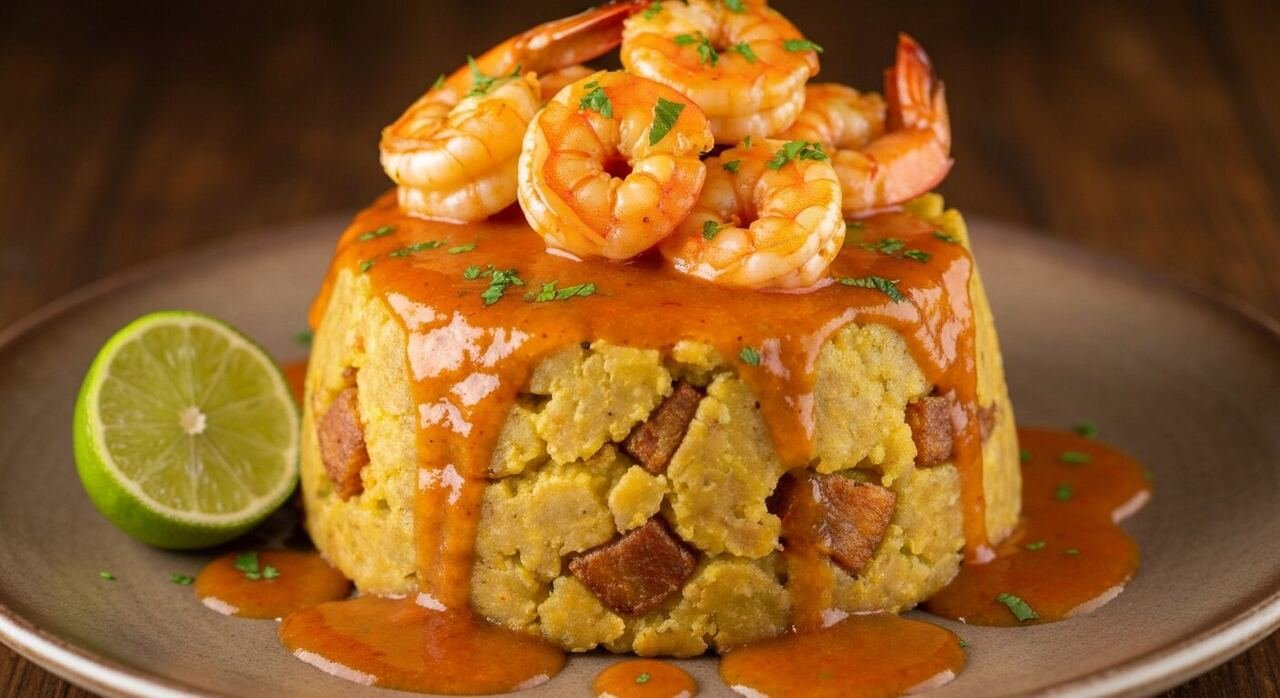
Mofongo announces itself: a dense, savory dome that arrives at the table like a monument, steam rising, sauce pooling at its base. The technique is gloriously physical — hot fried plantains mashed in a wooden pilón with raw garlic, olive oil, and shattered chicharrón — and the result is unlike anything else in the Americas: fluffy and hearty at once, garlicky to its core, crunchy where the pork hides. Top it with garlic shrimp and you have the island on a plate.
Before You Peel a Plantain
- Mofongo is fried green plantains mashed with garlic, oil, and chicharrón, shaped into a dome and topped or stuffed.
- Its roots are West African — brought to Puerto Rico through the technique of fufu, pounded starch dishes.
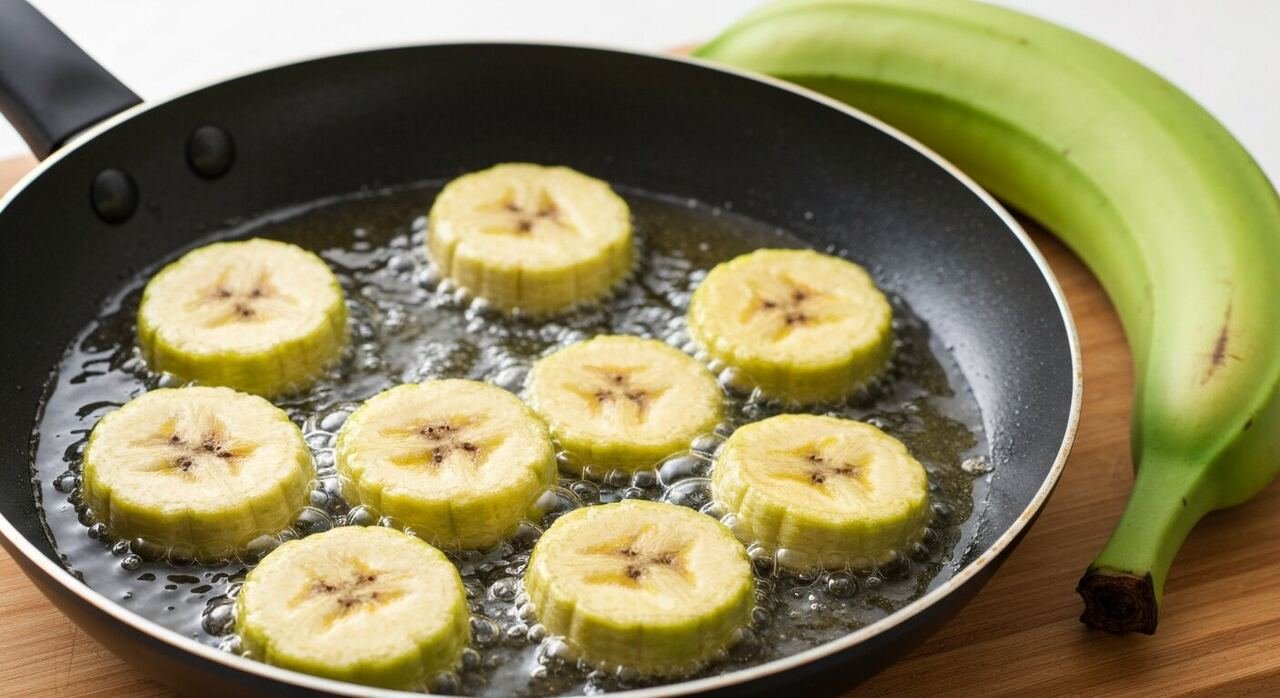
- The plantains must be fully green: firm, starchy, savory. Yellow ones turn the mash sweet and gluey.
- The pilón (wooden mortar) is traditional; a sturdy bowl and any pestle works at home.
- Serve it the minute it’s shaped — mofongo waits for no one. Total time: about 45 minutes.
From Fufu to the Pilón: An African Story in the Caribbean
Mofongo’s family tree runs straight to West Africa. Enslaved Africans brought to the Caribbean carried the technique of fufu — starches boiled and pounded into a smooth, elastic mass — and adapted it to the island’s pantry: plantains instead of yam and cassava, frying instead of boiling, and the Spanish additions of garlic, olive oil, and pork. Even the name likely echoes the Angolan word mfwenge-mfwenge. What emerged in Puerto Rico by the 19th century was entirely its own dish — and today it’s as close as the island comes to an edible flag.
You’ll find mofongo everywhere from roadside fondas to San Juan’s white-tablecloth rooms: plain alongside roast pork, shaped into a bowl and stuffed with stewed chicken (mofongo relleno), or under a tide of garlic shrimp — the classic pairing this recipe makes. Cousins abound across the Caribbean (the Dominican mangú is a softer, boiled sibling), but the fried-then-pounded Puerto Rican original owns the crown.
Fried, pounded, garlicked, crowned — a monument you can eat.
Green Plantains Are Not Bananas (and Other Load-Bearing Facts)
| Stage | Peel | Character | Use for |
|---|---|---|---|
| Green plantain | Firm, hard to peel | Starchy, savory, potato-like | Mofongo, tostones |
| Yellow plantain | Gives slightly | Semi-sweet, softer | Not mofongo |
| Black (maduro) | Soft, sweet smell | Sugary, custardy | Sweet fried maduros |
The Pounding Is the Recipe
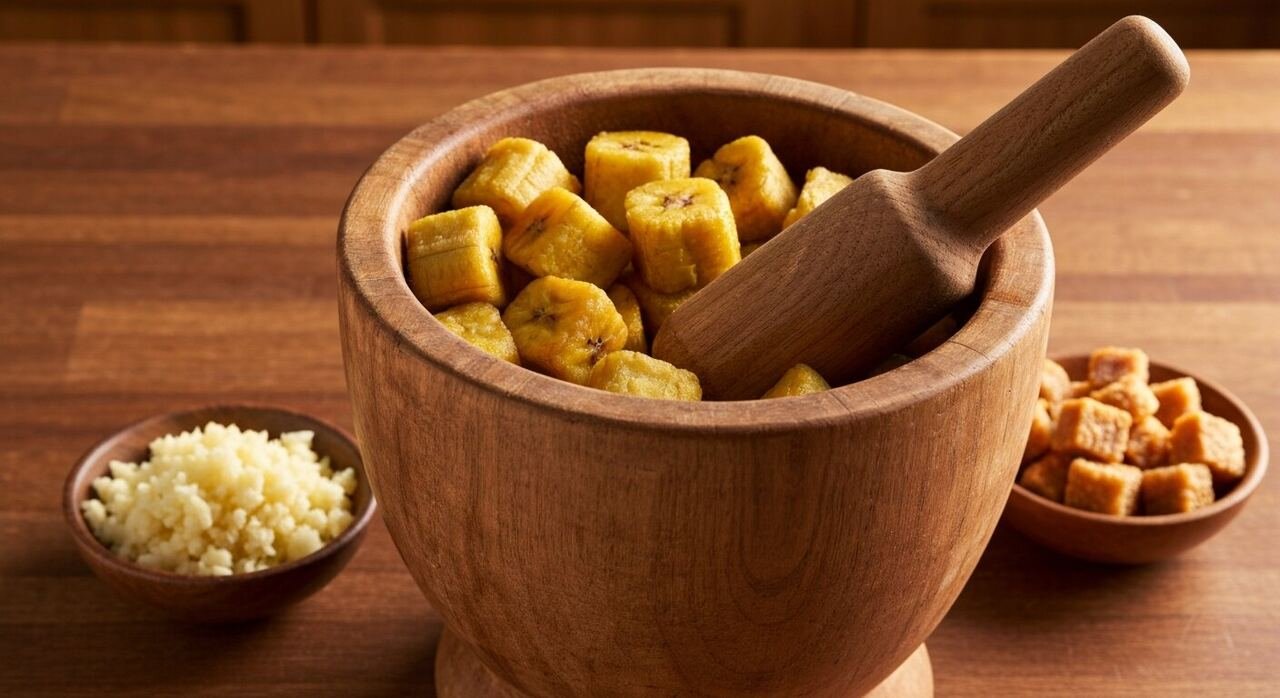
Everything converges at the pilón, and heat is the secret ingredient: the plantains must be mashed straight from the fryer, while their starches are soft and steamy. Work in single-serving batches — a quarter of the plantains, a share of garlic paste, a handful of chicharrón, a drizzle of olive oil — and pound with intent. You’re not making a purée; you want a rough, cohesive mash with visible pork shards and the occasional plantain chunk. A few spoonfuls of warm broth loosen a dry mash; restraint keeps it from turning gummy.
Then shape and serve without pause: press each batch into a small bowl, invert onto the plate, and crown it while the dome still steams. Mofongo stiffens as it cools — delicious for about twenty minutes, architectural after forty. This is why the shrimp sauce matters: camarones al ajillo bring not just garlic and sweetness but hydration, soaking down through the mountain with every forkful.
Good to Know
Pilón Wisdom
- Peeling green plantains — cut off the ends, score the skin along its ridges, and pry sideways with your thumbs. A 10-minute soak in salted water helps them fry evenly.
- No pilón? A sturdy mixing bowl and a potato masher or heavy pestle do the job — just work while everything’s hot.
- Chicharrón substitutes — crisp bacon works; store-bought pork rinds are the standard shortcut. Vegetarian? Toasted garlic breadcrumbs bring the crunch.
- Other crowns — stewed chicken, roast pork, or churrasco steak are all classic; the shrimp version is the gateway.
- This is a fried, hearty plate — the lime and a simple green salad on the side aren’t garnish, they’re balance.
Watch It Made
Sometimes one minute of watching beats a page of reading — see the technique in motion, then scroll on for the full recipe card.

Video walkthrough via YouTube — tap to play (nothing loads until you do).
The Continental Table Recipe
Mofongo con Camarones
Ingredients
The mofongo
- 4 large green plantains (very green, very firm)
- Vegetable oil for frying
- 4 garlic cloves, mashed with ½ tsp salt
- 1 cup chicharrón, roughly crushed
- 3 tbsp olive oil
- A few tbsp warm chicken broth
The garlic shrimp
- 1 lb large shrimp, peeled
- 5 garlic cloves, sliced
- 2 tbsp olive oil + 2 tbsp butter
- ½ cup tomato sauce + ¼ cup broth
- 1 tsp paprika, salt & pepper
- Parsley & lime, to serve
Method
- Prep the plantains. Peel and cut into 1-inch coins; soak in salted water 10 minutes and pat dry.
- Fry. Cook the coins in 350°F oil 6–8 minutes until golden and tender enough to crush easily. Drain.
- Make the shrimp. Sauté garlic in oil and butter; add paprika, tomato sauce, and broth; simmer 3 minutes; cook the shrimp 2–3 minutes until pink.
- Pound, hot. In a pilón or sturdy bowl, mash the plantains in batches with the garlic paste, chicharrón, and olive oil — rough and cohesive, loosened with spoonfuls of broth if dry.
- Shape. Press each batch into a small bowl and unmold the dome onto a plate.
- Crown and serve immediately with the shrimp, plenty of sauce, parsley, and lime.
The Island on a Plate
Mofongo is what happens when a technique survives an ocean and finds better weather: African pounding, Caribbean plantains, Spanish garlic and pork, all landing in the same wooden mortar. It’s honest, physical cooking — fry, pound, shape, crown — and the payoff is a plate with real presence. Make it once for the novelty; make it twice because nobody at the table stopped talking about it.
Quick Answers
What is mofongo?
Puerto Rico’s signature dish: fried green plantains mashed with garlic, olive oil, and chicharrón, shaped into a dome and topped — classically with garlic shrimp.
Where does mofongo come from?
Its technique descends from West African fufu, adapted in Puerto Rico with fried plantains, garlic, and pork — a Creole dish through and through.
Can I use yellow plantains for mofongo?
No — they turn the mash sweet and gluey. Mofongo needs fully green, firm, starchy plantains.
What if I don’t have a pilón?
Use a sturdy bowl with a potato masher or heavy pestle — the key is mashing the plantains while they’re hot from the fryer.
What’s the difference between mofongo and mangú?
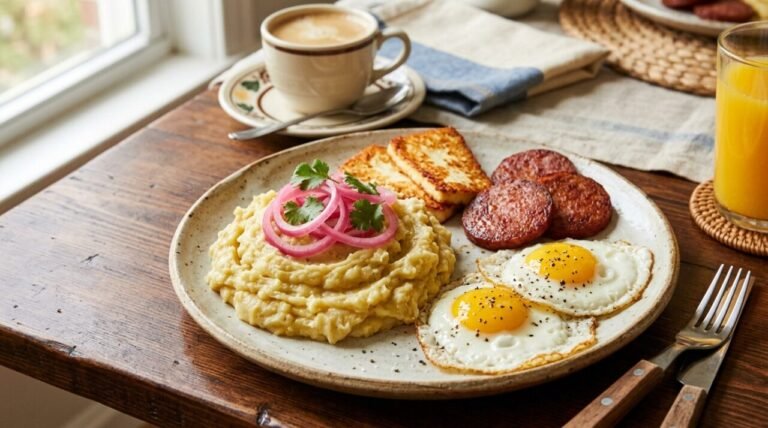
Mangú (Dominican) uses boiled green plantains mashed soft, served with pickled onions; mofongo fries them first and pounds in garlic and chicharrón.
You might also like
Leave a Reply
Join the conversation
You need an account to leave a comment.