A roux stirred to the color of dark chocolate, the holy trinity, andouille smoke, and whatever the water gave that day — gumbo is Louisiana in a pot, and the pot takes its time.
Nothing else in American cooking tastes like a proper gumbo — deep, smoky, faintly bitter in the best way, thick enough to stand a spoon at attention over rice. The dish is a living archive: African okra, French roux technique, Choctaw filé powder, Spanish and German sausage-making, all simmered together in the country’s most storied food city. The only entrance fee is the roux, and the roux only asks one thing: that you stand there and stir.
Before You Stir the Roux
- Gumbo is Louisiana’s state dish — a Creole-Cajun stew built on a dark roux, the “holy trinity,” and slow simmering.
- The name likely comes from ki ngombo — the West African word for okra, the dish’s original thickener.
- The roux must go dark — milk-chocolate minimum, dark-chocolate ideal — 30–45 patient minutes of stirring.
- The holy trinity (onion, bell pepper, celery) goes in the moment the roux is ready — it stops the browning.
- This version: chicken, andouille, and shrimp. Total time: about 2½ hours, most of it gentle simmering.
A Pot Big Enough for Four Continents
Gumbo simmered into existence in eighteenth-century Louisiana, and its ingredient list reads like the colony’s census. Enslaved West Africans brought okra (ki ngombo) and the stew-over-rice tradition that forms gumbo’s backbone. French colonists contributed the roux. The Choctaw ground sassafras leaves into filé powder, the region’s other great thickener. Spanish, German, and later Italian communities fed the pot their peppers, sausages, and seafood know-how. By the time New Orleans wrote it down, gumbo already belonged to everyone — which in Louisiana means everyone argues about it.
The arguments have geography. Creole (New Orleans) gumbo often includes tomatoes and leans seafood; Cajun (country) gumbo is darker, smokier, tomato-free, and heavier on fowl and sausage. Okra gumbo versus filé gumbo splits tables further — traditionally one thickener per pot, never both. All camps agree on two things: the trinity is holy, and a pale roux is a moral failing.
African okra, French roux, Choctaw filé — one pot, four continents, zero shortcuts.
Creole or Cajun? Okra or Filé?
| Creole (city) | Cajun (country) | |
|---|---|---|
| Tomatoes | Often yes | Never |
| Roux | Medium to dark | Dark to “almost burnt” |
| Stars | Shrimp, crab, oysters | Chicken, andouille, duck |
| This recipe | Cajun-style base with a shrimp finish — the crowd-pleaser | |
The Roux Is a Meditation With a Deadline
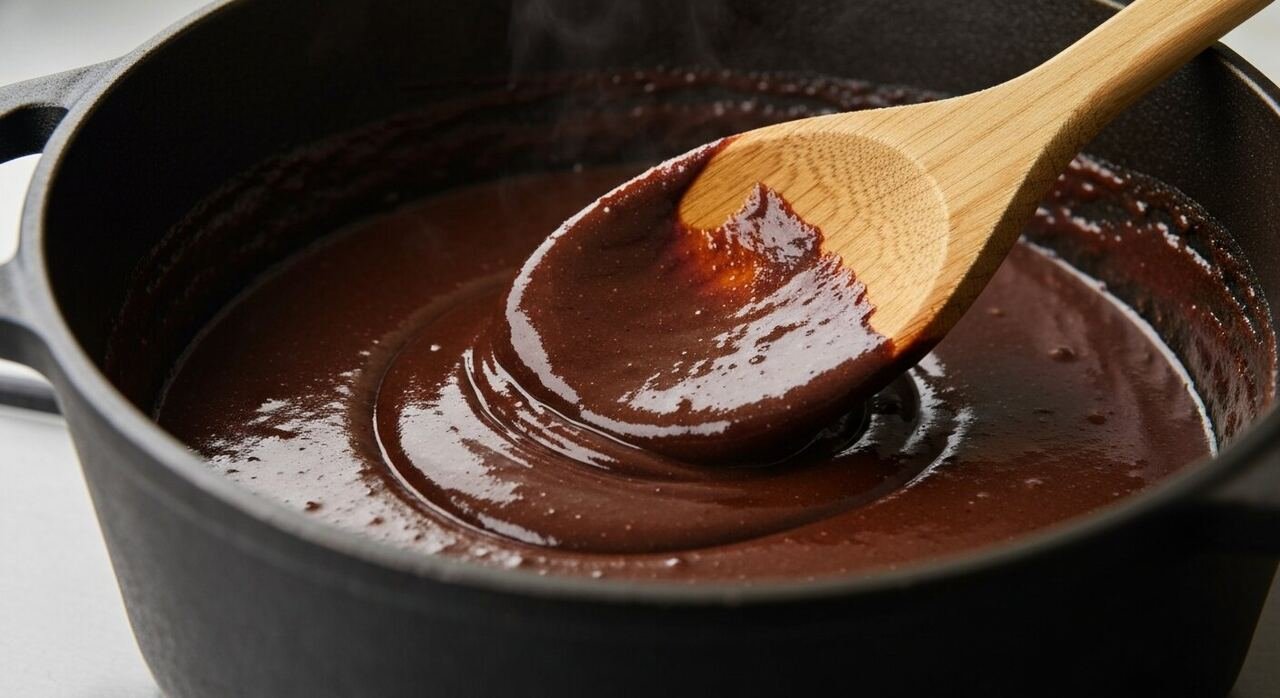
Equal parts oil and flour, medium-low heat, and a flat-edged spoon that never stops moving — that’s the whole ceremony. The roux will pass through blond, peanut butter, milk chocolate, and finally the deep mahogany that gives gumbo its soul, trading thickening power for flavor with every shade. It takes 30 to 45 minutes, it smells like toasting heaven, and it punishes a wandering eye instantly: black specks mean burnt, and burnt means starting over. Louisiana cooks call it “making groceries pay rent.” Pour a drink, put on music, and stir.
The moment the color is right, the trinity goes in — the vegetables’ moisture slams the brakes on the browning — then garlic, then stock added gradually, then the andouille and chicken for a long, lazy simmer. Shrimp joins only in the final five minutes. Serve it over rice with scallions, filé at the table for those who want it, and hot sauce within reach. Like every great stew, it’s better tomorrow — if it survives tonight.
Good to Know
Gumbo Law
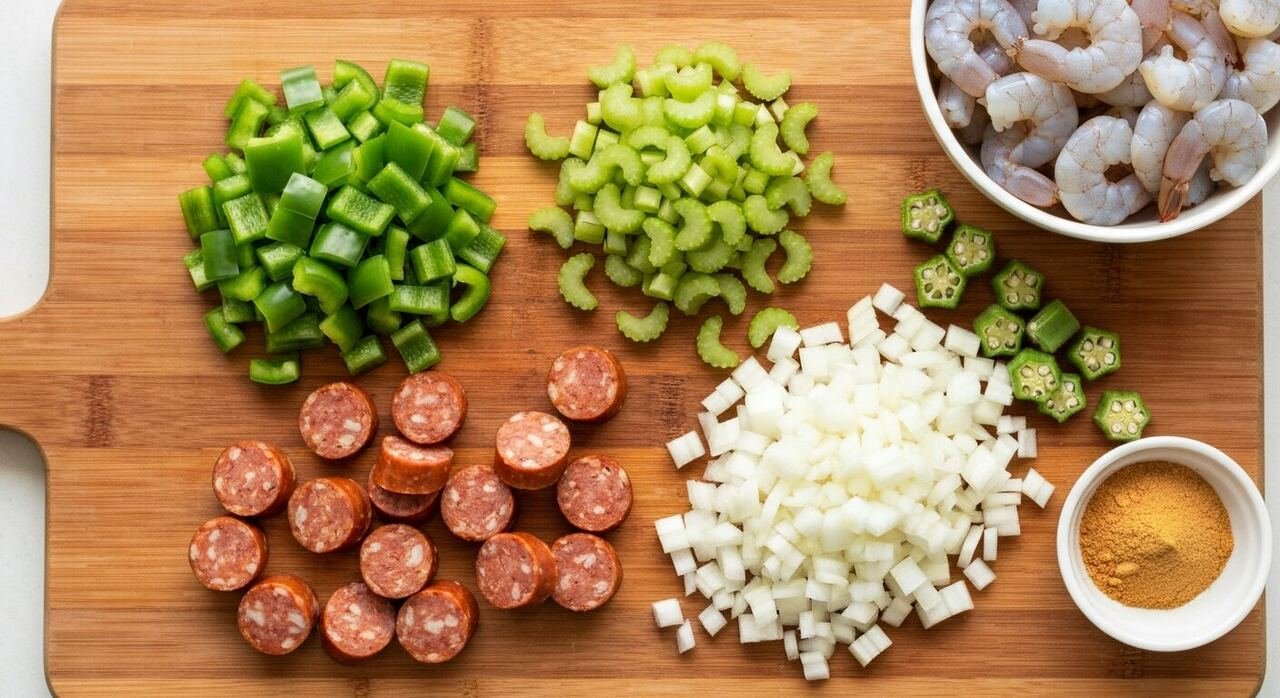
- Prep everything before the roux — once you start stirring, you cannot leave. The trinity chopped, stock warm, sausage sliced.
- Warm stock, added slowly — cold stock dumped into hot roux seizes it into lumps.
- Andouille matters — its smoke seasons the whole pot; smoked kielbasa is the honorable substitute outside Louisiana.
- One thickener — okra in the pot or filé at the table, traditionally never both.
- Skim the surface as it simmers — a dark roux releases oil, and ten seconds with a spoon keeps the gumbo silky, not greasy.
Watch It Made
Sometimes one minute of watching beats a page of reading — see the technique in motion, then scroll on for the full recipe card.

Video walkthrough via YouTube — tap to play (nothing loads until you do).
The Continental Table Recipe
Chicken, Andouille & Shrimp Gumbo
Ingredients
The roux & trinity
- ⅔ cup neutral oil + ⅔ cup flour
- 2 onions, 2 green bell peppers, 3 celery stalks — all diced
- 4 garlic cloves, minced
The pot
- 1½ lbs chicken thighs, in chunks
- 12 oz andouille sausage, sliced
- 1 lb shrimp, peeled
- 6 cups warm chicken stock
- 2 bay leaves, 1 tbsp Cajun seasoning, ½ tsp thyme
- Cooked white rice, scallions, filé powder & hot sauce to serve
Method
- Prep everything first — the roux will not let you leave.
- Make the roux: oil and flour over medium-low, stirring constantly 30–45 minutes to dark chocolate. Black specks = start over.
- Trinity in the moment the color is right; cook 5 minutes, then the garlic.
- Build: whisk in the warm stock gradually, add chicken, andouille, bay, and seasoning; simmer gently 1½ hours, skimming the surface oil.
- Shrimp last — final 5 minutes, just until pink.
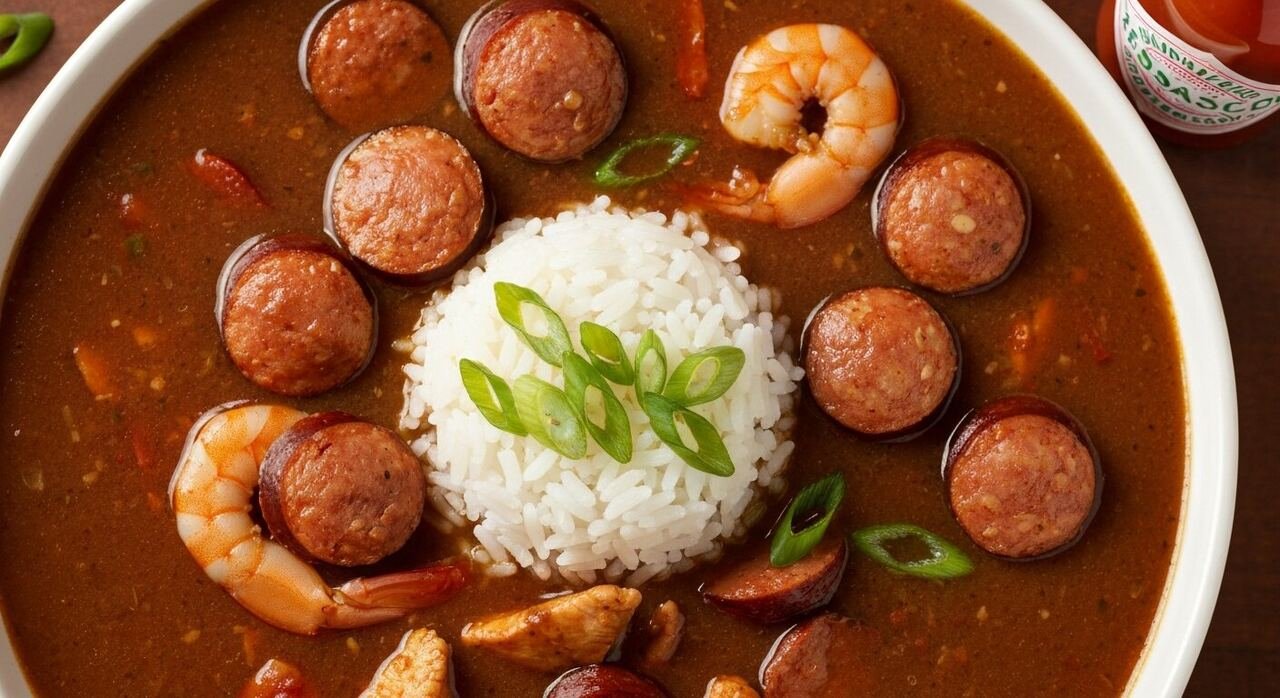
- Serve over rice with scallions, filé at the table, hot sauce in reach. Better tomorrow, if it lasts.
Stirred, Not Hurried
Gumbo can’t be rushed, and that’s the point of it. The forty minutes at the roux pot are the price of admission to one of America’s greatest dishes — and they’re strangely pleasant minutes, all aroma and anticipation. Feed a table with it on a cold Sunday, watch the pot empty, and you’ll understand why Louisiana treats this stew as both dinner and heritage. Save a bowl for tomorrow. Tomorrow’s is better.
Quick Answers
What is gumbo?
Louisiana’s signature stew: a dark roux, the “holy trinity” of vegetables, and meats or seafood simmered into a deep, smoky pot served over rice.
What is the holy trinity?
Diced onion, green bell pepper, and celery — the Cajun-Creole base that plays the role mirepoix plays in France.
How dark should gumbo roux be?
Milk chocolate at minimum, dark chocolate for real Cajun depth — 30–45 minutes of constant stirring over medium-low heat.
What’s the difference between Creole and Cajun gumbo?
Creole (New Orleans) often includes tomatoes and leans seafood; Cajun runs darker, smokier, tomato-free, and favors chicken and andouille.
What is filé powder?
Ground sassafras leaves, a Choctaw contribution — a thickener and earthy seasoning added at the table. Tradition says okra or filé, never both.
You might also like
Leave a Reply
Join the conversation
You need an account to leave a comment.