
A deep red broth, pork falling off the spoon, hominy blooming like little clouds — and a table full of garnishes so everyone builds their own perfect bowl. Pozole isn’t dinner; it’s an occasion.
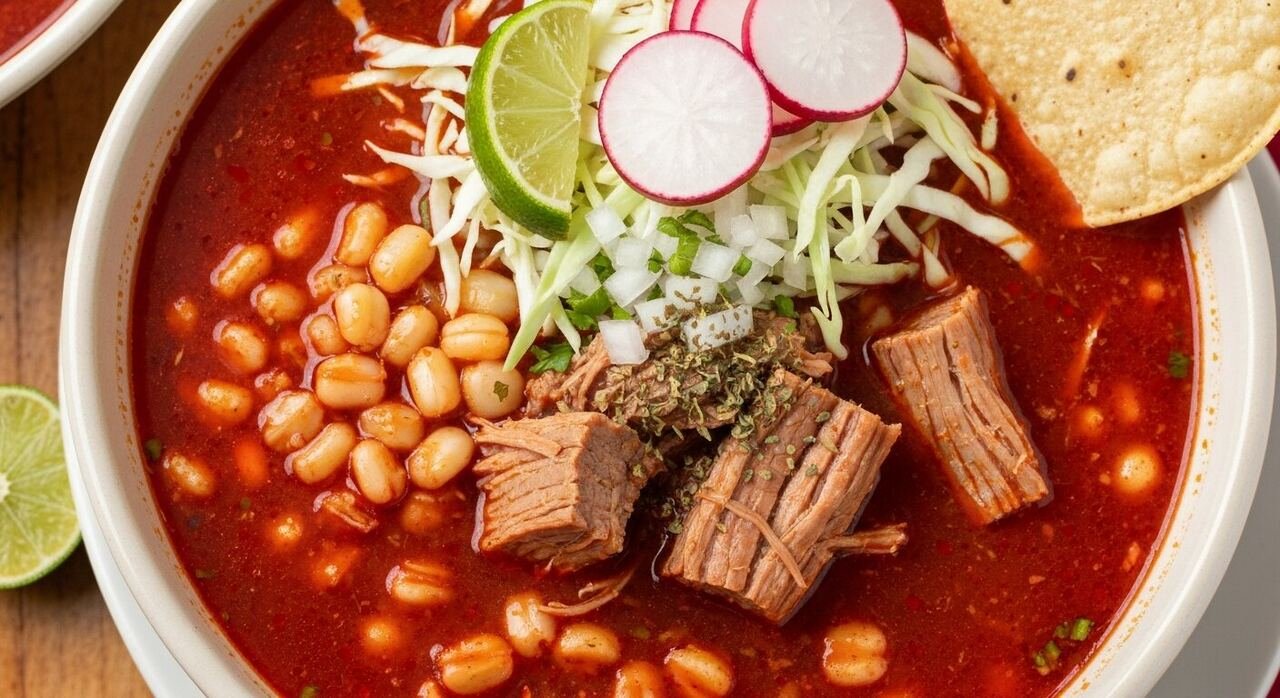
In Mexico, pozole marks the moments that matter: Independence Day, Christmas Eve, birthdays, the Sunday when the whole family finally shows up. The soup itself is patient, generous cooking — pork simmered tender, hominy corn swelling in a guajillo-ancho broth — but the genius is the finish: cabbage, radish, onion, oregano, and lime added raw at the table, so every spoonful lands hot, cold, rich, and crunchy at once.
Before You Toast a Chile
- Pozole is a pre-Hispanic Mexican soup built on hominy — corn kernels treated with lime (nixtamalized) until plump and chewy.
- This is pozole rojo, the guajillo-ancho red style of Jalisco and Guerrero; verde and blanco are its siblings.
- Pork shoulder is the classic cut — simmered about 2 hours until it shreds.
- The raw garnish bar is not optional: cabbage, radish, onion, oregano, lime, tostadas.
- It’s a one-pot dish that feeds a crowd and tastes even better tomorrow. Total time: about 2½ hours, mostly unattended.
The Ceremonial Corn Soup That Outlived Empires
Pozole is one of the oldest dishes still on Mexican tables — the Aztecs cooked ceremonial versions of it, and the word comes from the Náhuatl pozolli, “foamy,” for the way nixtamalized corn blossoms open in the pot. That corn is the soul of the dish: field corn soaked in mineral lime until the kernels shed their skins, swell, and take on hominy’s unmistakable chew and fragrance. The Spanish brought pork, which slid into the pot so naturally that five hundred years later the pairing feels inevitable.
Today pozole is Mexico’s festival soup. Every September 15th, pots of it simmer across the country for Independence Day; every region defends its color. Jalisco and Guerrero champion the red; Guerrero also claims the green (tomatillo and pepitas); Michoacán keeps it white and pure. What never changes is the ritual: a mountain of garnishes in the middle of the table and a stack of tostadas, everyone assembling their bowl exactly as their grandmother taught them — and quietly judging everyone else’s.
Five hundred years, three colors, one rule: the garnishes go on at the table.
Rojo, Verde, Blanco — The Three Flags of Pozole
| Style | The base | Flavor | Heartland |
|---|---|---|---|
| Rojo | Guajillo & ancho chiles | Deep, warm, gently smoky | Jalisco, Guerrero |
| Verde | Tomatillos, pepitas, herbs | Bright, tangy, nutty | Guerrero |
| Blanco | Plain pork-hominy broth | Clean, pure, garnish-led | Michoacán |
Patience in the Pot, Chaos at the Table
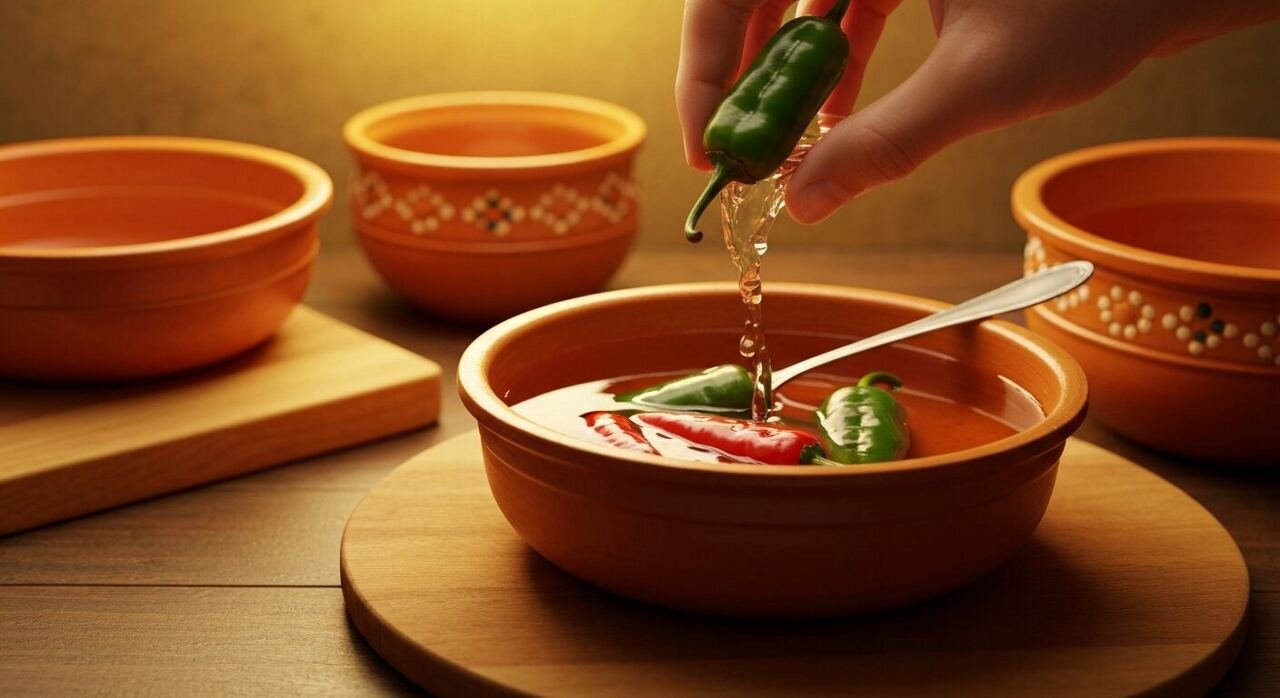
The pot work is honest and simple: pork shoulder simmered gently with garlic, onion, and bay until it surrenders (about two hours), the chile purée fried briefly to deepen it, then everything married with the hominy for a final half hour so the corn drinks the red broth. Skim as you go, salt at the end, and resist rushing the simmer — boiling toughens pork that gentle heat would have melted.
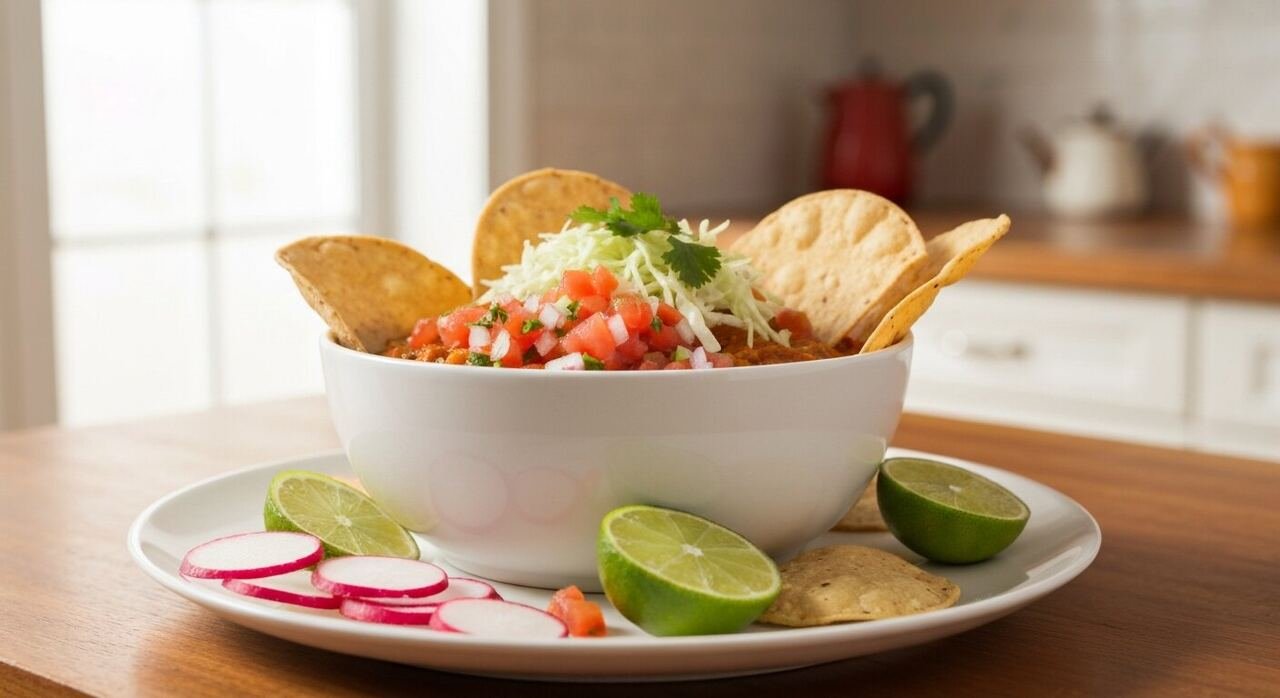
Then surrender control. Pozole is finished by the eater, not the cook: cold crisp cabbage against hot broth, peppery radish, sharp onion, oregano crushed between fingers, a hard squeeze of lime, and a tostada in the other hand. The contrast is the dish — a bowl served fully dressed from the kitchen is missing its second half.
Good to Know
Pozole Wisdom
- Canned hominy is legitimate — rinse it well and add it for the last 30 minutes. Dried hominy is glorious but needs an overnight soak and hours more simmering.
- Mix your pork cuts — shoulder for shreds plus a few ribs or a trotter for body gives the broth its traditional silkiness.
- Strain the chile purée — thirty extra seconds through a sieve means a silky red broth instead of gritty flecks.
- Better tomorrow — pozole deepens overnight and freezes beautifully; store garnishes separately, always fresh.
- It’s a naturally hearty, protein-rich bowl — the fresh garnish pile is what keeps it feeling bright instead of heavy.
Watch It Made
Sometimes one minute of watching beats a page of reading — see the technique in motion, then scroll on for the full recipe card.

Video walkthrough via YouTube — tap to play (nothing loads until you do).
The Continental Table Recipe
Pozole Rojo
Ingredients
The pot
- 3 lbs pork shoulder, in large chunks (plus 1 lb ribs, optional)
- 1 white onion, halved + 6 garlic cloves
- 2 bay leaves, 1 tbsp salt
- 2 cans (25 oz each) white hominy, rinsed
- 10 cups water
The red & the table
- 5 guajillo + 2 ancho chiles, stemmed & seeded
- 2 garlic cloves & ¼ onion (for the blend)
- 1 tsp dried oregano + ½ tsp cumin
- Garnish bar: shredded cabbage, sliced radishes, diced onion, oregano, lime, tostadas
Method
- Simmer the pork. Cover the pork, onion, garlic, bay, and salt with the water; skim, then simmer gently 2 hours until shreddable.
- Make the red. Toast the chiles 30 seconds, soak in hot water 15 minutes, then blend smooth with garlic, onion, oregano, cumin, and a cup of soaking liquid. Strain.
- Fry the purée. Cook the strained chile blend in a little oil 5 minutes until darkened and fragrant.
- Marry. Shred the pork into the pot, discard the aromatics, stir in the chile purée and hominy, and simmer 30 minutes more. Salt to taste.
- Set the table. Bowls of cabbage, radish, onion, oregano, lime wedges, and a stack of tostadas.
- Serve hot and let everyone build — broth first, garnishes at the table, tostada in hand.
The Pot That Gathers People
Pozole rewards exactly the things weeknight cooking punishes: a big pot, a slow afternoon, and more people than chairs. The work is gentle, the broth does the talking, and the garnish bar turns dinner into an event. Make it once for a holiday and it becomes the holiday — that’s how it’s survived five hundred years of them.
Quick Answers
What is pozole?
A traditional Mexican soup of hominy corn and pork in a seasoned broth — red (chile-based), green (tomatillo-based), or white — finished with raw garnishes at the table.
What is hominy?
Corn kernels treated with mineral lime (nixtamalized) until they swell, shed their skins, and develop a chewy texture and distinctive fragrance. It’s the defining ingredient of pozole.
Can I use canned hominy for pozole?
Yes — rinse it well and add for the final 30 minutes. Dried hominy tastes even deeper but needs an overnight soak and several hours of cooking.
What’s the difference between pozole rojo and verde?
Rojo is built on dried guajillo and ancho chiles (deep and warm); verde on tomatillos, pepitas, and herbs (bright and tangy). Blanco skips both and lets the garnishes lead.
What do you serve with pozole?
The garnish bar: shredded cabbage, sliced radishes, diced onion, dried oregano, lime wedges, and crisp tostadas — added raw at the table.


Leave a Reply
Join the conversation
You need an account to leave a comment.