
Corn tortillas soaked in chile sauce, wrapped around a filling, smothered in more sauce and cheese — the name literally means “seasoned with chili,” and that’s the whole idea.
Enchiladas are one of Mexico’s oldest and most beloved dishes — and one of the most misunderstood outside the country, where half the internet can’t tell them apart from a burrito. But a real enchilada is its own thing: a soft corn tortilla, dipped in chile sauce, rolled around a filling, and baked under even more sauce and melted cheese. Simple on paper, and the gap between good and great comes down to one technique most people skip.
Before You Roll the First One
- “Enchilada” literally means “seasoned with chili” — the chile sauce is the whole point, not a topping.
- The base is always a corn tortilla, softened, rolled around a filling, and baked in sauce; you eat it with a fork.
- The sauce defines the style: rojas (red), verdes (green), suizas (creamy), or de mole.
- The one secret restaurants rely on: soften the tortillas in warm oil first, so they don’t crack or go soggy.
- Not a burrito, not a taco — enchiladas are sauced and baked, not wrapped and handheld.
What “Enchilada” Actually Means
The word tells you everything. Enchilada is the past participle of the Spanish verb enchilar — “to season or coat with chili.” So an enchilada is, literally, something that has been chili-ed. That single fact clears up most of the confusion about the dish: the sauce isn’t a garnish, it’s the definition. A tortilla without the chile sauce simply isn’t an enchilada.
The dish is genuinely ancient. Long before the Spanish arrived, the Maya and Aztec were eating corn tortillas rolled around fillings and dipped in chili sauces — the direct ancestor of what’s on the plate today. The modern name appears in 19th-century Mexican cookbooks, but the idea goes back centuries: take the two things Mexico has always had in abundance, corn and chiles, and put them together. Everything since has been variation.
The sauce isn’t a topping on an enchilada. The sauce is what makes it one.
Red, Green, or Suizas? The Sauce Is the Dish
Because the sauce is the enchilada, choosing it is the biggest decision you’ll make. There are four you’ll see again and again, and they’re less a ranking than a mood. Rojas lean deep and smoky; verdes are bright and tangy; suizas are the rich, creamy, cheese-blanketed ones; and de mole bring the complex, chocolate-tinged depth of Mexico’s most famous sauce.
| Style | Sauce base | Character |
|---|---|---|
| Enchiladas Rojas | Dried red chiles (guajillo, ancho) | Deep, smoky, mildly spicy |
| Enchiladas Verdes | Tomatillos & green chiles | Bright, tangy, fresh |
| Enchiladas Suizas | Green sauce + cream & melted cheese | Rich, creamy, mild |
| Enchiladas de Mole | Mole (chile, chocolate, spices) | Complex, sweet-savory, deep |
The Secret to Restaurant-Style Enchiladas
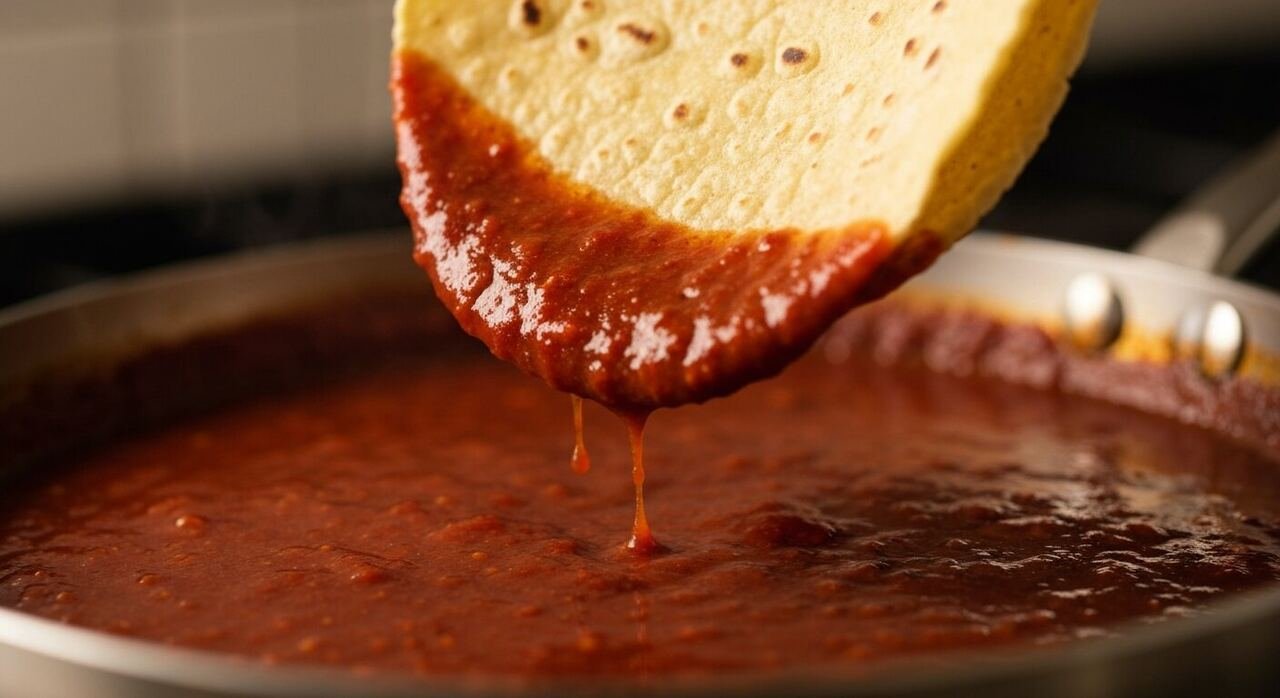
Here’s the thing nobody tells you, and the reason homemade enchiladas so often disappoint: you have to soften the tortillas first. Cold corn tortillas crack and split the moment you roll them; un-treated ones soak up sauce and collapse into mush. The fix is what every good Mexican kitchen does — pass each tortilla through a little hot oil for a few seconds until it’s pliable and just starting to blister. Now it rolls without breaking and holds its structure under the sauce. That one step is the whole secret.
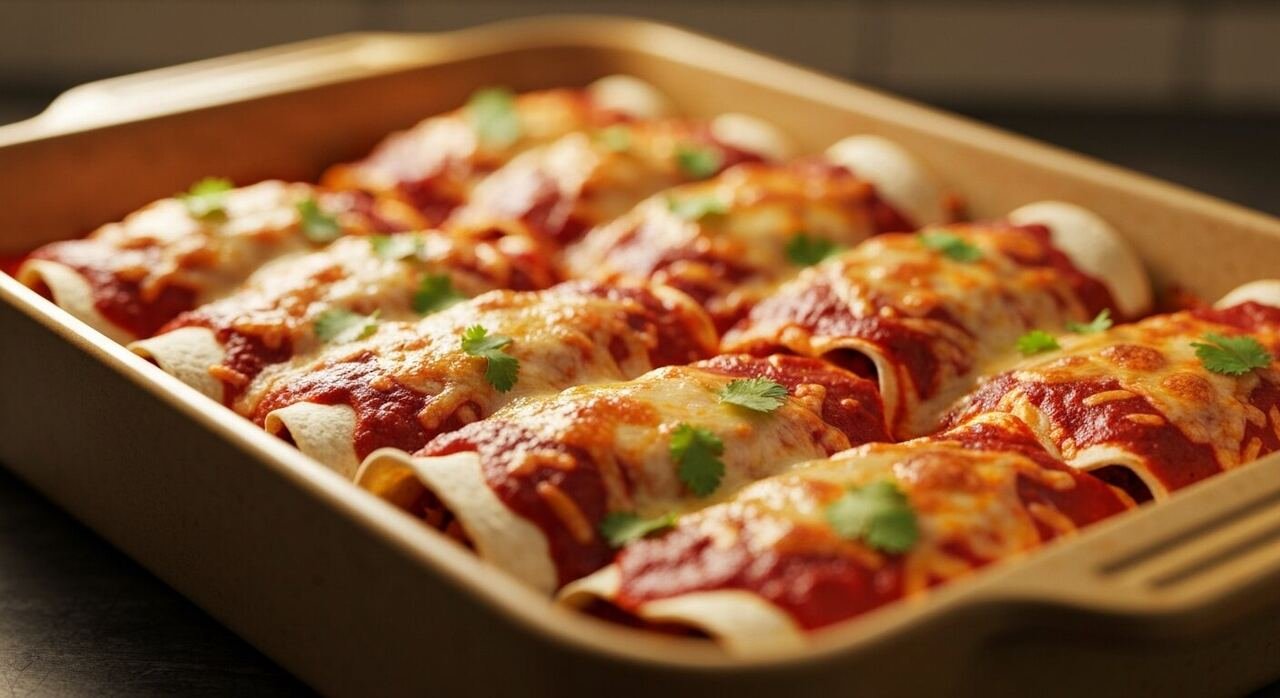
The other mistakes are easy to avoid once you know them: don’t drown the enchiladas in sauce before baking (a coat, not a bath), don’t bake them so long they turn to paste (20 minutes is plenty), and don’t skip warming the tortillas because you’re in a hurry. Get those right and yours will taste like the ones you order out — because you’ll finally be making them the same way.
Lighter Table
Smart Swaps: Lighter Enchiladas
- Fill heavier, cheese lighter — more shredded chicken, beans, or vegetables, and a thinner layer of cheese on top.
- Warm, don’t deep-fry — a quick pass in a dry hot pan or a light spray softens the tortillas with far less oil.
- Lean on the sauce and fresh toppings — chile sauce, onion, cilantro, and a little crema carry the flavor without much fat.
- Watching carbs? Corn tortillas are the base here, so keep portions modest and load up on the protein filling.
- This is general guidance, not medical advice — anyone managing diabetes or another condition should check portions with a doctor or dietitian.
Watch It Made
Sometimes one minute of watching beats a page of reading — see the technique in motion, then scroll on for the full recipe card.

Video walkthrough via YouTube — tap to play (nothing loads until you do).
The Continental Table Recipe
Chicken Enchiladas Rojas
Ingredients
The red sauce
- 4 guajillo chiles, stemmed & seeded
- 2 ancho chiles, stemmed & seeded
- 2 garlic cloves & ¼ white onion
- 1 tsp oregano, ½ tsp cumin
- 2 cups chicken stock, salt
- (or 3 cups good store-bought red enchilada sauce)
Fill & finish
- 12 corn tortillas
- ¼ cup oil, for softening
- 3 cups cooked shredded chicken
- 2 cups shredded Jack or Oaxaca cheese
- ½ onion, diced
- Crema, queso fresco, cilantro
Method
- Make the sauce. Toast the chiles briefly, soak 15 minutes, then blend with garlic, onion, oregano, cumin, and stock until smooth. Strain, simmer 10 minutes, and salt.
- Soften the tortillas. Pass each corn tortilla through a little hot oil for a few seconds per side until pliable — the step that keeps them from cracking or turning to mush.
- Fill & roll. Dip a tortilla in the sauce, lay chicken and a little onion down the center, roll, and set seam-side down in a baking dish.
- Assemble. Repeat, packing them snugly. Pour the remaining sauce over the top and scatter with cheese.
- Bake. At 375°F for about 20 minutes, until bubbling and melted — no longer, or they soften too far.
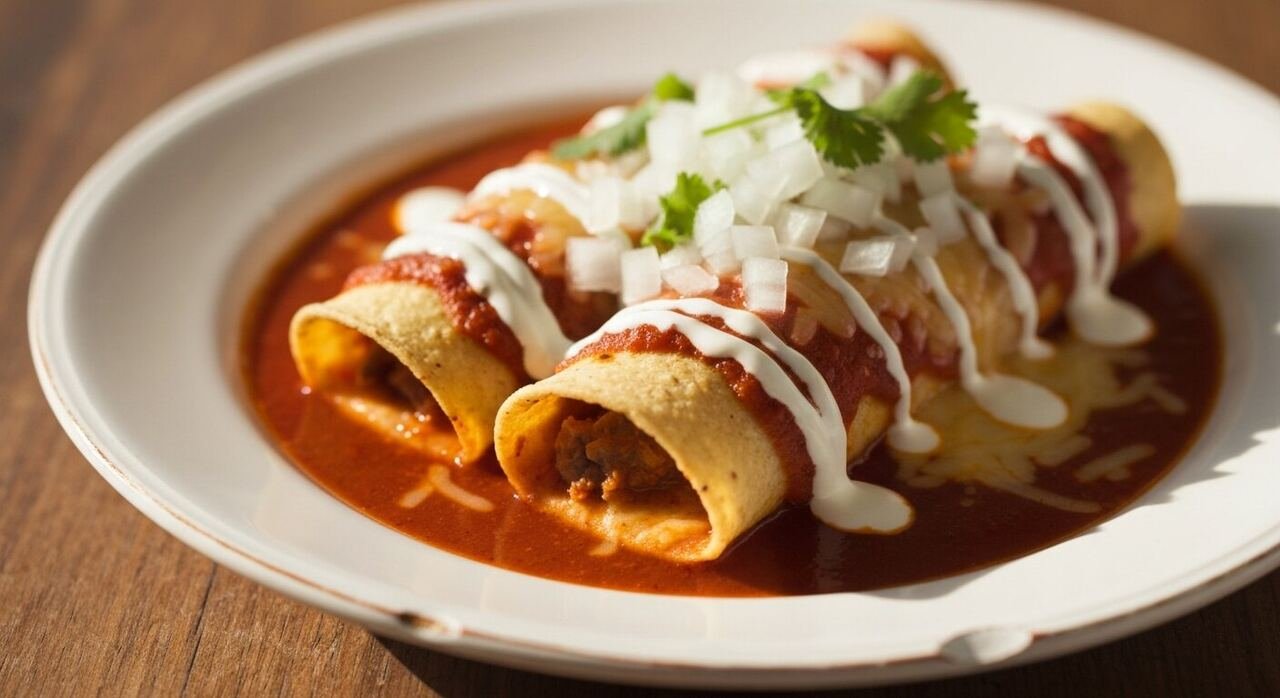
- Finish. Drizzle with crema and add queso fresco, diced onion, and cilantro. Serve hot.
Enchilada vs Burrito vs Taco
It’s the question that trips up almost everyone, so here’s the clean answer. All three start with a tortilla, but what happens next is completely different — and an enchilada is the only one that’s sauced and baked rather than wrapped and eaten by hand.
| Dish | Tortilla | How it’s served |
|---|---|---|
| Enchilada | Corn, sauced & baked | On a plate, with a fork |
| Burrito | Large flour, wrapped | Handheld, usually no sauce |
| Taco | Corn or flour, folded | Handheld and quick |
Why Enchiladas Never Go Out of Style
Enchiladas endure because they’re infinitely adaptable without ever losing their identity. Change the sauce, change the filling, stack them or roll them, make them for a weeknight or a celebration — they’re still unmistakably enchiladas. They’re built from the two ingredients at the heart of Mexican cooking, corn and chiles, and that’s exactly why they’ve stayed on the table for centuries. Learn the one tortilla trick and the rest is yours to play with.
Quick Answers
What is traditionally in an enchilada?
A corn tortilla rolled around a filling — classically shredded chicken, cheese, beef, or beans — coated in chile sauce, topped with more sauce and cheese, and baked.
What are good fillings for enchiladas?
Shredded chicken is the classic. Cheese, seasoned beef, pork, or beans all work beautifully, usually with a little diced onion.
What’s the difference between an enchilada and a burrito?
An enchilada is a corn tortilla sauced and baked, eaten with a fork. A burrito is a big flour tortilla wrapped and eaten by hand, usually without sauce.
What’s the secret to enchiladas that don’t fall apart?
Soften the corn tortillas in a little hot oil before rolling. Cold tortillas crack; un-softened ones go soggy. This one step is what restaurants do and home cooks skip.
What’s the easiest, “lazy” way to make enchiladas?
Stack them like a casserole — layer tortillas, filling, sauce, and cheese in a dish instead of rolling each one. Same flavor, far less work.
Are enchiladas OK if I’m watching my blood sugar?
They’re corn-tortilla based, so keep portions modest, go heavier on protein and vegetables, and lighter on cheese and sauce. Check with your doctor or dietitian for what fits your needs.
You might also like
Leave a Reply
Join the conversation
You need an account to leave a comment.