
Unwrap the warm husk, breathe the corn-and-chile steam, and understand instantly why making tamales is how Mexican families turn cooking into a party — the tamalada.
A tamale is deceptively simple — seasoned masa and a savory filling steamed inside a corn husk — and quietly one of the oldest prepared foods in the Americas. What makes them special isn’t any single step but the float: masa beaten with lard until it’s light enough to bob in water, giving that tender, almost fluffy bite. They take an afternoon, which is exactly the point. Nobody makes six tamales; you make sixty, with family, assembly-line style, and freeze the spoils.
Before You Soak the Husks
- Tamales are pre-Columbian — steamed masa parcels eaten across Mesoamerica for over 3,000 years, portable food for armies and travelers.
- The masa is beaten with lard until it floats — the single test that guarantees light, tender tamales.
- Use masa harina para tamales (coarser than the tortilla grind) and real lard for authentic flavor and texture.
- They’re steamed upright, open-end up, 75–90 minutes — done when the masa peels cleanly from the husk.
- A tamalada (tamale-making party) is the traditional way — many hands, big batch, freeze the rest. Total: about 3 hours.
Three Thousand Years of Wrapped Corn
Tamales predate almost everything else on a Mexican table. Mesoamerican cultures — Maya, Aztec, and earlier — were steaming masa in leaves and husks millennia ago; the Náhuatl word tamalli simply means “wrapped.” They were ritual food and travel food at once: portable, durable, offered to gods and packed for armies. When the Spanish arrived they documented tamales in astonishing variety, and that variety never collapsed — it multiplied.
Today every region wraps its own: Oaxaca steams them flat in banana leaves with black mole; the Yucatán bakes hearty mucbipollo underground for Día de Muertos; the north keeps them small and pork-red; sweet pink tamales turn up at breakfast. They’re bound to the calendar — Christmas, Candlemas (Día de la Candelaria on February 2nd, when whoever found the baby figure in the Rosca de Reyes must provide the tamales), birthdays, funerals. To make them is to mark an occasion, which is why they’re almost never made alone.
The word just means “wrapped” — three thousand years later it means “the whole family’s here.”
A Nation of Tamales
| Style | Wrapper | Signature |
|---|---|---|
| Rojos (this recipe) | Corn husk | Red guajillo-ancho pork; the everyday classic |
| Verdes | Corn husk | Salsa verde chicken, bright and tangy |
| Oaxaqueños | Banana leaf | Flat, silky, filled with dark mole |
| Dulces | Corn husk | Sweet pink masa with raisins — a breakfast treat |
| Rajas con queso | Corn husk | Cheese with strips of poblano chile (vegetarian) |
The Float Test Is the Whole Secret
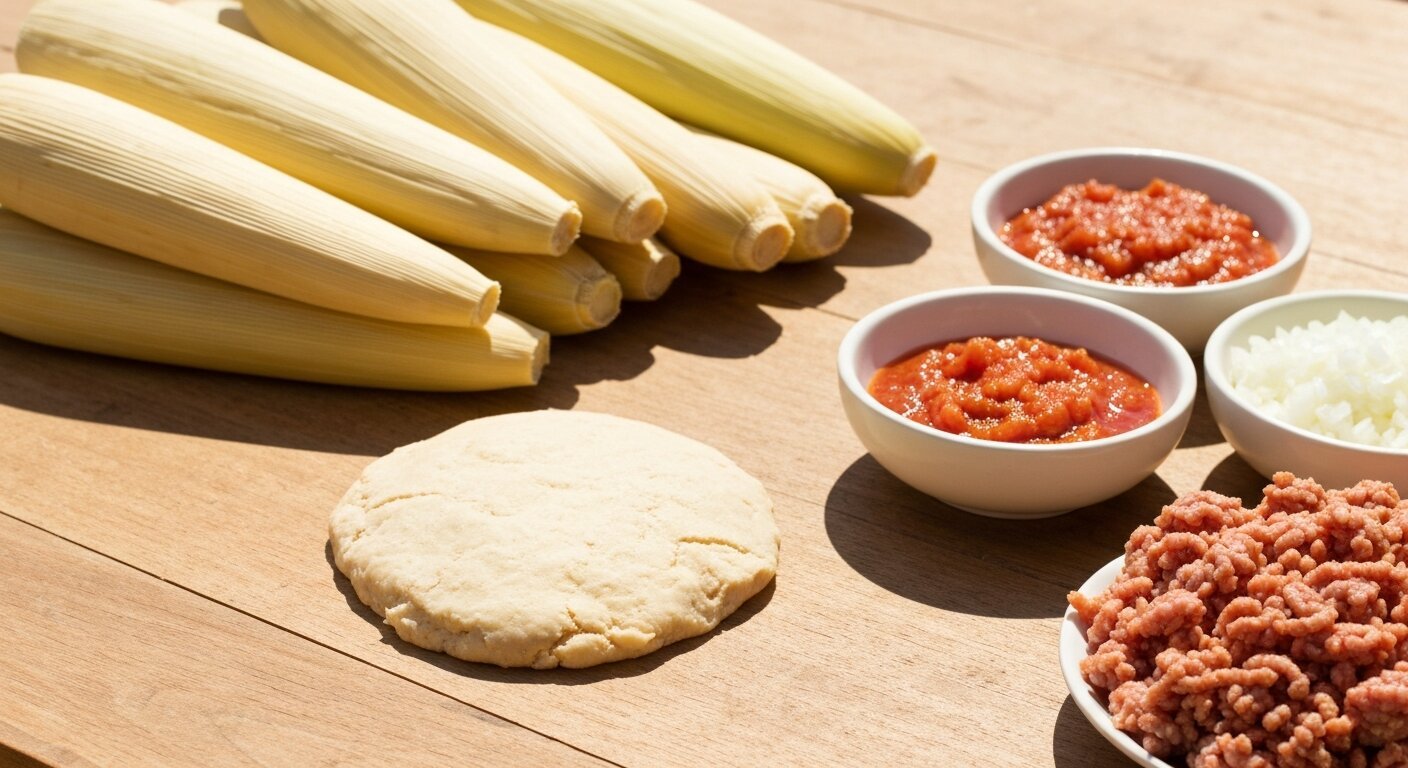
Everything about a great tamale comes down to the masa, and the masa comes down to air. Beat the lard until it’s pale and fluffy, then work in the masa harina, leavening, salt, and warm broth, beating until the mixture is soft, spreadable, and light. The famous test: drop a pea-sized ball into a glass of cold water. If it floats, you’re done — the masa is aerated enough to steam up tender. If it sinks, beat in more air and a splash of broth and test again. This one trick is the border between fluffy tamales and dense ones.
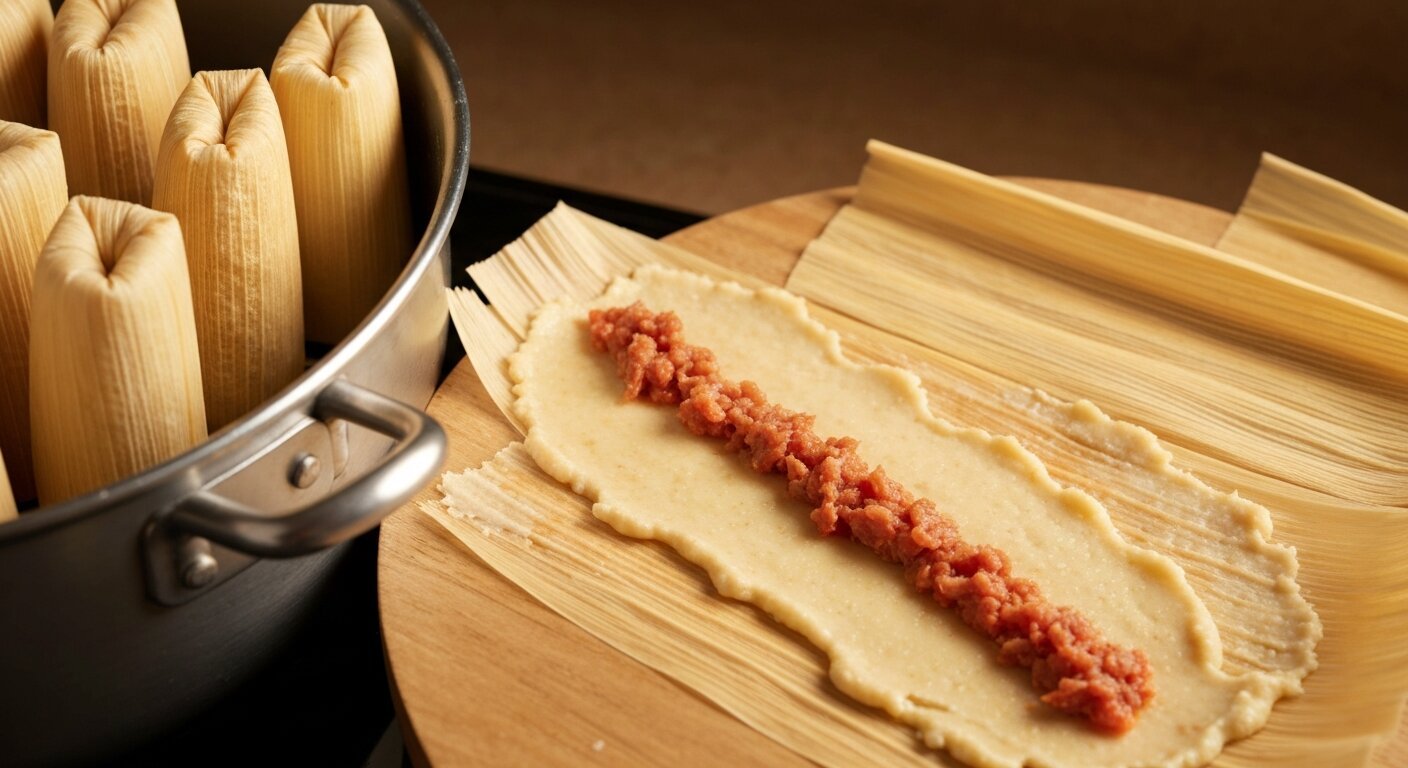
Assembly is pure rhythm once you start: spread a thin layer of masa over the smooth side of a soaked husk, lay a line of filling down the middle, fold the sides so the masa edges meet and enclose it, then fold up the empty bottom. Stand them upright in a steamer, open end up, packed snugly so they hold their shape. Steam 75–90 minutes — keep the water simmering and don’t let it run dry — and they’re ready when the masa pulls cleanly from the husk. If it sticks, they need a few more minutes. Like pozole, they only get better the next day.
Good to Know
Tamale Wisdom
- Lard matters — real lard gives the classic flavor and float. Vegetable shortening works for a vegetarian batch but tastes plainer.
- Don’t overfill — a thin masa layer and a modest filling line steam evenly; overstuffed tamales cook unevenly and burst.
- Save husk strips — tear a few soaked husks into ties, or to cushion the steamer bottom so tamales don’t sit in water.
- They freeze perfectly — steam, cool, freeze; reheat by re-steaming or microwaving wrapped in a damp paper towel. This is the whole reason to make a huge batch.
- The float test isn’t optional — it’s the difference between the tamales you remember and the ones you don’t.
Watch It Made
Sometimes one minute of watching beats a page of reading — see the spread-fill-fold rhythm in motion, then scroll on for the full recipe card.

Video walkthrough via YouTube — tap to play (nothing loads until you do).
The Continental Table Recipe
Mexican Red Pork Tamales
Ingredients
The masa
- 4 cups masa harina para tamales
- 1⅓ cups lard (or shortening)
- 1 tbsp baking powder
- 2 tsp salt
- 3–4 cups warm broth
- 25–30 corn husks, soaked 30 min
The red pork
- 2 lbs pork shoulder, simmered & shredded
- 5 guajillo + 2 ancho chiles, stemmed & seeded
- 3 garlic cloves, ½ onion
- 1 tsp cumin, 1 tsp oregano, salt
- 1 cup pork broth
Method
- Cook the pork. Simmer with onion, garlic, and salt ~90 min until shreddable; reserve broth and shred.
- Make the red sauce. Toast and soak the chiles, blend with garlic, onion, spices, and broth; strain and simmer with the pork 10 min.
- Beat the masa. Whip the lard fluffy, add masa harina, baking powder, salt, and warm broth to a soft dough — until a pea of it floats in water.
- Assemble. Spread 3 tbsp masa thinly on each husk, add a line of pork, fold the sides so masa meets, then fold up the bottom.
- Steam upright open-end up, 75–90 min, until the masa peels cleanly from the husk.
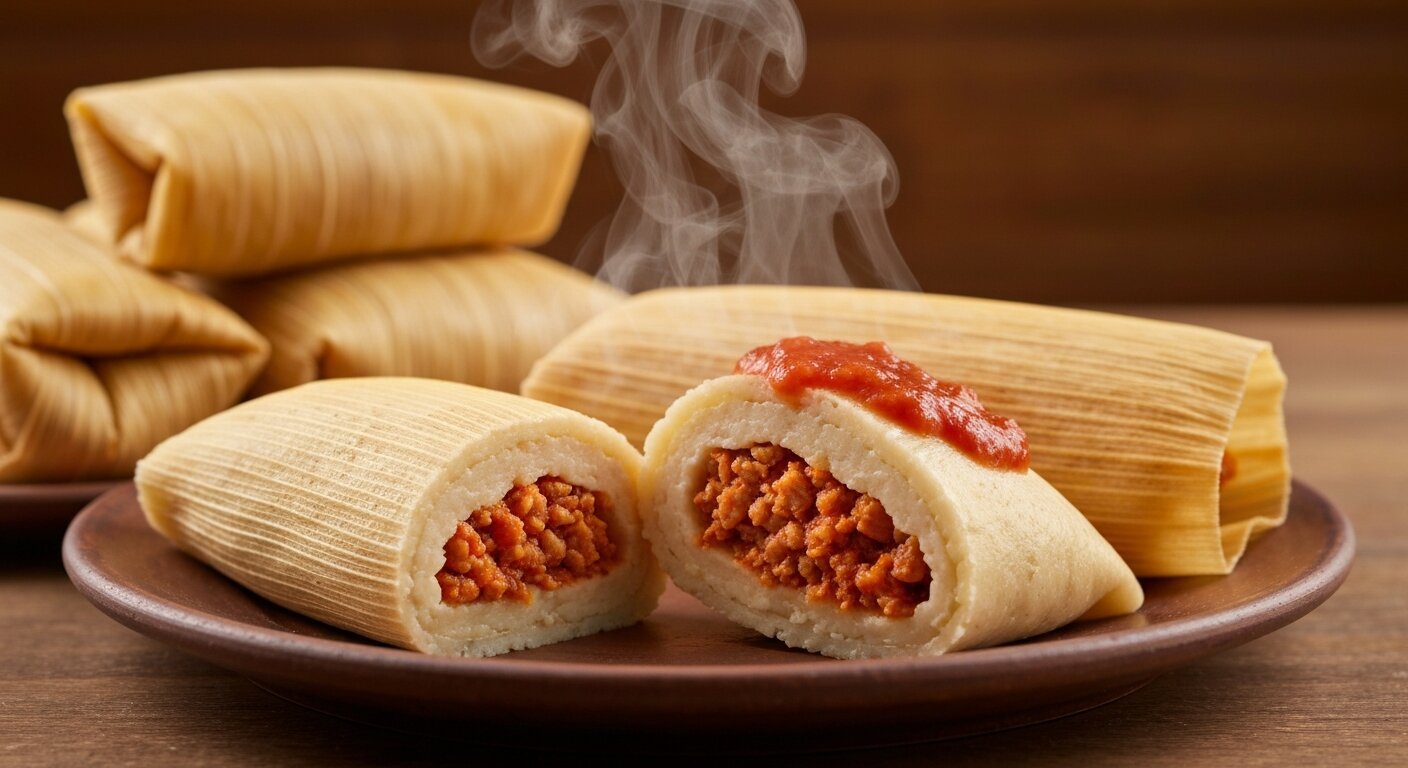
- Rest 10 minutes, then unwrap and serve — with extra salsa and, if you like, more red sauce.
Worth the Afternoon
Tamales are a project, and they’re meant to be — the payoff isn’t just the eating but the making, ideally with people you like and an assembly line going. Beat the masa until it floats, keep the fillings modest, steam them patiently, and freeze the batch you can’t finish. Master one filling and the rest of Mexico’s tamale universe — verde, mole, sweet, cheese — is just a swap away. Start with the red.
Quick Answers
What are tamales?
A pre-Columbian Mexican dish of seasoned corn masa and a filling, wrapped in a corn husk or banana leaf and steamed. The word tamalli means “wrapped.”
What is the float test for tamale masa?
Drop a small ball of beaten masa into cold water — if it floats, it’s aerated enough for light, tender tamales. If it sinks, beat in more air and broth.
What masa do I use for tamales?
Masa harina para tamales — a coarser grind than tortilla masa. Beat it with real lard for the classic flavor and texture.
How do you know when tamales are done?
When the masa pulls cleanly away from the husk after steaming 75–90 minutes. If it sticks, steam a few minutes longer.
Can you freeze tamales?
Perfectly — steam, cool, and freeze. Reheat by re-steaming or microwaving wrapped in a damp paper towel. It’s why batches are always huge.
You might also like
Leave a Reply
Join the conversation
You need an account to leave a comment.