It’s not laziness. It’s not sloppiness. Folding a New York slice is a century-old ritual with real science, real history, and very strong opinions behind it.
The first time I watched someone fold a New York slice in half and take a bite the size of a small country, I thought they’d lost their mind. Where I come from, you eat pizza with two hands, sitting down, like a civilized human being. You do not crease it like a newspaper and shove it toward your face while hailing a cab.
But here’s what I’ve learned since then: the fold is not reckless, and it is not lazy. It is one of the most deliberate, satisfying, and honestly correct ways to eat a pizza that exists. Once you understand why New Yorkers do it — the history, the physics, the sheer practicality — you’ll fold your next slice too. No arguments.
Key Takeaways
- The fold is a New York tradition born from necessity, not a shortcut.
- NY-style crust is engineered to fold: thin, flexible, with a crisp outer layer.
- New Yorkers eat standing up, walking, on the go — the fold is functional design.
- The folded Italian ancestor of NY pizza is the calzone — and yes, they’re related.
- Folding concentrates the flavors and keeps toppings from sliding. It actually tastes better.
A City That Eats on Its Feet
To understand the fold, you first have to understand New York City. This is a place where lunch is 20 minutes, where the sidewalk is your dining room, and where standing still for too long makes other people visibly annoyed. Time is the rarest luxury in Manhattan, and pizza had to adapt to that reality.
New York-style pizza as we know it traces back to the early 1900s, when Neapolitan immigrants brought their dough-making traditions to the Lower East Side. The first American pizzeria, Lombardi’s, opened in 1905 on Spring Street. But the pizza that emerged in New York wasn’t quite like what they’d left behind in Naples. It was bigger, thinner, and built for movement.
“In New York, the slice is not a meal. It is a mode of transportation.”
You couldn’t sit at a table for every slice. You needed to eat it walking to the subway, between meetings, standing at a counter on your lunch break. The fold solved the drip problem, the flop problem, and the both-hands-occupied problem all in one elegant move. It’s urban design disguised as food.
The Crust That Was Born to Fold
Here’s where it gets genuinely interesting — and where a lot of people get it wrong. The fold only works because of how New York-style crust is made. This isn’t just any pizza dough; it’s a specifically engineered material.
The Crust Breakdown
Why NY Dough Folds Without Cracking
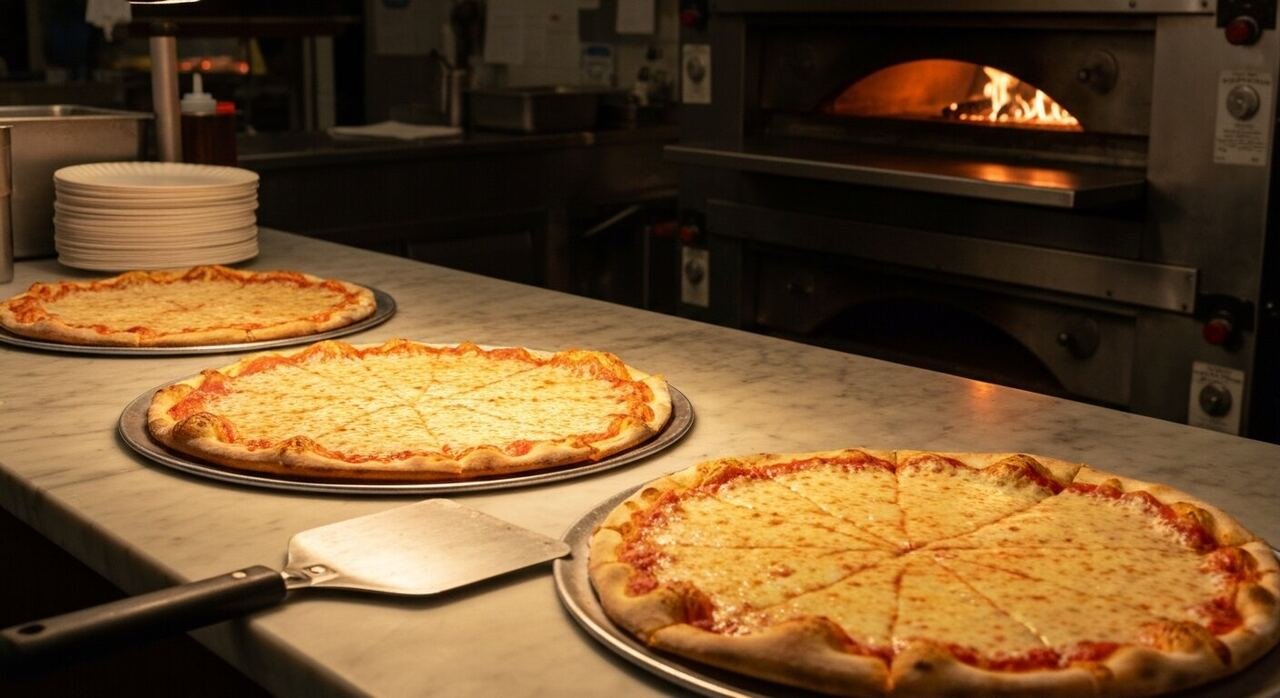
NY-style dough uses high-gluten bread flour, a long cold fermentation (often 24 to 72 hours), and is stretched, not rolled, into thin rounds. The result is a crust with a crisp undercarriage, a slightly chewy interior, and just enough structural give to fold without cracking — flexible where it needs to be, sturdy where it counts.
Compare that to pan pizza (thick, bready, would snap if you tried to fold it), deep dish (do not even think about it), or a thin cracker crust (it’ll shatter like glass). The NY-style crust hits a narrow window of flexibility that makes the fold not just possible but natural. It wants to be folded.
What’s the difference between NY-style and original Neapolitan crust? Neapolitan is softer, wetter, and designed to be eaten with a fork and knife at a table. NY took the concept and made it road-ready — same spirit, built for a different life.
Which Pizzas Can You Actually Fold?
| Pizza style | Crust character | Foldable? |
|---|---|---|
| New York | Thin, flexible, crisp underside | Yes — born for it |
| Neapolitan | Soft, wet, delicate | No — fork & knife |
| Pan / Sicilian | Thick and bready | No — it’d snap |
| Deep dish | Very thick, deeply sauced | Never |
| Cracker-thin | Brittle and rigid | No — it shatters |
What Actually Happens When You Fold
Beyond the practical benefits, folding does something unexpected: it makes the pizza taste better. I know that sounds like pizza-evangelist nonsense, but bear with me.
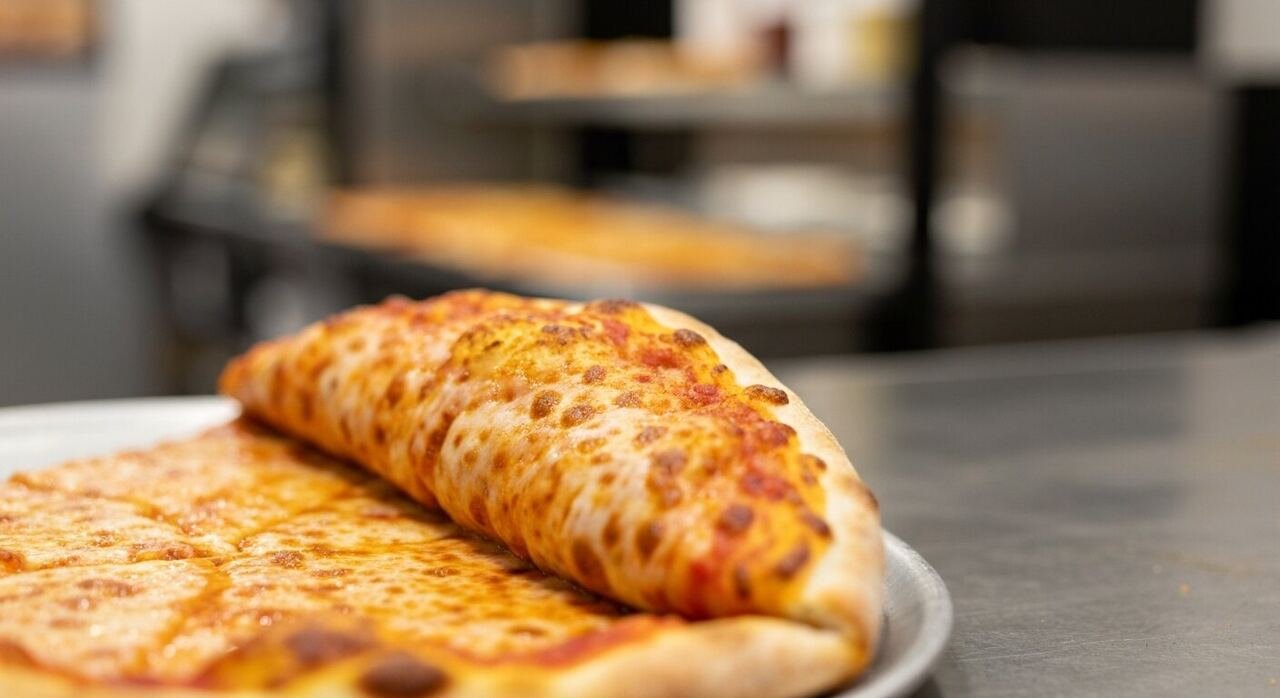
When you fold a slice, you create a doubled layer of crust at the base. The sauce and cheese that were on top are now enclosed, concentrating their heat and moisture inside a kind of impromptu pocket. Each bite delivers crust, cheese, and sauce simultaneously, in a ratio that’s hard to achieve eating a flat slice.
You also solve the notorious pizza flop — that humiliating moment when a wide, unsupported slice droops under its own weight and deposits half its toppings on your shirt. The fold eliminates structural failure entirely. It’s engineering disguised as table manners.
The Right Way to Do It (Yes, There Is One)
Since we’re being opinionated here: the fold goes crust-out, cheese-in. You pick up the slice by the crust end, pinch the two sides together so the point aims forward, and fold lengthwise — top meeting bottom, like closing a book. The structural crease runs along the center of the slice, not across it.
Do not fold it crosswise. That’s not a fold, that’s a mistake. Do not fold it toward the crust end — you’ll lose your handle. The point always leads. One hand, thumb on the bottom, fingers on top, crust end in your palm. Walk forward. Bite. Repeat.
“The fold is not just about eating pizza. It is about not stopping when you are already somewhere else.”
That’s it. A century of New York ingenuity, compressed into a single gesture that takes about half a second to execute and somehow makes every slice better than it was before you folded it.
The Italian Cousin: What Is a Folded Pizza Actually Called?
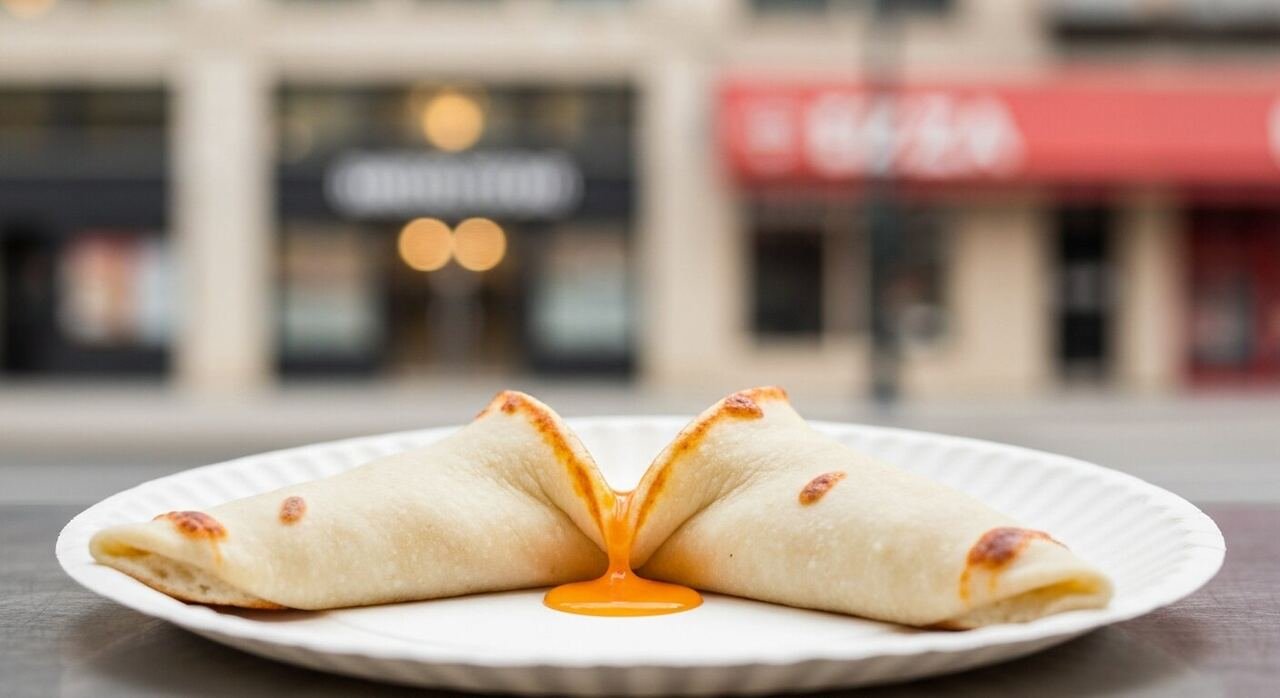
This is where it gets delightfully complicated. When you ask what a folded Italian pizza is called, the obvious answer is a calzone — from the Italian word for stocking or trouser leg, referring to the way the dough wraps around the filling. Calzones are made from pizza dough, folded over a ricotta-and-mozzarella filling, and baked or fried. Same DNA, very different execution.
Is calzone dough the same as pizza dough? Mostly yes — the base ingredients are nearly identical. But calzone dough is often slightly thicker to hold the filling without leaking, while a pizza crust is stretched much thinner to achieve that foldable structure. And while pizza gets its toppings exposed to direct heat, the calzone seals them inside, creating a steamed interior that’s richer and denser than any open-face slice.
Then there’s the stromboli, often confused with the calzone but different: a stromboli is rolled like a log, an Italian-American creation, while a calzone is folded into a half-moon. The NY fold is more casual still — not sealed, not baked that way, nothing hidden inside. It’s a single slice of regular pizza, bent in half at the moment of eating. Simple. Honest. Perfect.
Make Your Own Foldable NY Slice
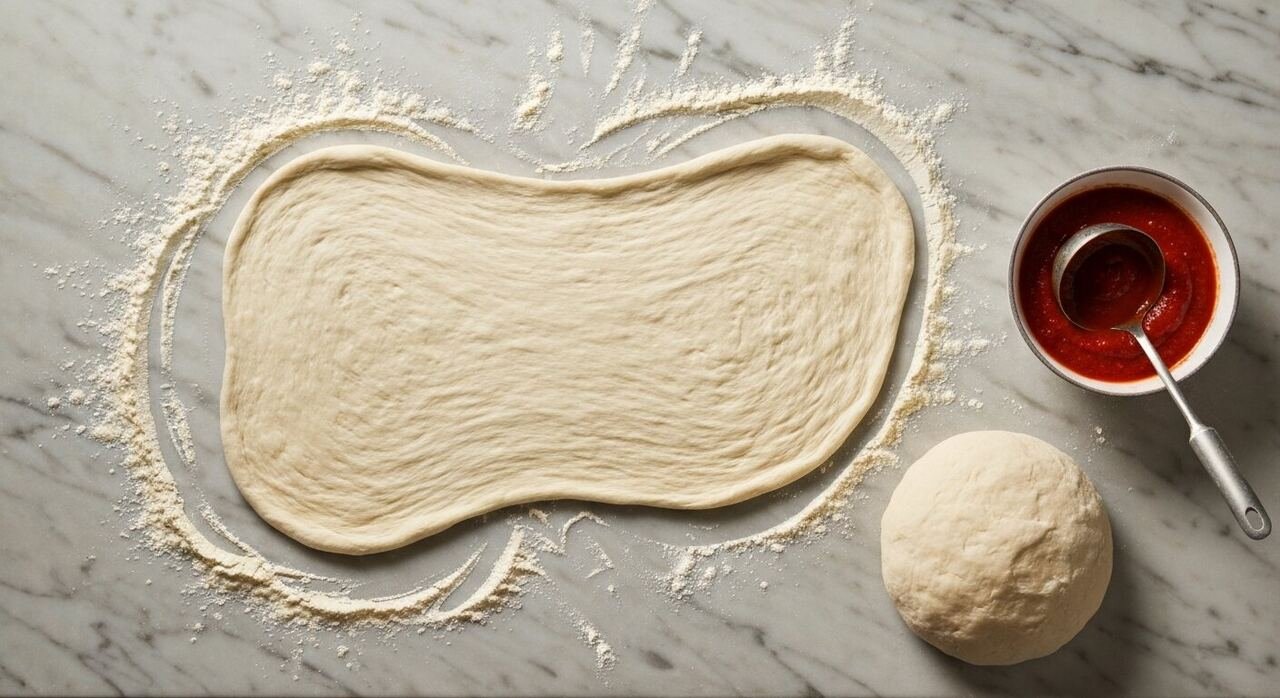
Understanding the fold is one thing. Building a slice worth folding is another — and it’s entirely doable at home. Everything that makes a New York slice foldable comes down to the dough: high-gluten flour for strength, a long cold ferment for flavour and those signature bubbles, and a stretch (never a roll) that keeps the crust alive. Here’s the whole thing, start to finish.
Watch It Made
Sometimes one minute of watching beats a page of reading — see the technique in motion, then scroll on for the full recipe card.

Video walkthrough via YouTube — tap to play (nothing loads until you do).
The Continental Table Recipe
Foldable New York-Style Pizza
Ingredients
For the Dough
- Bread or high-gluten flour: 500 g (about 4 cups)
- Warm water: 325 ml (about 1⅓ cups)
- Instant yeast: 1 tsp
- Fine sea salt: 2 tsp
- Granulated sugar: 1 tsp (helps it brown)
- Extra-virgin olive oil: 1 tbsp
For the Topping
- Pizza sauce: 1 cup (crushed San Marzano, salt, oregano, olive oil)
- Low-moisture whole-milk mozzarella: 300 g, grated from a block
- Not fresh mozzarella in water — it makes the slice soggy
Method
- Mix the dough. Whisk the warm water, sugar, and yeast; rest 5 minutes until foamy, then stir in the olive oil. Whisk the flour and salt separately, then add to the wet mix until a shaggy dough forms.
- Knead for structure. Knead 8–10 minutes until smooth, elastic, and slightly tacky — not sticky. This builds the gluten that gives the slice its foldable strength.
- Cold ferment (the NY secret). Divide into two tight balls, place each in a lightly oiled covered bowl, and refrigerate 24 to 72 hours. The slow ferment builds flavour and the crust bubbles.
- Prep for baking. Two hours ahead, bring the dough to room temperature. Preheat a pizza stone or steel at the oven’s maximum (260–285°C / 500–550°F) for at least 45 minutes.
- Stretch, never roll. Press the air toward the edges with your fingertips, then stretch over your knuckles into a 12–14 inch round. A rolling pin crushes the bubbles and makes it cracker-stiff.
- Top and bake. Move to a semolina-dusted peel. Spread a thin layer of sauce, leaving the edge bare, then add the grated mozzarella. Slide onto the hot stone.
- Finish and fold. Bake 7–10 minutes until deeply browned and blistered. Rest 3 minutes, slice, then pinch the crust, fold lengthwise, and bite.
So, Are You Supposed to Fold It?
If it’s a proper New York-style slice — wide, thin, flexible — then yes. Absolutely. Without question. The fold isn’t just acceptable; it’s how the pizza was designed to be eaten. You’re not being sloppy, and you’re not cutting corners. You’re participating in a food tradition over a hundred years old that has fed more people on the move than almost any other eating method in American history.
Next time you’re holding a big, floppy NY slice and wondering what to do with it, don’t reach for a fork. Don’t eat it flat and lose a pepperoni to gravity. Just fold it. Hold it like you’ve done this before. Eat it walking.
You’ll get it on the first try. New York will approve.
Quick Answers
What’s the difference between NY-style and Neapolitan crust?
Neapolitan crust is softer and wetter, meant to be eaten with a fork and knife at a table. NY-style is thinner, crisper underneath, and engineered to fold — same spirit, built for life on the move.
What is a folded pizza called?
A calzone — from the Italian for “stocking” or “trouser leg.” It’s pizza dough folded over a ricotta-and-mozzarella filling and baked or fried. The New York fold is different: a single slice simply bent in half as you eat it.
Is calzone dough the same as pizza dough?
The base ingredients are nearly identical, but calzone dough is usually a touch thicker to hold its filling without leaking, while pizza crust is stretched much thinner for that foldable structure.
What’s the difference between a calzone and a stromboli?
A stromboli is rolled like a log (an Italian-American creation); a calzone is folded into a half-moon. Different shapes, same family.
Is it rude not to fold a New York slice?
No one will stop you, but eating a proper NY slice flat marks you as an out-of-towner. The fold is considered proper etiquette — a small sign of pizza fluency.
You might also like
Leave a Reply
Join the conversation
You need an account to leave a comment.