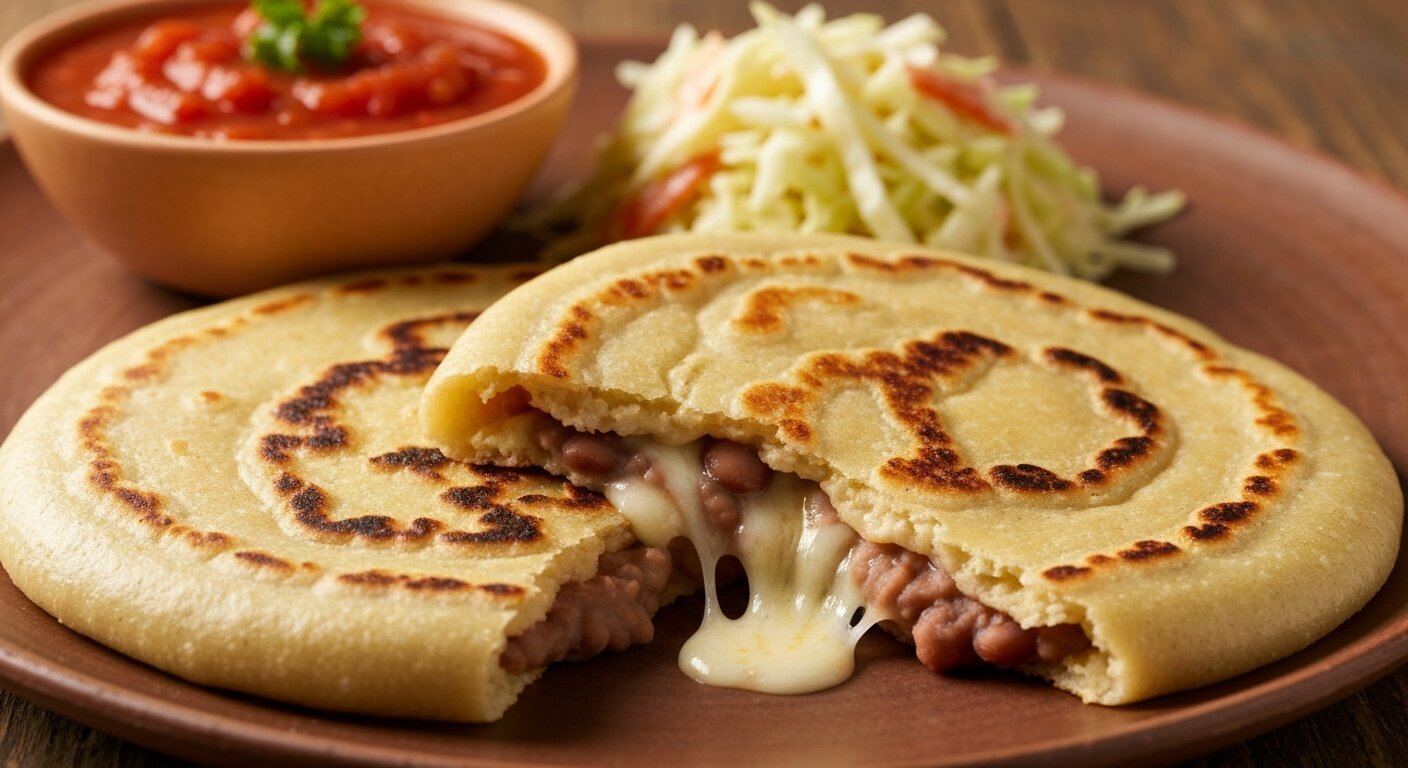
A thick corn cake griddled until golden, hiding molten cheese inside, crowned with tangy cabbage and warm salsa — the pupusa is El Salvador’s national dish and one of the great handheld foods of the Americas.
Pupusas are the kind of food that turns strangers into regulars. A soft masa shell, a stretchy pocket of cheese (or beans, or savory pork), a hot griddle, and the two things that always ride along: curtido, the bright fermented cabbage slaw, and a thin tomato salsa. They’re naturally gluten-free, endlessly customizable, and far easier to make at home than their handmade look suggests — the whole technique is really just “stuff a ball of dough and flatten it without letting the filling escape.”
Before You Wet Your Hands
- Pupusas are El Salvador’s national dish — thick stuffed corn-masa cakes cooked on a griddle (comal).
- They’re made from masa harina, the same instant corn flour used for tortillas and arepas — naturally gluten-free.
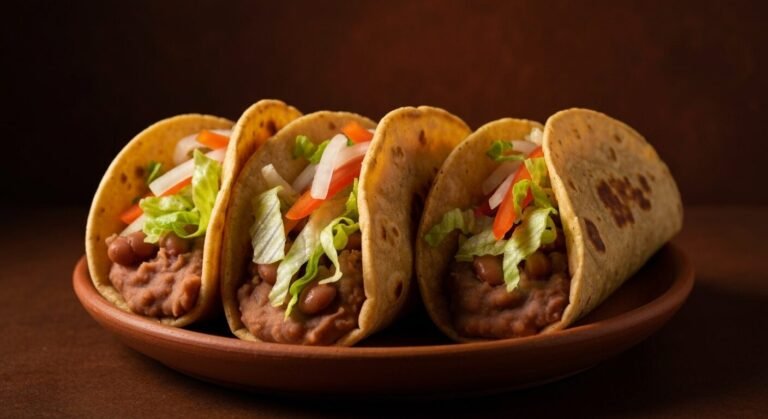
- The holy trinity of fillings: quesillo (cheese), refried beans, and chicharrón (seasoned ground pork) — alone or combined (“revueltas”).
- Wet hands are the whole secret — they stop the sticky masa from tearing as you seal and flatten.
- Always served with curtido and tomato salsa. Total time: about 55 minutes; makes 10.
A Corn Cake Older Than the Border It Made Famous
The pupusa is genuinely ancient. Archaeologists have found griddle tools in what is now El Salvador suggesting stuffed masa cakes were being cooked by the Pipil people centuries before the Spanish arrived; the word itself traces to the Náhuat-Pipil language. For most of that history the pupusa was humble country food — cheap, filling, made by hand from whatever the pantry offered. It stayed regional until the twentieth century, then rode Salvadoran migration outward until pupuserías appeared everywhere from Los Angeles to Sydney.
Today the pupusa is a point of national pride, with its own holiday — the second Sunday of November is El Salvador’s Día Nacional de las Pupusas. There’s even a gentle rivalry with neighboring Honduras over origins, which tells you how much the dish means. What’s never in dispute is the ritual of eating them: hot off the comal, no fork, curtido piled on top, salsa spooned over, eaten with your hands while the next one cooks.
Older than the Spanish, national enough to have its own holiday — and still just cheese in griddled corn.
Know Your Fillings
| Pupusa | Filling | Character |
|---|---|---|
| De queso | Quesillo cheese | The molten, stretchy classic |
| De frijol | Refried beans | Earthy, creamy, vegetarian |
| De chicharrón | Seasoned ground pork | Savory and rich (not crispy pork rinds — a soft paste) |
| Revueltas | All three, mixed | The “everything” — the most popular order |
| De loroco | Cheese + loroco buds | Floral, herbal, distinctly Salvadoran |
The Masa, the Seal, and the Wet-Hand Trick
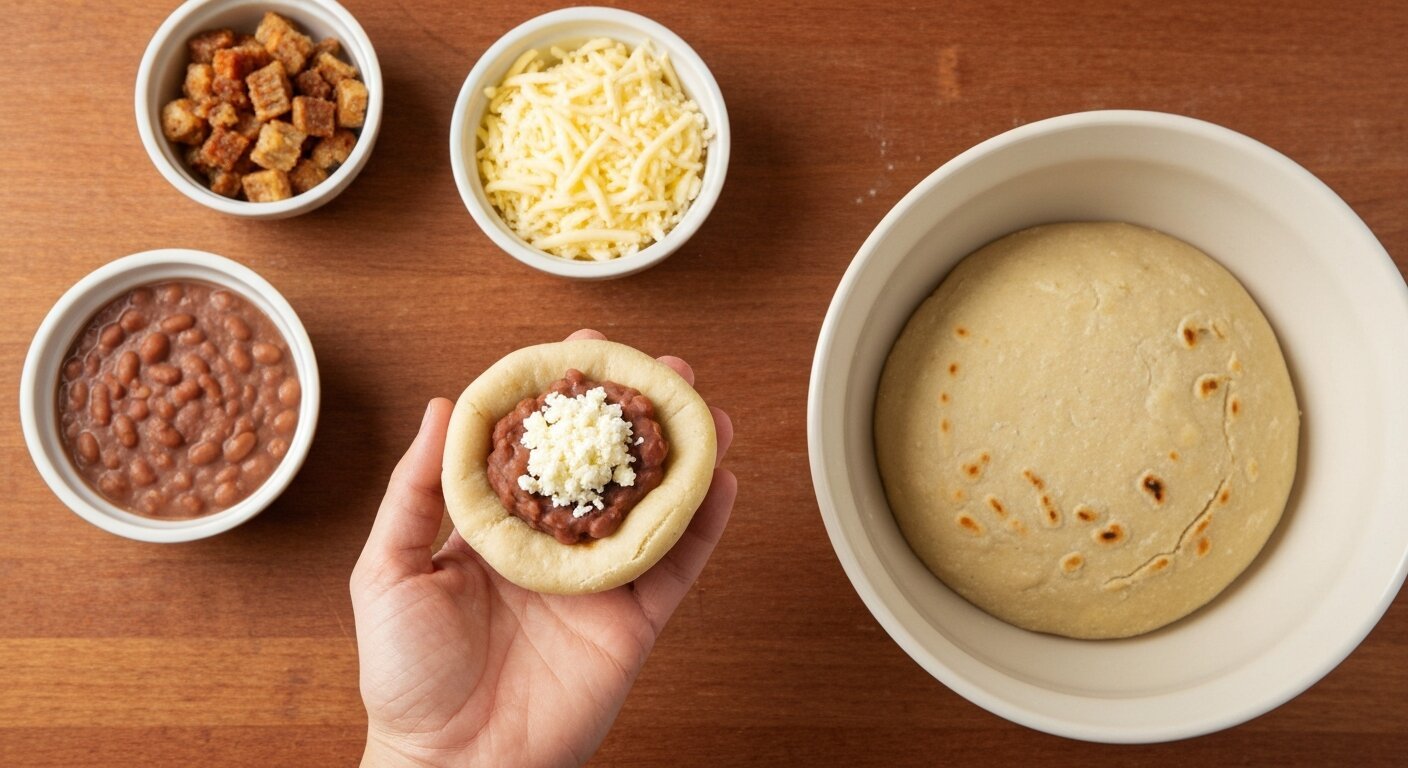
The dough could not be simpler: masa harina, salt, and warm water worked into something soft and smooth, like play-dough that just holds its shape. Get the hydration right and everything else follows — too dry and the edges crack and leak; too wet and it sticks to everything. The test: press the ball with your thumb, and if the edge cracks, add water a splash at a time. Rest it ten minutes so the corn fully hydrates.
Shaping is where pupusas look intimidating and aren’t. Roll a ball, press a deep cup into it with your thumb, tuck in a modest spoon of filling, then pinch the top closed and roll it smooth again — filling fully wrapped. Now gently pat it flat between wet palms, turning as you go, into a disc about four inches wide. Keep your hands wet the entire time; it’s the single trick that separates a smooth pupusa from a torn, leaking one. Modest filling and a good seal do the rest.
Good to Know
Pupusa Wisdom
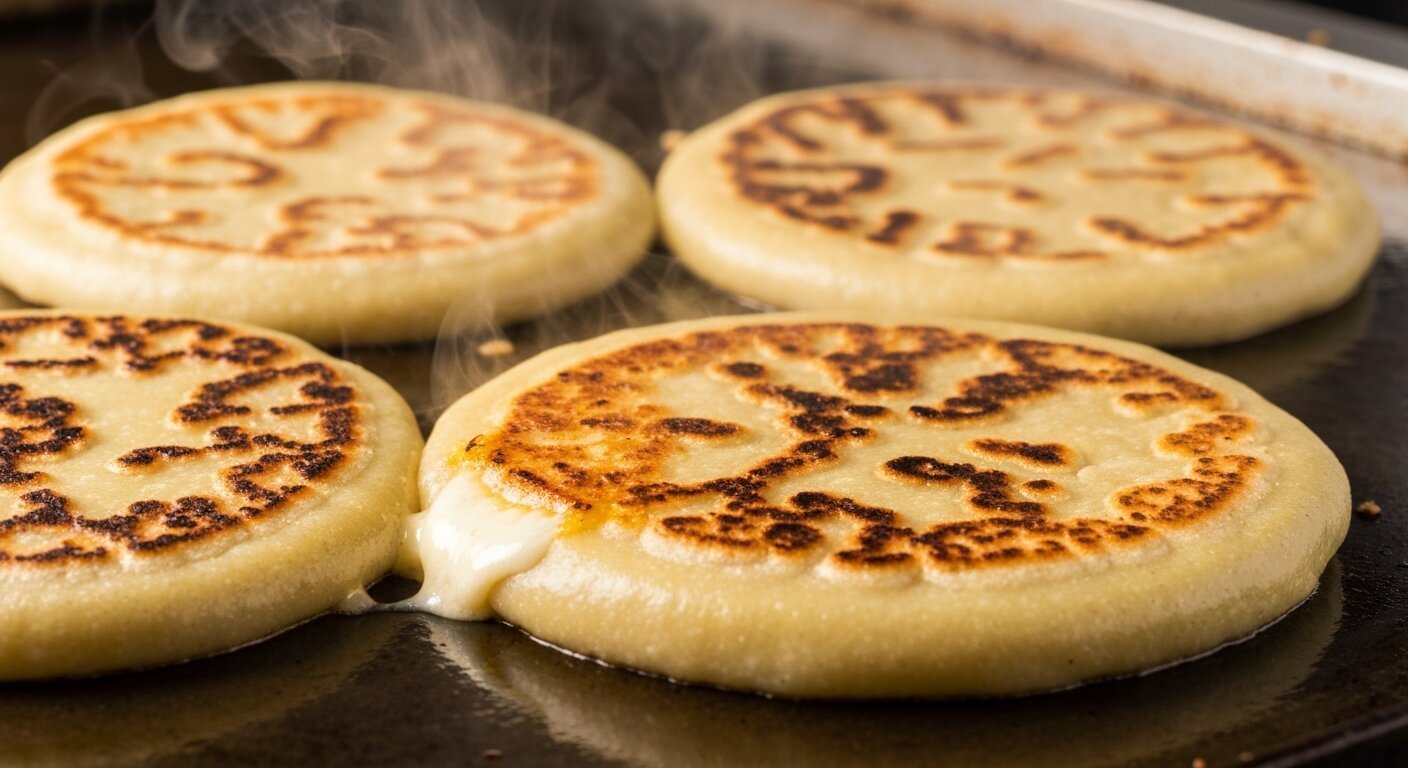
- Embrace the leak — cheese that escapes onto the griddle crisps into a lacy frilled edge Salvadorans prize. It’s a feature, not a failure.
- Dry griddle only — no oil. Pupusas toast, they don’t fry; the masa browns on its own.
- Masa harina, not cornmeal — look for “masa harina” (nixtamalized, like Maseca). Regular cornmeal or polenta will not bind.
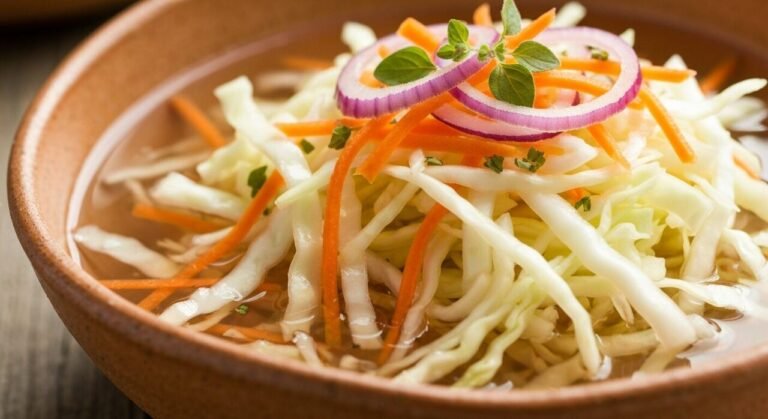
- Make curtido first — it wants at least a few hours (better a day) to pickle, so start it before the masa. Here’s our curtido recipe.
- They reheat well — a dry pan revives leftovers far better than a microwave, which steams them soft.
Watch It Made
Sometimes one minute of watching beats a page of reading — see the fill-seal-flatten motion in action, then scroll on for the full recipe card.

Video walkthrough via YouTube — tap to play (nothing loads until you do).
The Continental Table Recipe
Salvadoran Pupusas
Ingredients
The masa
- 2 cups masa harina (instant corn flour)
- 1½–2 cups warm water
- ½ tsp salt
- A bowl of water for wet hands
The filling & to serve
- 1 cup shredded quesillo or mozzarella
- ½ cup refried beans
- Optional: ½ cup seasoned chicharrón (ground pork), or loroco
- Curtido & tomato salsa, to serve
Method
- Make the dough. Mix masa harina and salt, stir in warm water gradually to a soft, smooth play-dough texture. Rest 10 minutes; add water if edges crack.
- Fill. With wet hands, roll a golf-ball of masa, press a cup into it, add a tablespoon of filling, and pinch closed. Roll smooth again.
- Flatten. Gently pat between wet palms into a 4-inch disc, keeping the filling sealed inside.
- Griddle. Cook on a dry, medium-hot comal 3–4 minutes per side until golden with charred spots.
- Serve hot with curtido piled on top and warm tomato salsa spooned over — no fork required.
Your Kitchen, a Pupusería
Pupusas reward practice fast — your third one will already look better than your first, and by the tenth you’ll have the fill-seal-flatten rhythm that pupuseras make look effortless. Keep the hands wet, the filling modest, the griddle dry, and the curtido close. Make a big batch; they’re the rare handmade food that’s genuinely better shared, hot, straight off the comal, with the next round already cooking.
Quick Answers
What is a pupusa?
El Salvador’s national dish — a thick, handmade corn-masa cake stuffed with cheese, beans, and/or seasoned pork, cooked on a griddle and served with curtido and tomato salsa.
What is the filling in a pupusa?
Classically quesillo cheese, refried beans, or chicharrón (a soft seasoned-pork paste, not crispy rinds) — often all three together, called revueltas.
What flour do you use for pupusas?
Masa harina — nixtamalized instant corn flour like Maseca, the same used for tortillas. Regular cornmeal or polenta won’t bind.
How do you keep pupusas from breaking open?
Keep your hands wet, use a modest amount of filling, and seal the dough fully before flattening. A little cheese escaping is normal and prized.
What do you serve with pupusas?
Always curtido (a tangy fermented cabbage slaw) and a thin warm tomato salsa — the acidity cuts the rich masa and cheese.
You might also like
Leave a Reply
Join the conversation
You need an account to leave a comment.