Golden outside, steamy and soft inside, and split open like a pocket for anything you love — the corn cakes two nations argue over and everyone wins with.
Few foods carry as much identity as the arepa. In Colombia and Venezuela it isn’t a dish, it’s a daily fact of life — breakfast, lunch, dinner, midnight. A simple dough of pre-cooked corn meal, water, and salt becomes a griddled cake with a crackly golden shell and a tender middle, eaten plain with butter or split open and stuffed until it barely closes. It’s naturally gluten-free, endlessly adaptable, and one of the easiest breads you’ll ever make: three ingredients, no yeast, no rising, no mercy on your excuses.
Before You Mix the Dough
- Arepas are griddled corn cakes from Colombia and Venezuela — both countries claim them, and both are right.
- The only flour that works is masarepa (pre-cooked corn meal) — not masa harina, not cornmeal, not polenta.
- Three base ingredients: masarepa, warm water, salt. That’s the entire dough.
- They’re naturally gluten-free and endlessly stuffable — cheese, avocado, shredded meats, beans.
- From dry flour to hot arepa: about 35 minutes.
Older Than Both Countries That Claim Them
Long before there was a Colombia or a Venezuela, the indigenous peoples of northern South America were grinding maize and griddling flat corn cakes on clay plates called budares. The word “arepa” likely comes from erepa — the word for corn in the language of the Cumanagoto people. When the two modern nations drew their borders, the arepa ignored them completely, remaining the daily bread on both sides and the subject of a friendly (mostly) eternal rivalry over who makes it better.
The twentieth century changed everything: in the 1950s, industrially pre-cooked corn flour — masarepa, led by the Venezuelan brand P.A.N. — turned an hours-long process of soaking and grinding corn into a five-minute mix. Suddenly every household could make arepas daily, and they did. Today Venezuelans tend to make them thick and stuff them like pitas with fillings that have their own names — the reina pepiada (chicken and avocado) is national royalty — while Colombians often go thinner, topped or filled with cheese, eaten alongside nearly every meal.
Two countries, one corn cake, zero chance of settling the argument.
Colombian vs Venezuelan: One Cake, Two Schools
Ask a Colombian and a Venezuelan whose arepa is better and clear your afternoon. The differences are real, though: Venezuelan arepas are usually thicker, split open like pockets, and stuffed generously — each classic combination has its own name. Colombian arepas run thinner and flatter, often with the cheese worked into the dough or melted on top, served as the bread beside a meal. This recipe gives you the master dough that makes both.
| Venezuelan | Colombian | |
|---|---|---|
| Shape | Thick (½–¾ inch) | Thinner, wider |
| Serving | Split & stuffed like a pita | Topped or cheese-filled, as a side |
| Famous version | Reina pepiada (chicken-avocado) | Arepa de queso (cheese) |
| When | A meal in itself | With every meal |
The Masarepa Rule — and the Griddle Sound
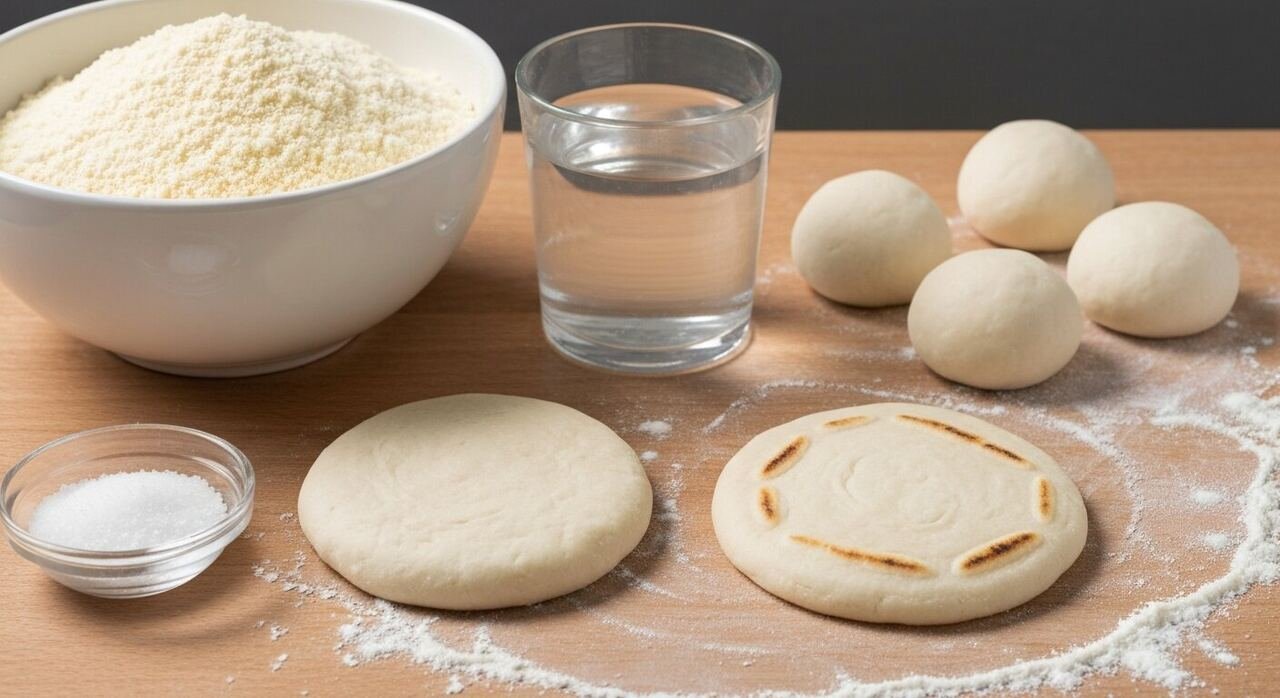
Everything about arepas depends on one ingredient: masarepa, corn that’s been cooked, dried, and milled into flour. Because it’s pre-cooked, it drinks up warm water and turns instantly into a smooth, workable dough. Its cousins don’t behave this way — masa harina (for tortillas) is nixtamalized and tastes different, and regular cornmeal or polenta will simply never form a dough. Look for the P.A.N. brand in the yellow bag, or any package that says “harina de maíz precocida.”
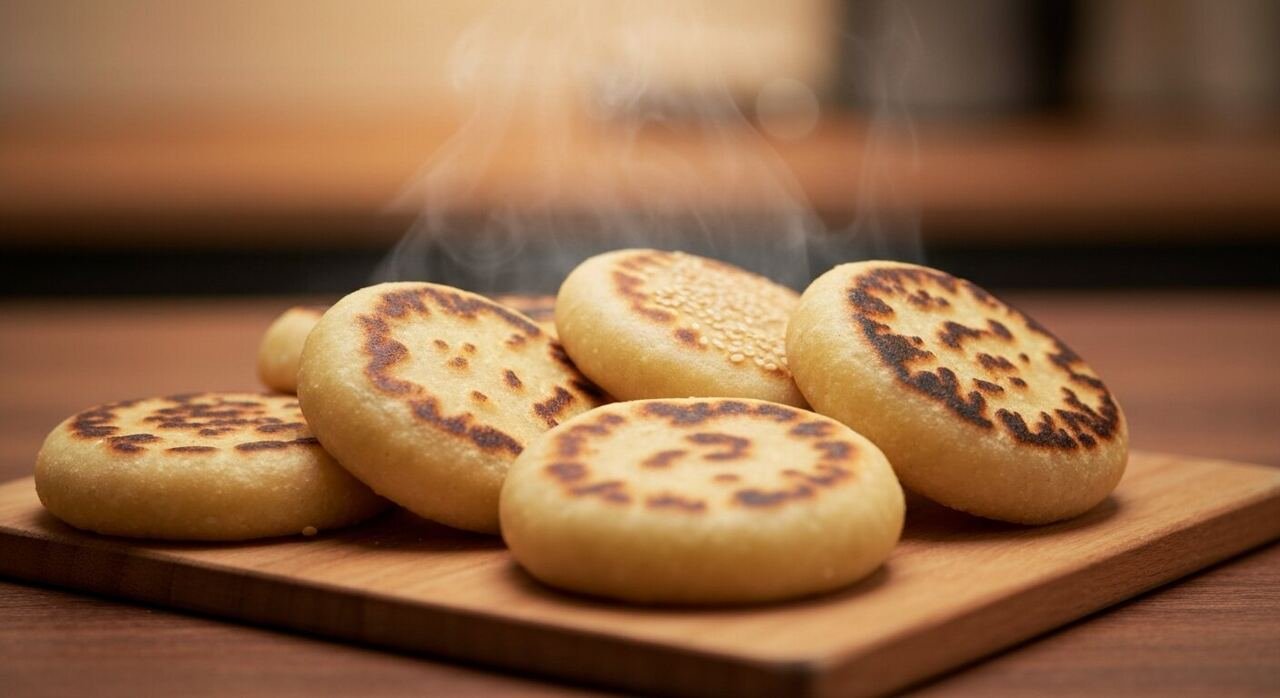
The cooking is a patience game: medium heat, 6 to 8 minutes per side, and resist pressing them. You’re building a golden, spotted crust while the inside steams itself tender. The classic doneness test is sound: tap a finished arepa and it should sound faintly hollow, like knocking on a tiny door. If the outside browns before 6 minutes, your pan is too hot and the middle will stay raw and gummy.
Good to Know
Arepa Wisdom
- Cracked edges? The dough is too dry — wet your hands and knead in a splash more warm water. Smooth cracks with a wet finger as you shape.
- Make-ahead — cooked arepas freeze beautifully; re-crisp them in a dry pan or toaster straight from frozen.
- The budare upgrade — a cast-iron pan is the closest thing to the traditional clay griddle; nonstick works but chars less beautifully.
- Gluten-free by nature — pure corn, no wheat; celiacs should still check the flour bag for a certified label.
- Filling rule — let them rest 2 minutes before splitting, or the steam escapes and the pocket tears.
Watch It Made
Sometimes one minute of watching beats a page of reading — see the technique in motion, then scroll on for the full recipe card.

Video walkthrough via YouTube — tap to play (nothing loads until you do).
The Continental Table Recipe
Arepas
Ingredients
The dough
- 2 cups masarepa (pre-cooked corn meal, e.g. P.A.N.)
- 2½ cups warm water
- 1 tsp fine sea salt
- 1 tbsp vegetable oil, plus more for the pan
Classic fillings
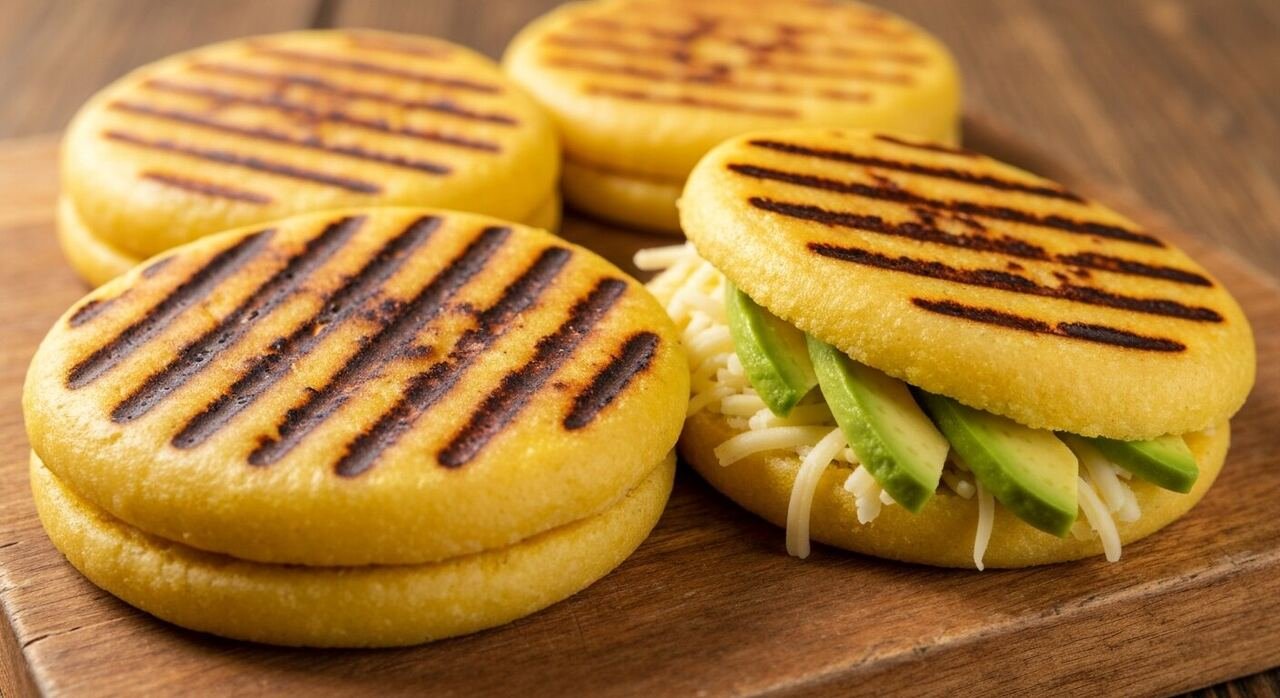
- Queso blanco or mozzarella
- Sliced avocado
- Shredded chicken or beef
- Black beans & cheese
- Or just butter and salt
Method
- Mix. Whisk the salt into the warm water, then stir in the masarepa gradually until no dry lumps remain.
- Knead & rest. Knead 2–3 minutes until smooth like playdough, work in the oil, and rest 5 minutes.
- Shape. Divide into 8 balls; flatten each into a 4-inch disc about ½ inch thick, smoothing cracks with a wet finger.
- Griddle. Cook on a lightly oiled pan over medium heat, 6–8 minutes per side, until golden-spotted and hollow-sounding when tapped.
- Rest & split. Cool 2 minutes, then slit open like a pita for stuffing (Venezuelan) or serve whole with butter (Colombian).
- Stuff & eat hot. Cheese and avocado is the gateway; reina pepiada is the destination.
The Easiest Bread in the Americas
Arepas ask almost nothing of you — three ingredients, one pan, half an hour — and give back a warm, golden pocket that holds whatever your kitchen has. Master the dough once and it becomes a reflex: breakfast arepas with eggs, lunch arepas with beans and cheese, midnight arepas with butter eaten over the sink. Colombia and Venezuela will never settle whose they are. Lucky for the rest of us, the corn cakes don’t care who’s eating.
Quick Answers
What are arepas made of?
Just masarepa (pre-cooked corn meal), warm water, and salt — kneaded into a dough, shaped into discs, and griddled until golden.
Can I use masa harina or cornmeal instead of masarepa?
No — masa harina is nixtamalized (for tortillas) and regular cornmeal won’t form a dough. Only pre-cooked corn meal labeled masarepa or “harina de maíz precocida” works.
Are arepas gluten-free?
Yes — they’re pure corn. If you have celiac disease, check the bag for a certified gluten-free label to be safe.
What’s the difference between Colombian and Venezuelan arepas?
Venezuelan arepas are thicker and stuffed like pitas; Colombian ones are thinner, often cheese-topped or filled, and served alongside meals.
Can I make arepas ahead?
Yes — cooked arepas freeze well. Re-crisp them in a dry pan or toaster straight from frozen.
You might also like
Leave a Reply
Join the conversation
You need an account to leave a comment.