
Chunky avocado, sharp onion, bright lime, a whisper of chili — the honest Mexican guacamole that made every other version want to be it.
Guacamole is deceptively simple: six ingredients, ten minutes, no cooking. But every version you’ve had at a chain restaurant — smooth, sour-cream-y, over-limed, seasoned with mystery — is a diminished cousin of the real thing. Authentic Mexican guacamole has texture, it tastes clean and green, and it’s meant to be eaten within the hour it’s made. Get the avocados right and the rest almost happens on its own.
Before You Halve the Avocado
- Real guacamole is chunky, not smooth — mashed with a fork or a molcajete, never blended.
- Six ingredients: avocado, onion, tomato, cilantro, chili, lime. No sour cream, no mayo, no garlic powder.
- The word comes from Náhuatl áhuacamolli — “avocado sauce” — and the dish is Aztec in origin.
- Ripe Hass avocados are non-negotiable: they should yield to gentle pressure and feel heavy for their size.
- It’s at its best in the first hour. Guacamole doesn’t keep.
A Sauce Older Than Mexico
Guacamole predates modern Mexico by centuries. The Aztecs made it long before the Spanish arrived, mashing avocados with tomatoes, chilies, and salt in a stone molcajete. They called it áhuacamolli, literally “avocado sauce,” a compound of áhuacatl (avocado) and molli (sauce). The tools and the ratios have barely changed in five hundred years, which is a good sign you’re looking at a perfect dish. When something works this well, it doesn’t need updating.
In Mexico today, guacamole is everywhere and nowhere fussy — a bowl on the taco stand counter, a spoonful next to grilled meats, a scoop on the edge of a plate of rice and beans. It’s the country’s most exported dish and its most misunderstood. American versions have gotten smoother, milkier, and heavier over the years; the Mexican original stays exactly where it started: chunky, sharp, and alive.
Five hundred years, six ingredients, no shortcuts. Some recipes are perfect.
Real Guac vs Restaurant Guac
If you’ve been let down by guacamole, it’s almost certainly because you’ve been eating the restaurant version — a smoother, richer, more forgiving cousin built to sit under a heat lamp. It’s not bad food; it’s just a different food. Here’s how they diverge.
| Authentic Mexican | Chain Restaurant | |
|---|---|---|
| Texture | Chunky, forked, alive | Smooth, blended |
| Extras | Nothing but the six | Sour cream, mayo, garlic powder |
| Made | To order | In big batches |
| Best eaten | Within the hour | Whenever |
The Ripe Avocado Is Half the Recipe
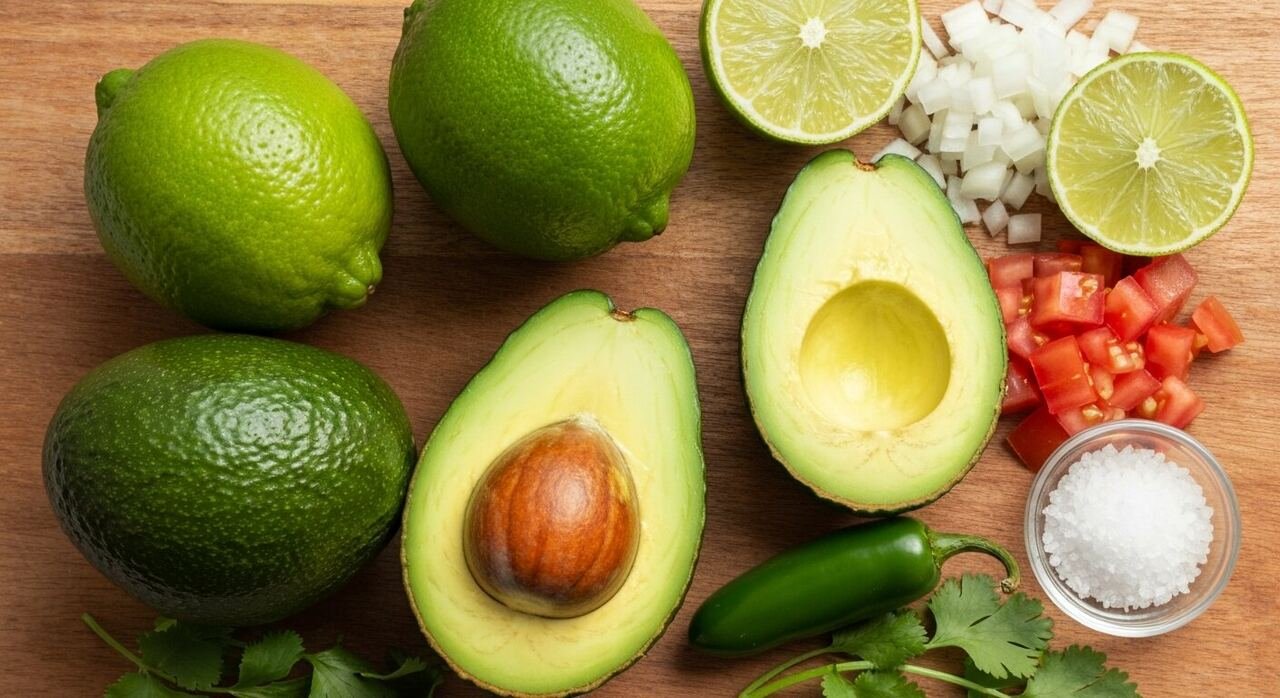
Guacamole is only ever as good as its avocados. There’s no clever technique that saves an underripe one and no seasoning that rescues a brown, mushy one. You want ripe Hass — the small pebbled dark-green kind — and they should yield to gentle pressure at the neck and feel heavy for their size. A rock-hard avocado isn’t ready. A soft, dented one is past. If your avocados aren’t ripe, tuck them in a paper bag with a banana overnight (bananas release ethylene gas, which speeds things up).
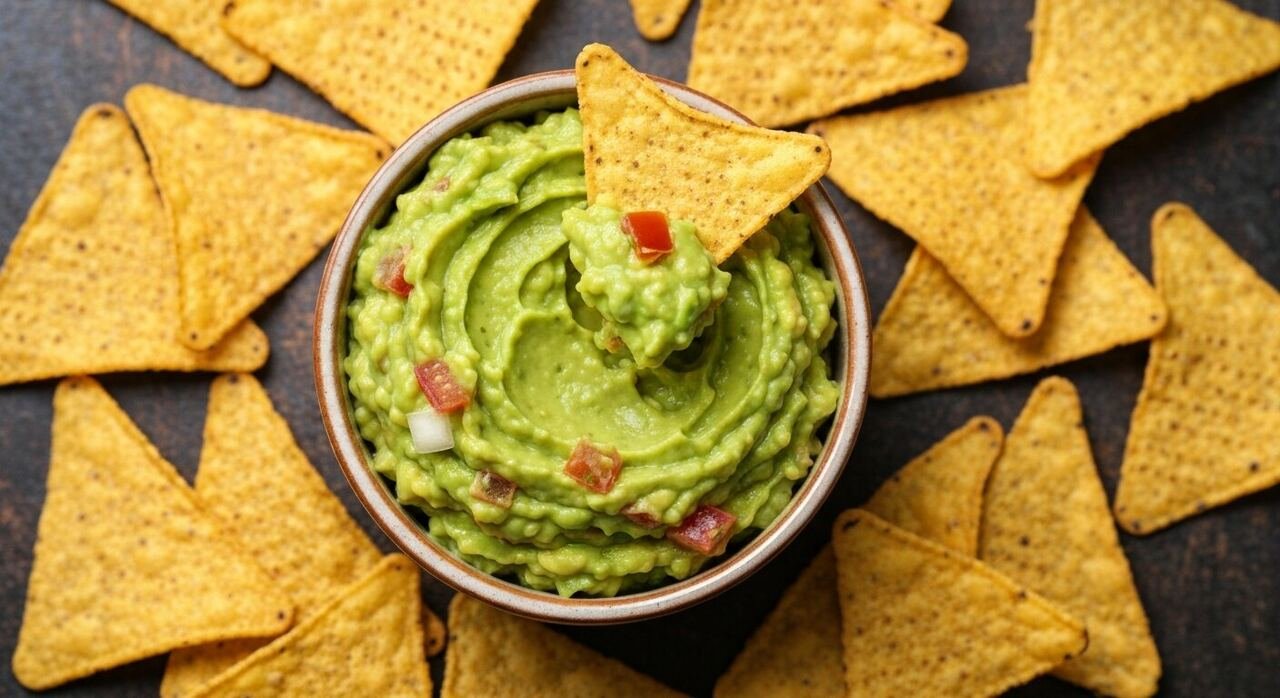
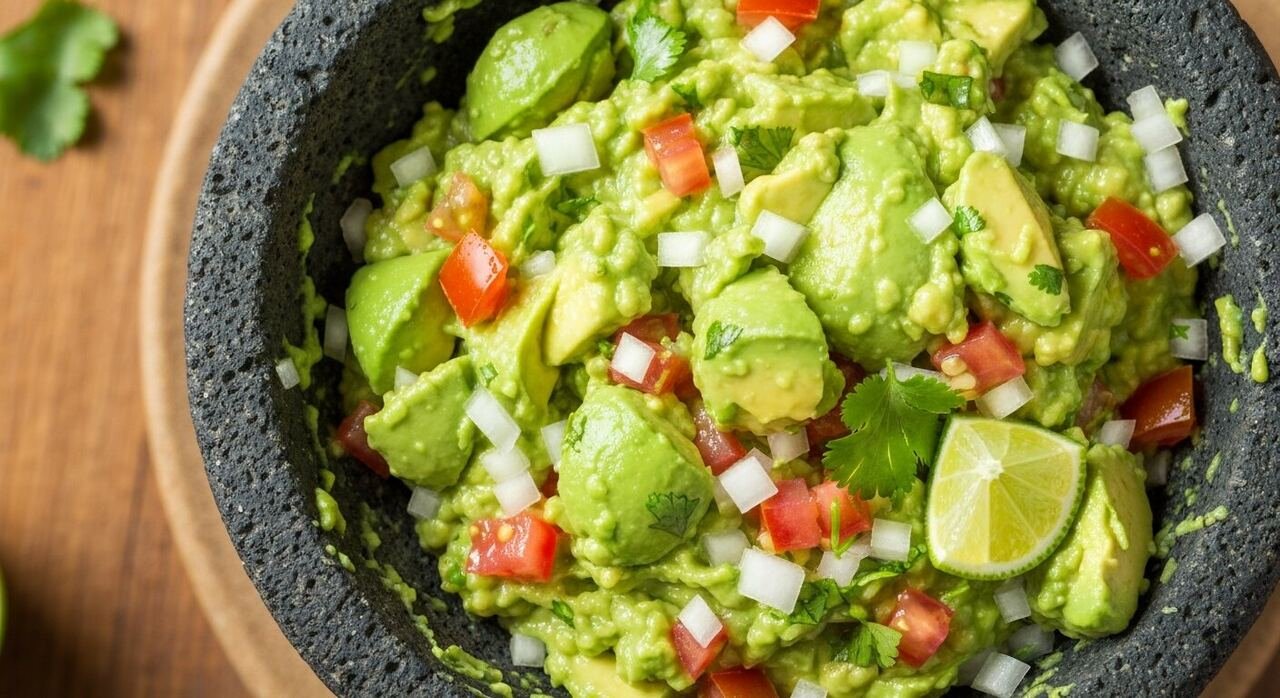
The other rule: mash, don’t blend. A fork against the side of the bowl (or a pestle in a molcajete) gives you the varied, chunky texture that makes guacamole feel like something you’re eating, not something you’re dipping into. Fold in everything else with a spoon, not a whisk. Six or seven turns is plenty — if it looks messy, you did it right.
Good to Know
Guac Rules That Save You
- The pit trick is a myth — leaving the avocado pit in the bowl does not stop browning; only air contact does.
- To hold it briefly — press plastic wrap flat against the surface (no air gap) and refrigerate. Best within an hour, still fine in two.
- Salt at the end — salt draws water; add it just before serving so the guac stays bright, not soupy.
- No garlic, no cumin, no sour cream — if it’s not in the six, it doesn’t belong. This is the moment to trust the classic.
- Avocados are calorie-dense — delicious, and worth being mindful of portion size if you’re watching intake.
Watch It Made
Sometimes one minute of watching beats a page of reading — see the technique in motion, then scroll on for the full recipe card.

Video walkthrough via YouTube — tap to play (nothing loads until you do).
The Continental Table Recipe
Authentic Mexican Guacamole
Ingredients
The core
- 3 ripe Hass avocados
- ¼ white onion, finely chopped
- 1 small ripe tomato, seeded & chopped
- ¼ cup cilantro leaves, chopped
To finish
- 1 jalapeño, seeded & minced (or serrano)
- Juice of 1 lime
- ¾ tsp fine sea salt, to taste
- Warm tortilla chips, to serve
Method
- Prep the avocados. Halve and pit them; scoop the flesh into a bowl or molcajete.
- Mash, don’t blend. Use a fork or pestle until chunky — texture is the whole point.
- Add the fresh mix. Fold in the onion, tomato, cilantro, and jalapeño.
- Finish. Squeeze in the lime, add the salt, and fold gently — five or six turns is enough.
- Taste. Adjust salt and lime. It should be bright, sharp, and clean.
- Serve immediately. Guacamole is a live thing — it’s best within the first hour.
The Simplest Dish Worth Getting Right
Guacamole is one of those dishes where the shortcut and the real thing are wildly different foods. Ten minutes of mashing gives you something honest and bright that no chain kitchen can reproduce, because they can’t make it to order. Buy good avocados, trust the six, mash by hand — and pass the bowl before it’s empty, because it will be.
Quick Answers
What is authentic guacamole made of?
Just six things: avocado, white onion, tomato, cilantro, chili (jalapeño or serrano), and lime, with a good pinch of salt. No sour cream, no mayo, no garlic.
Should guacamole be chunky or smooth?
Chunky. Real Mexican guacamole is mashed with a fork or a molcajete, never blended. Texture is essential.
Does the avocado pit stop guacamole from browning?
No — it’s a myth. Only sealing the surface from air (plastic wrap flush against the top) actually slows browning.
How do I keep guacamole fresh?
Press plastic wrap directly onto the surface with no air gap and refrigerate. It’s best in the first hour, still good in two.
How do I pick a ripe avocado?
It should yield to gentle pressure at the neck and feel heavy for its size. Rock-hard is underripe; soft with dents is past its best.
You might also like
Leave a Reply
Join the conversation
You need an account to leave a comment.