Crisp on the outside, impossibly stretchy on the inside, and gone the moment the pan hits the table — Brazil’s golden little cheese rolls are what you make when you want to be adored.
Ask any Brazilian what they miss most from home when they’re abroad, and there’s a strong chance the answer will be pão de queijo. Warm from the oven, these small round rolls hit an almost cartoonish level of pleasure: shattering-crisp outside, stretchy and cheesy inside, faintly sweet, faintly tangy, and completely addictive. They’re also naturally gluten-free (made with tapioca starch, not wheat), which turned them from a Brazilian breakfast staple into a global favorite.
Before You Preheat
- Pão de queijo are Brazilian tapioca-starch cheese rolls — small, crisp outside, chewy and stretchy inside.
- They’re naturally gluten-free — the whole structure is built on tapioca starch, not wheat flour.
- The dish comes from Minas Gerais, Brazil’s dairy heartland, where cheesemaking runs deep.
- The dough is meant to be sticky — don’t add flour to firm it up; grease your hands instead.
- They’re best warm from the oven. Serve immediately or freeze the unbaked balls for next time.
A Minas Gerais Original
Pão de queijo comes from Minas Gerais, the mountainous state in southeast Brazil that gave the country most of its cheese culture. In the eighteenth century, colonial-era cooks improvised a bread from the ingredients they had — cassava (tapioca) starch, milk, eggs, and local queijo Minas, a soft cow’s milk cheese. Wheat was scarce; cassava was everywhere. What began as thrift became a signature: a bread that needed no wheat, no yeast, no rising, and came out chewy and gorgeously cheesy in about half an hour.
Today pão de queijo is a Brazilian institution — found in bakery windows across the country, served warm with morning coffee, packed into afternoon snack boxes, and made in industrial quantities as freezer balls that Brazilians bake off a dozen at a time. The recipe travels beautifully. Once you know the technique, you can put warm cheese bread on the table any morning of the week.
No yeast, no wheat, no rising — and somehow the best bread on the table.
What Makes Them Chewy: Tapioca, Not Flour
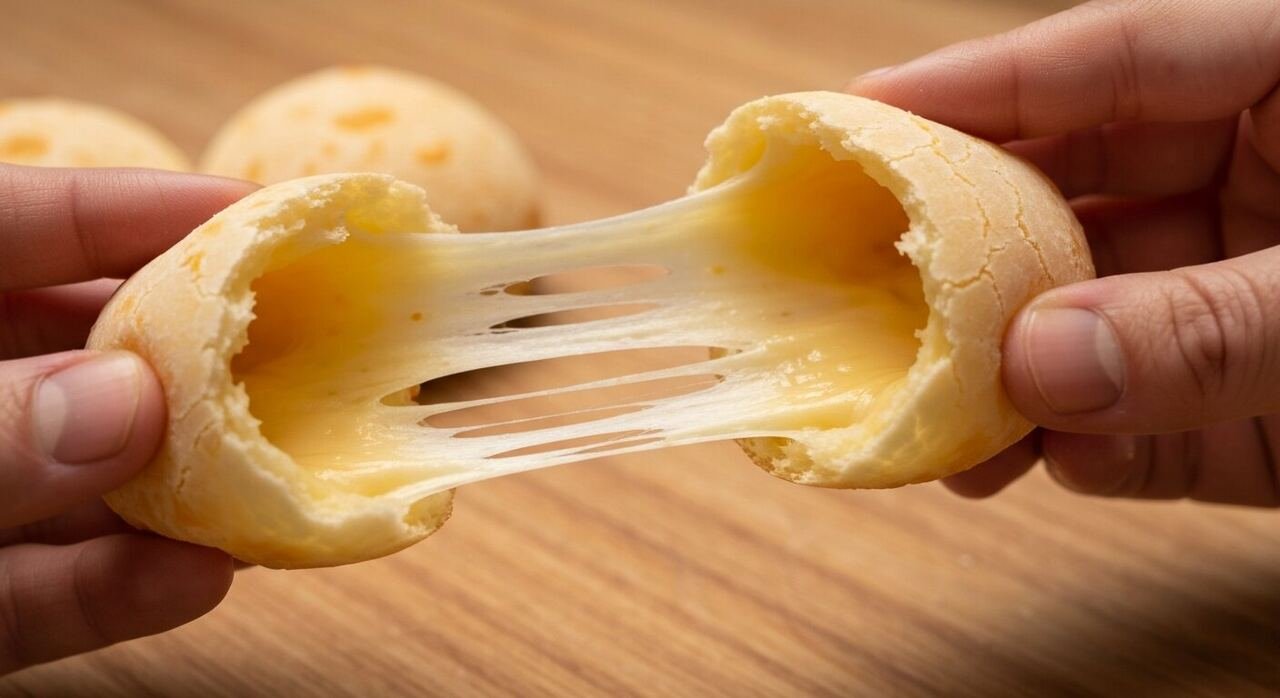
The single most important ingredient in pão de queijo is tapioca starch — the fine white starch extracted from the cassava root. It’s what gives these little rolls their signature texture: crackly-crisp outside, chewy and elastic inside, with that faint characteristic stretchy pull when you tear one open. Tapioca doesn’t contain gluten (which is why the rolls are naturally gluten-free), but it forms its own kind of chewy network when heated, and no other flour behaves quite like it. Swap it for wheat, cornstarch, or almond flour and you don’t get pão de queijo — you get sad little balls.
You’ll see two versions on Brazilian shelves: polvilho azedo (sour tapioca starch) and polvilho doce (sweet tapioca starch). Either works — sour gives more tang and lift; sweet is milder and easier to find. Outside Brazil, look for “tapioca starch” or “tapioca flour” at Latin markets, health-food stores, or the international aisle. They’re the same thing.
| Starch | Also called | Character | Use |
|---|---|---|---|
| Polvilho azedo | Sour tapioca starch | Tangier, lighter rise | Traditional |
| Polvilho doce | Sweet tapioca starch, tapioca flour | Milder, chewier | Easier to find |
| Wheat flour | — | Doesn’t chew right | Don’t |
Choosing the Cheese
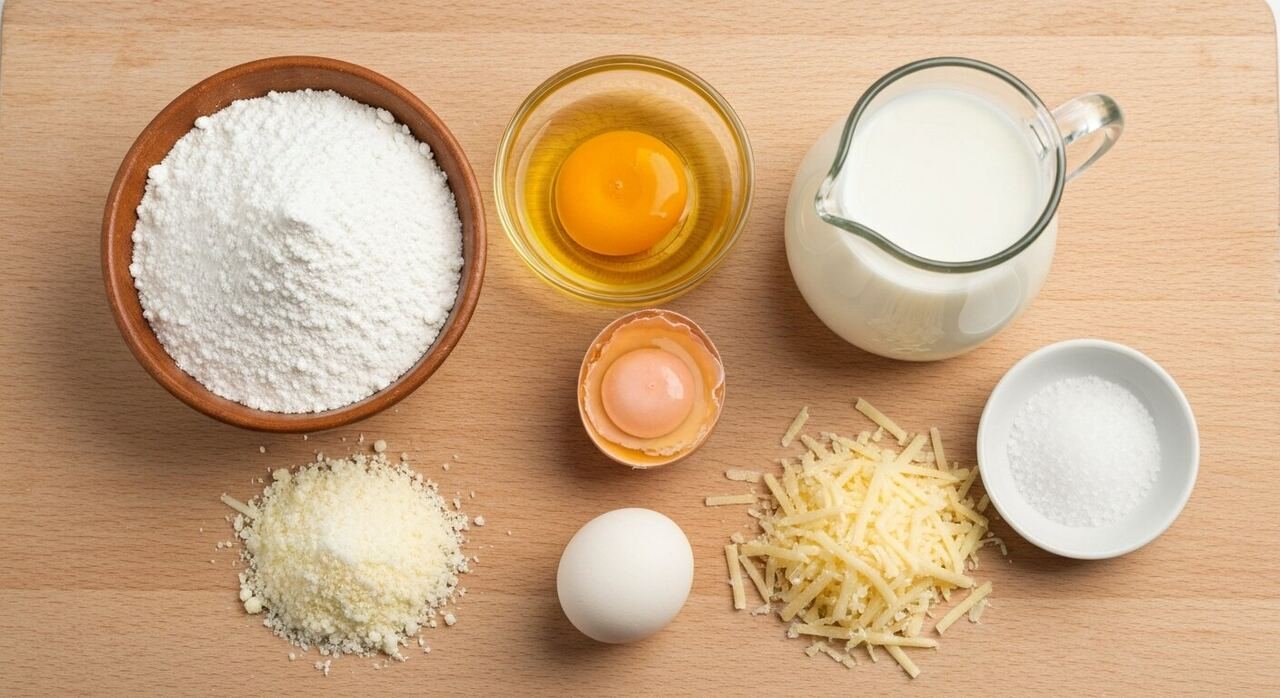
Authentic pão de queijo uses queijo Minas, a fresh Brazilian cow’s milk cheese that’s salty, mildly tangy, and melts beautifully. Outside Brazil it’s rare, but easy to fake with a good pantry pairing: a hard salty cheese for flavor (Parmesan or Grana Padano) and a mild melting cheese for stretch (mozzarella, Monterey Jack, or a mild white cheddar). Half and half is the sweet spot — the Parmesan gives depth, the mozzarella gives that satisfying cheesy pull when you tear one apart.
Grate the cheese finely, not shredded — big shreds create pockets that leave holes in the rolls. And don’t skimp; roughly equal weights of cheese and starch is what makes them properly cheesy. This is not the moment to be modest.
Good to Know
Tips, Swaps & the Freezer Trick
- The dough is meant to be sticky — don’t “fix” it with extra starch. Grease your hands with a little oil and roll from there.
- Blender method — whizz everything in a blender for a shortcut, then chill 20 minutes so it firms enough to scoop.
- Freeze the balls, not the baked rolls — roll, freeze on a tray, then bag. Bake straight from frozen; add a few extra minutes.
- Serving — classic with strong Brazilian coffee for breakfast, or as a warm bite alongside soups and grilled meats.
- Naturally gluten-free, but if you have celiac disease, check that your tapioca starch and cheeses are labeled certified gluten-free to be safe.
Watch It Made
Sometimes one minute of watching beats a page of reading — see the technique in motion, then scroll on for the full recipe card.

Video walkthrough via YouTube — tap to play (nothing loads until you do).
The Continental Table Recipe
Pão de Queijo
Ingredients
The base
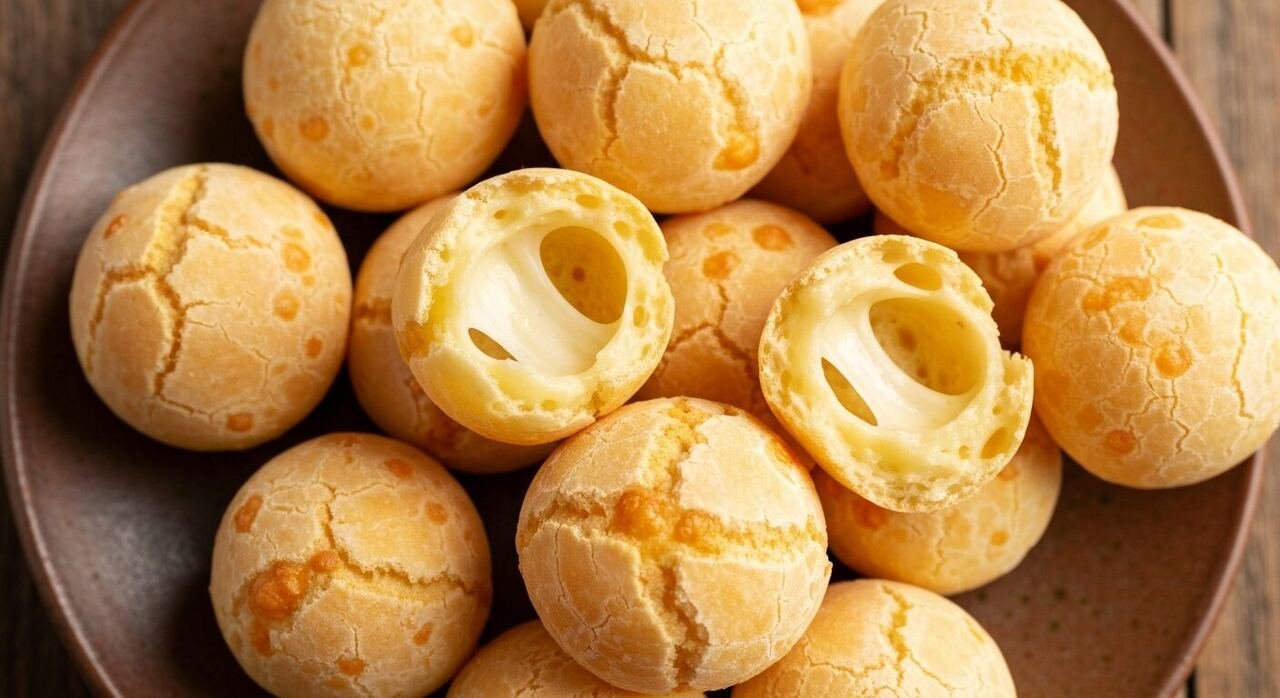
- 2 cups (250 g) tapioca starch (polvilho azedo or doce)
- ½ cup whole milk
- ½ cup water
- ⅓ cup vegetable oil
- 1 tsp fine sea salt
The cheese & eggs
- 1 cup (100 g) finely grated Parmesan
- 1 cup (100 g) finely grated mozzarella or Minas cheese
- 2 large eggs, lightly beaten
Method
- Preheat. Heat the oven to 400°F (200°C) and line two baking sheets with parchment.
- Heat the liquid. Combine the milk, water, oil, and salt in a saucepan and bring to a simmer.
- Scald the starch. Put the tapioca starch in a large bowl and pour the hot liquid over it. Stir until it comes together in a lumpy, stringy mass — that’s right.
- Cool 5–10 min. Let the mixture cool until warm but not hot.
- Add eggs & cheese. Beat in the eggs one at a time, then work in both cheeses. The dough will be sticky and stretchy.
- Roll & bake. Oil your hands and roll 24 golf-ball-sized rounds onto the sheets. Bake 18–22 minutes until golden and puffed. Eat warm.
Your New Weekend Baking Habit
Pão de queijo is the rare recipe that’s easier than it looks, prettier than it deserves to be, and gone in about the time it took to bake it. Make a batch once and you’ll want a bag of tapioca-starch balls in the freezer at all times — twenty minutes and a hot oven away from your kitchen smelling like a Minas bakery. Start with coffee, keep them warm, and pass the plate before anyone sees how many are left.
Quick Answers
What is pão de queijo?
Brazilian cheese bread — small round rolls made from tapioca starch, milk, eggs, and cheese, with a crisp exterior and stretchy chewy interior.
Is pão de queijo gluten-free?
Yes — it’s built on tapioca starch (from cassava), not wheat. If you have celiac disease, use certified gluten-free starch and cheese.
What cheese should I use?
Traditionally queijo Minas. Outside Brazil, half Parmesan (for flavor) and half mozzarella or mild white cheese (for stretch) works beautifully.
Can I make pão de queijo ahead?
Yes — roll the balls, freeze them on a tray, then bag. Bake straight from frozen, adding a few minutes.
Why is my dough so sticky?
It’s supposed to be. Don’t add more starch — oil your hands lightly to roll the balls.
You might also like
Leave a Reply
Join the conversation
You need an account to leave a comment.