
Ice-cold fish “cooked” in fresh lime juice, crisp red onion, a whisper of chili — ceviche is Peru’s national dish and the brightest thing you can make without turning on a stove.
Some dishes taste like a place. Ceviche tastes like the Peruvian coast at noon: cold, citrusy, faintly fiery, and impossibly fresh. It’s raw fish transformed by lime juice — the acid firms and whitens the flesh the way heat would — finished with red onion, cilantro, and chili. In a summer when everyone wants fresh, no-cook, gut-friendly food, ceviche isn’t just on trend. It practically invented the trend.
Before You Squeeze the Limes
- Ceviche is fish cured in citrus — the lime’s acid denatures the proteins, turning the flesh opaque and firm without heat.
- It’s Peru’s national dish, with roots stretching back some 2,000 years on the coast.
- Fish freshness is everything — buy the best you can, ideally telling your fishmonger it’s for ceviche.
- The leftover citrus marinade is called leche de tigre — “tiger’s milk” — and Peruvians drink it.
- Total time: about 25 minutes, no stove, no oven.
Two Thousand Years on the Peruvian Coast
Long before Peru was Peru, coastal peoples were curing fresh fish in acidic juices — historians trace versions of the practice back roughly two millennia, to cultures like the Moche. When limes arrived with the Spanish, the modern form took shape: fish, lime, onion, chili, salt. Five ingredients, endless devotion. Today ceviche is Peru’s official national dish — it even has its own national holiday — and cevicherías from Lima to the smallest fishing towns serve it strictly fresh, traditionally only until the day’s catch runs out.
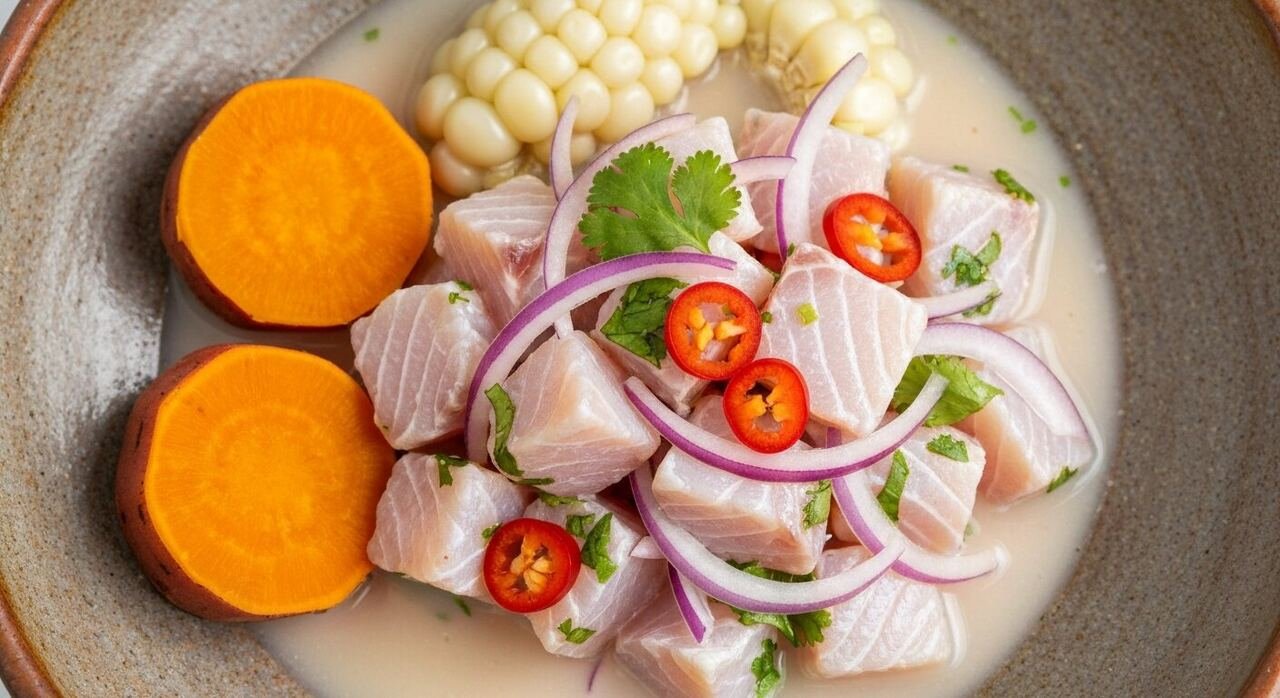
What makes the Peruvian version special is restraint and ritual. The fish is cut cleanly, cured briefly — minutes, not hours — and served immediately with sweet potato and big-kernel corn, whose sweetness plays against the citrus. And nothing is wasted: the milky, intensely flavored marinade left in the bowl, the leche de tigre, is prized as a restorative — sipped from a glass, spooned over the fish, or knocked back as the world’s freshest chaser.
Five ingredients, ten minutes in the lime, two thousand years of practice.
One Idea, Many Coastlines
Citrus-cured seafood belongs to the whole Pacific coast of the Americas, and every country bends it its own way. Peru keeps it austere and fish-first. Mexico chops everything smaller and adds tomato. Ecuador serves it swimming in juice, closer to a chilled soup. All are legitimate; all are wonderful. This recipe makes the Peruvian classic.
| Style | The cut | Signature | Served with |
|---|---|---|---|
| Peruvian | Chunky cubes, brief cure | Leche de tigre, aji chili | Sweet potato & corn |
| Mexican | Small dice, longer cure | Tomato, avocado | Tostadas & saltines |
| Ecuadorian | Juicy, soupy style | Tomato-citrus broth | Popcorn & plantain chips |
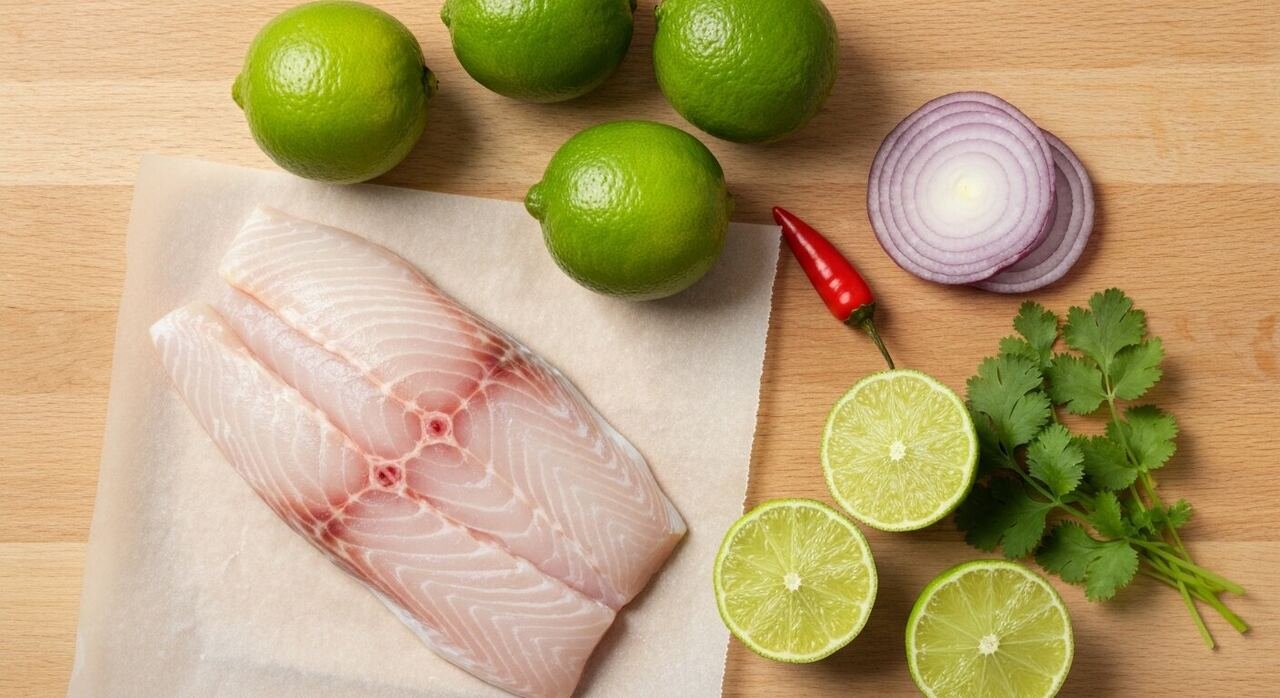
How Lime “Cooks” Fish — and How Not to Overdo It
The magic is simple chemistry: the citric acid in lime juice denatures the fish’s proteins, firming and whitening the flesh much like heat does. The skill is in the timing. In Peru the cure is short — 10 to 15 minutes for chunky cubes — so the outside turns opaque while the center stays silky. Leave the fish swimming in lime for an hour and the acid keeps working until the texture turns chalky and rubbery. When the cubes are white outside and just translucent at the heart, it’s done.
The other secrets are cold and crispness. Everything — fish, juice, bowl — should be properly cold; ceviche is a dish you eat almost shivering. And soak the sliced red onion in ice water for ten minutes first: it stays crunchy, loses its harsh bite, and turns that beautiful pink that crowns every proper cevichería bowl.
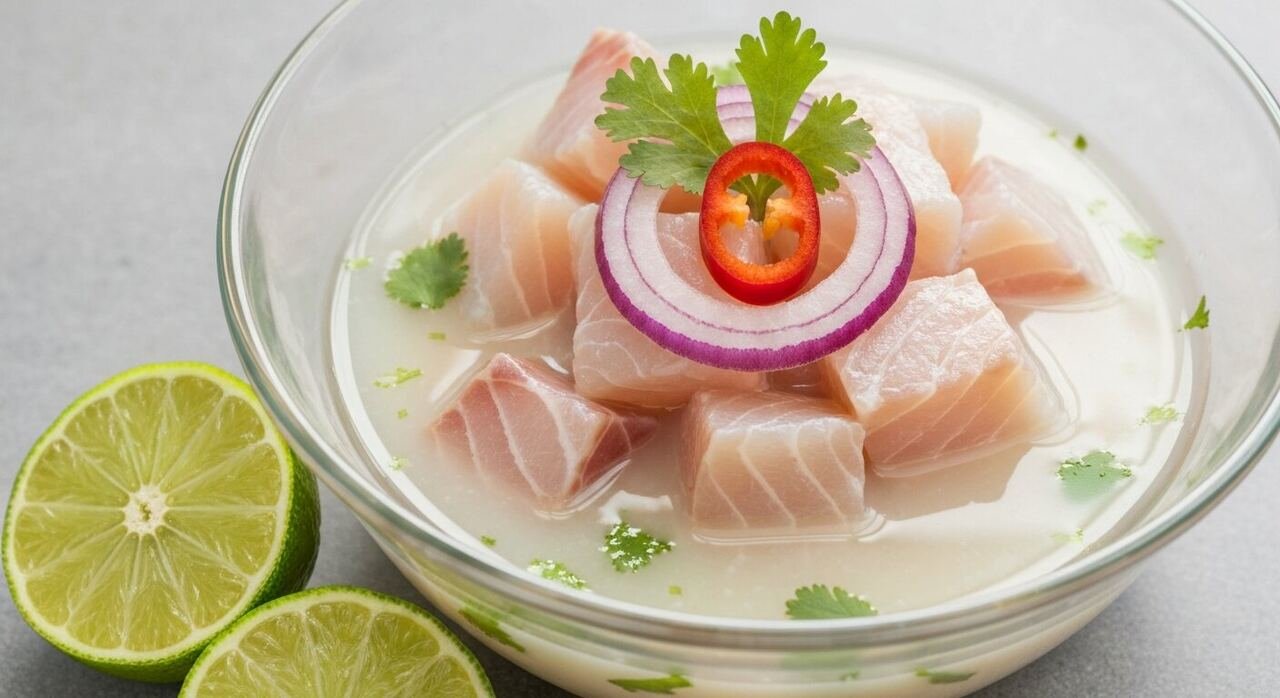
Good to Know
Fish Safety First
- The lime is flavor, not sterilization — acid firms the fish but does not kill parasites or bacteria the way heat does, so quality is non-negotiable.
- Buy smart — ask for sushi-grade or previously frozen fish from a fishmonger you trust, and say it’s for ceviche.
- Keep it cold — fish stays refrigerated until the moment you cut it, and the finished bowl is served immediately.
- Same-day dish — ceviche doesn’t keep; make what you’ll eat today.
- Raw and citrus-cured seafood carries extra risk for pregnant people, young children, and anyone immunocompromised — when in doubt, check with a doctor.
Watch It Made
Sometimes one minute of watching beats a page of reading — see the technique in motion, then scroll on for the full recipe card.

Video walkthrough via YouTube — tap to play (nothing loads until you do).
The Continental Table Recipe
Peruvian Ceviche
Ingredients
The fish
- 1½ lbs very fresh firm white fish (sea bass, snapper, halibut), skinless
- 1 tsp fine sea salt
- 1 garlic clove, finely grated (optional)
The cure & garnish
- 1 cup fresh lime juice (10–12 limes)
- 1 red onion, very thinly sliced
- 1 aji limo or habanero, seeded & minced
- ½ cup cilantro leaves, chopped
- Boiled sweet potato & corn, to serve
Method
- Chill the onion. Soak the sliced red onion in ice water for 10 minutes, then drain — crisp, mellow, pink.
- Cut the fish. Cube the very cold fish into even ¾-inch pieces. Season with the salt and garlic; rest 2 minutes.
- Cure. Pour the lime juice over so the fish is mostly submerged, add half the chili, and stir gently.
- Watch the clock. Cure 10–15 minutes, stirring once, until the cubes are opaque outside and just tender within.
- Finish. Fold in the onion, cilantro, and remaining chili. Taste for salt.
- Serve ice cold. Plate immediately with sweet potato and corn — and sip the leche de tigre left in the bowl.
Summer’s Perfect No-Cook Dish
Ceviche is what happens when a cuisine trusts its ingredients completely: no stove, no sauce, no disguise — just pristine fish, sharp lime, and the confidence to stop there. It’s fast enough for a weeknight, stunning enough for company, and cooling in a way almost nothing else is. Find good fish, chill everything, mind the clock, and Peru’s national dish is yours in under half an hour.
Quick Answers
What is ceviche?
Fresh raw fish cured in citrus juice — usually lime — with onion, chili, and cilantro. It’s Peru’s national dish, found all along Latin America’s coasts.
Does the lime juice actually cook the fish?
The acid denatures the proteins so the flesh turns firm and opaque like cooked fish — but it doesn’t kill bacteria or parasites the way heat does, so fish quality is essential.
What fish is best for ceviche?
Firm, fresh white fish: sea bass, snapper, halibut, or fluke. Ask for sushi-grade or previously frozen fish and tell your fishmonger it’s for ceviche.
How long should ceviche marinate?
Just 10 to 15 minutes for chunky cubes. Longer cures turn the fish chalky and rubbery.
What is leche de tigre?
“Tiger’s milk” — the milky, intensely flavored lime marinade left after curing. Peruvians spoon it over the fish or drink it straight.
You might also like

Leave a Reply
Join the conversation
You need an account to leave a comment.