
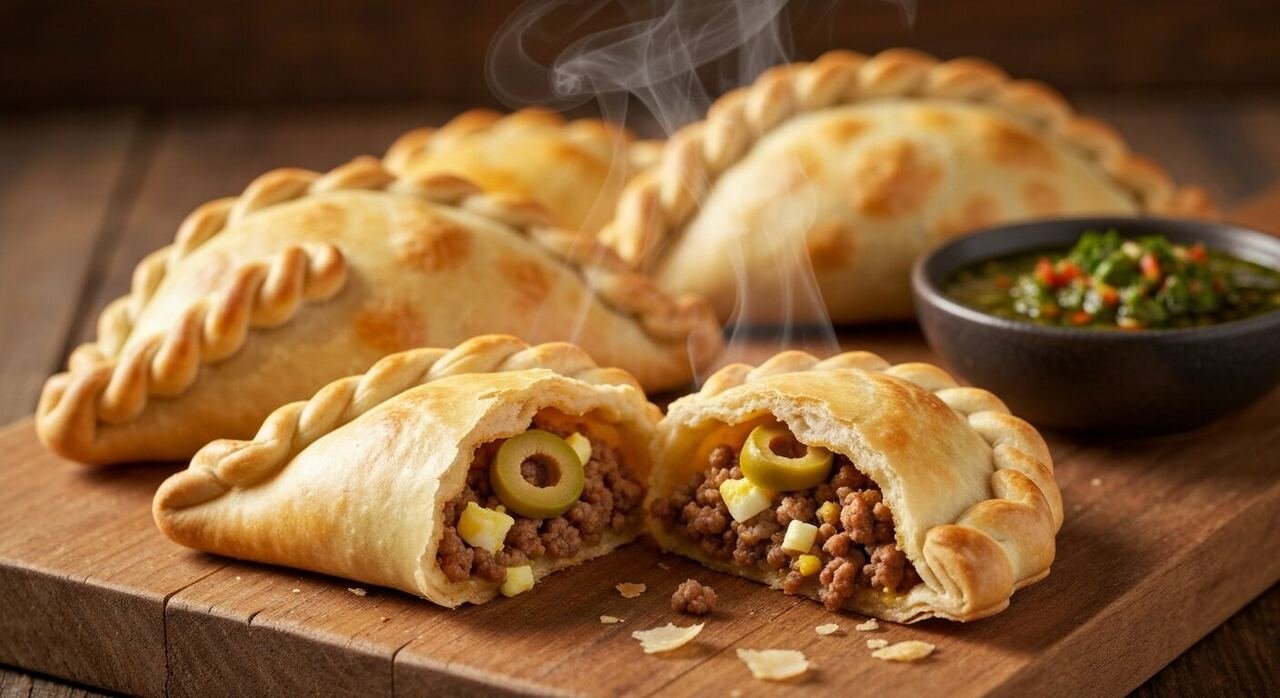
A golden half-moon with a braided edge, hiding juicy spiced beef, a slice of olive, and a surprise of egg — Argentina’s handheld pride, judged by its fold and won by its filling.
Every empanada is a small argument about what perfection looks like: how juicy the beef, whether raisins belong, how many braids in the repulgue edge. What’s not up for debate is the experience — warm pastry giving way to a filling that’s savory, faintly sweet, briny, and rich all at once. Empanadas are also the rare showpiece that’s genuinely practical: they freeze brilliantly, bake in twenty minutes, and disappear faster than anything else you’ll ever put on a table.
Before You Roll the Dough
- Empanadas came to Argentina with Spanish colonists (from the verb empanar, “to wrap in bread”) and every province made them its own.
- The classic Argentine beef filling: ground beef, onion, paprika, cumin, green olives, hard-boiled egg — raisins if your family says so.
- Cold beef fat or butter in the dough makes it tender; store-bought tapas (discs) are a legitimate shortcut.
- The braided edge (repulgue) isn’t decoration — different folds traditionally mark different fillings.
- Bake at 400°F about 20 minutes. Makes 12; doubles without complaint. Total: about 1½ hours.
From Galicia to Every Argentine Table
The empanada’s ancestors are Iberian — Galicia still bakes great communal empanada gallega pies — and the handheld version sailed with Spanish colonists across Latin America, where every country tuned it to its pantry: Chile added whole olives and more onion, Colombia fried corn-flour shells, Bolivia sweetened the dough for salteñas. Argentina, with its cattle wealth, made beef the standard and elevated the details into regional identity: Salta’s are small, juicy, and potato-laced; Tucumán’s are famously wet-filled and lemon-squeezed; Córdoba sneaks in sugar.
The repulgue — the rope-braided seal — carries its own tradition: in bakeries selling several kinds, the fold is the label. A braid for beef, a fork-crimp for cheese, a different twist for chicken. It’s a beautiful system with a practical soul, and learning even the basic braid puts your empanadas a continent ahead of the fork-pressed crowd. (The fork still works. Nobody will refuse one.)
The fold is the label, the filling is the argument, and the tray is always empty by the end.
One Pastry, Many Flags
| Style | Shell | Signature |
|---|---|---|
| Argentine (this recipe) | Baked wheat pastry | Beef, olive, egg; braided repulgue |
| Chilean (de pino) | Baked, larger | Beef-onion with a whole olive & raisin inside |
| Colombian | Fried corn masa | Crisp yellow shell, beef-potato filling, ají |
| Bolivian salteña | Baked, sweet dough | Juicy, stew-like filling eaten upright |
Cool Filling, Cold Dough, Confident Fold
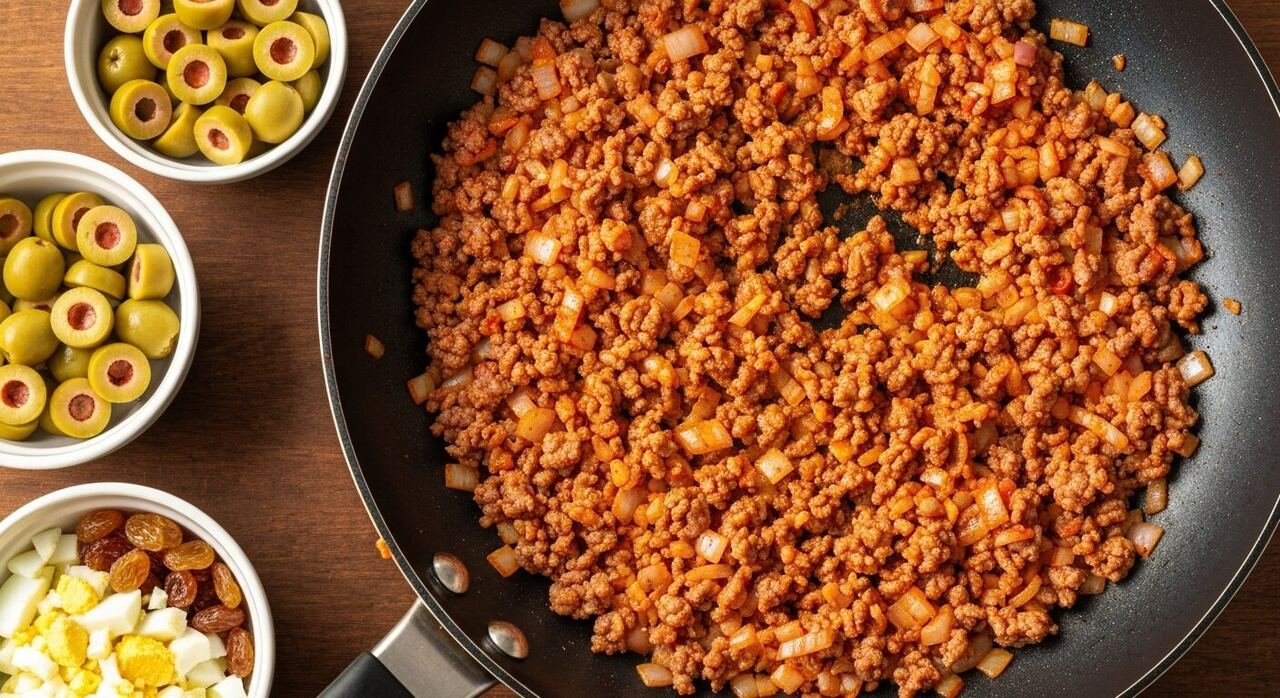
The three rules of empanada success are all about temperature and moisture. One: cook the filling first and cool it completely — warm filling melts the dough’s fat and steams the pastry gummy. Argentine cooks even chill it overnight, which firms the juices into a sliceable set that melts back to juicy in the oven. Two: keep the dough cold and rest it 30 minutes so it rolls thin without fighting back. Three: don’t overfill — two tablespoons per disc feels stingy and is exactly right.
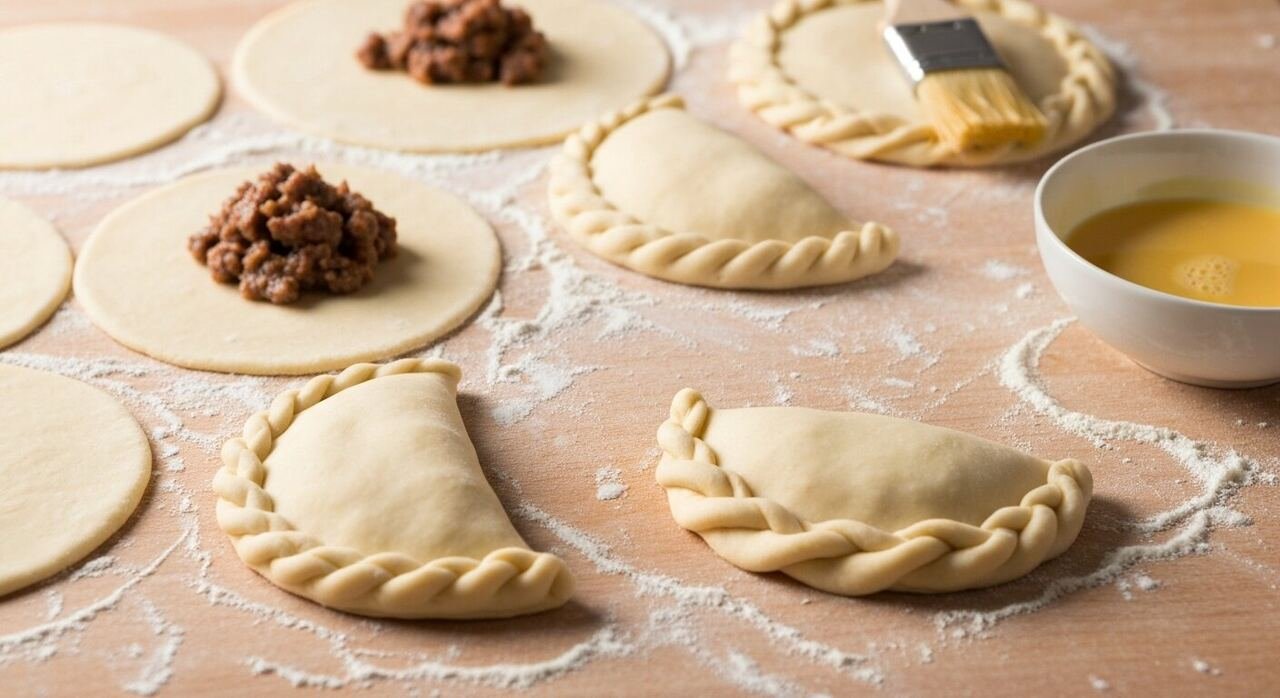
The fold: wet the disc’s rim, close it over the filling into a half-moon, press out the air, and seal. For the repulgue, start at one corner and fold a small triangle of edge over itself, then fold the next overlapping it, marching around the rim — ten little pleats that braid into a rope. Egg-wash for shine, bake hot, and give them five minutes out of the oven; the filling inside is molten lava with a grudge.
Good to Know
Empanada Wisdom
- Store-bought discs (tapas) from Latin markets are what busy Argentine households actually use — look for “tapas para empanadas, para horno.”
- The raisin question — a Tucumán-style handful adds sweet counterpoint to the olives. Families have split over less. Optional, defensible, delicious.
- Freeze like a pro — assemble, freeze raw on a tray, bag them, and bake straight from frozen (+5 minutes). Future-you says thanks.
- Fried version — the same empanada fries at 350°F in 4 minutes; skip the egg wash.
- A batch is rich party food — the classic plate is two or three with a sharp green salad and chimichurri, not six alone in the kitchen (though we’ve all been there).
Watch It Made
Sometimes one minute of watching beats a page of reading — see the technique in motion, then scroll on for the full recipe card.

Video walkthrough via YouTube — tap to play (nothing loads until you do).
The Continental Table Recipe
Argentine Beef Empanadas
Ingredients
The dough (or 12 store-bought tapas)
- 3 cups flour
- ½ cup cold butter or beef fat, cubed
- 1 tsp salt
- 1 egg + ¾ cup cold water
- 1 extra egg, beaten, for the wash
The filling
- 1 lb ground beef
- 2 onions, finely diced
- 2 tsp sweet paprika, 1 tsp cumin, ½ tsp chili flakes
- ½ cup green olives, sliced
- 2 hard-boiled eggs, chopped
- ¼ cup raisins (optional, traditional)
- Salt, pepper, 2 tbsp oil
Method
- Filling first. Soften the onions in oil, add the beef and spices, cook through, season, and stir in the olives, egg, and raisins. Cool completely (overnight is ideal).
- Dough. Rub the cold fat into the flour and salt, bind with egg and water, knead briefly, and rest 30 minutes chilled.
- Roll & cut into 12 discs about 5 inches wide.
- Fill & fold. Two tablespoons of filling per disc; wet the rim, close into a half-moon, press out air, and braid the repulgue (or crimp with a fork).
- Egg-wash and bake at 400°F for 18–22 minutes until deep gold.
- Rest 5 minutes — the filling is lava — and serve with chimichurri.
Twelve Little Arguments, All of Them Delicious
Empanadas reward the cook who respects the small rules — cool filling, cold dough, modest spoonfuls, a proud fold — and forgive nearly everything else. Make a double batch, freeze half raw, and you hold the ultimate hosting cheat code: bakery-warm Argentine pastries, twenty-five minutes from frozen, any night someone knocks. The raisin debate you’ll have to settle within your own family. We’ve said where we stand.
Quick Answers
What are empanadas?
Baked or fried filled pastries brought to Latin America by Spanish colonists — in Argentina, classically filled with spiced beef, onion, green olives, and hard-boiled egg.
What is the repulgue?
The braided rope edge that seals an empanada. In bakeries the fold traditionally identifies the filling — a braid for beef, a fork-crimp for cheese.
Why does my empanada dough get soggy?
Warm filling — it melts the dough’s fat and steams the pastry. Cool the filling completely (ideally overnight) before assembling.
Can I freeze empanadas?
Beautifully — freeze them raw on a tray, bag them, and bake straight from frozen at 400°F, adding about 5 minutes.
Do raisins belong in beef empanadas?
In Tucumán and many family recipes, yes — the sweet counterpoint to the olives is traditional. It remains Argentina’s favorite dinner-table argument.
You might also like
Leave a Reply
Join the conversation
You need an account to leave a comment.