
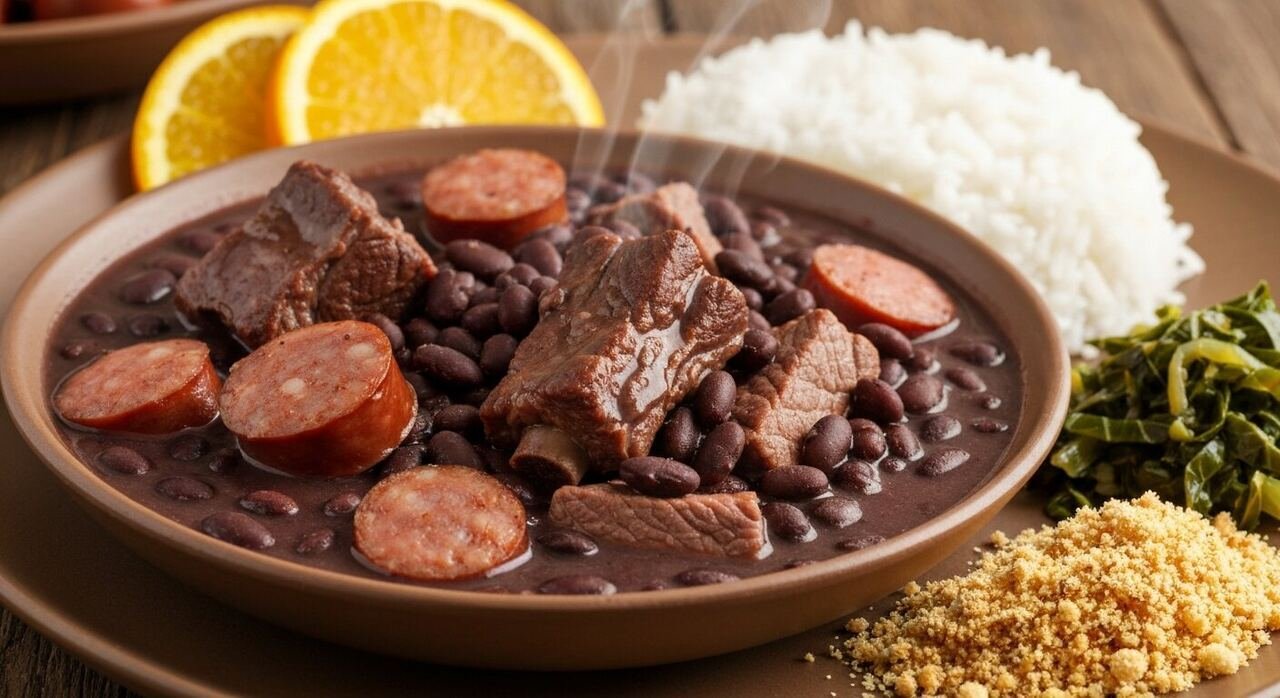
Black beans gone glossy and dark, pork falling off the bone, rice underneath and a slice of cold orange alongside — feijoada is Brazil’s national dish and a standing invitation to spend a whole afternoon at the table.
Feijoada (fay-ZHWAH-duh) is the definition of a slow pot: dried black beans and several cuts of pork simmered for hours until the beans turn creamy and the broth goes almost black. It’s rich, smoky, deeply savory — and cleverly balanced by everything Brazilians serve around it: bright collard greens, crunchy toasted farofa, and fresh orange. Traditionally it’s a Wednesday-and-Saturday affair, made in a huge pot for a crowd that lingers. It’s not a weeknight dish; it’s an occasion you cook.
Before You Soak the Beans
- Feijoada is Brazil’s national dish — a black bean and pork stew, served with rice, farofa, greens, and orange.
- The name comes from feijão, Portuguese for bean — the beans are the star, the pork is the seasoning.
- Soak the beans overnight and use several cuts of pork (fresh + smoked) for layered flavor.
- It needs 2½–3 hours of gentle simmering; crush a ladle of beans to thicken it, never flour.
- The orange isn’t decoration — its acidity cuts the fat and is part of the dish. Serves 8, and it’s better the next day.
The Myth, and the Better True Story
You’ll hear a story repeated everywhere: that feijoada was invented by enslaved Africans on Brazilian plantations, forced to cook the scraps their enslavers discarded — ears, tails, trotters — into a stew. It’s a powerful tale, and it’s how many Brazilians first learn the dish. But food historians have largely pushed back on it. Bean-and-meat stews were already European staples — Portuguese cozido, Spanish fabada, French cassoulet — and the earliest Brazilian records show feijoada being eaten in restaurants and elite homes with prime cuts, not leftovers. Beans and pork were expensive; enslaved people were rarely eating this.
The real story is arguably richer: feijoada is a genuine Brazilian synthesis — a Portuguese technique reborn around the New World black bean, seasoned by African cooking traditions that shaped the whole national kitchen, and finished with sides that are pure Brazil (farofa from indigenous cassava, oranges from the coast). By the twentieth century it had become the country’s edible symbol, the thing you serve to say this is who we are — ladled out on Saturdays while everyone talks for four hours and nobody leaves.
A Portuguese stew, a New World bean, an African kitchen, a Brazilian afternoon.
What Goes in the Pot
| Element | Its job | Notes |
|---|---|---|
| Black beans | The body — creamy, dark, the whole point | Rio style. São Paulo and the south often use brown or red beans |
| Fresh pork (shoulder, ribs) | Tender meat and richness | Brown it first; it pays you back |
| Smoked meats (linguica, bacon) | The smoke that defines the broth | The one thing you shouldn’t skip |
| Carne seca (dried beef) | Deep salty funk, very traditional | Optional — soak it first to de-salt |
| Ears, tails, trotters | Collagen and body, the old-school way | Fully authentic, fully optional |
Low Heat, Layered Pork, and the Ladle Trick
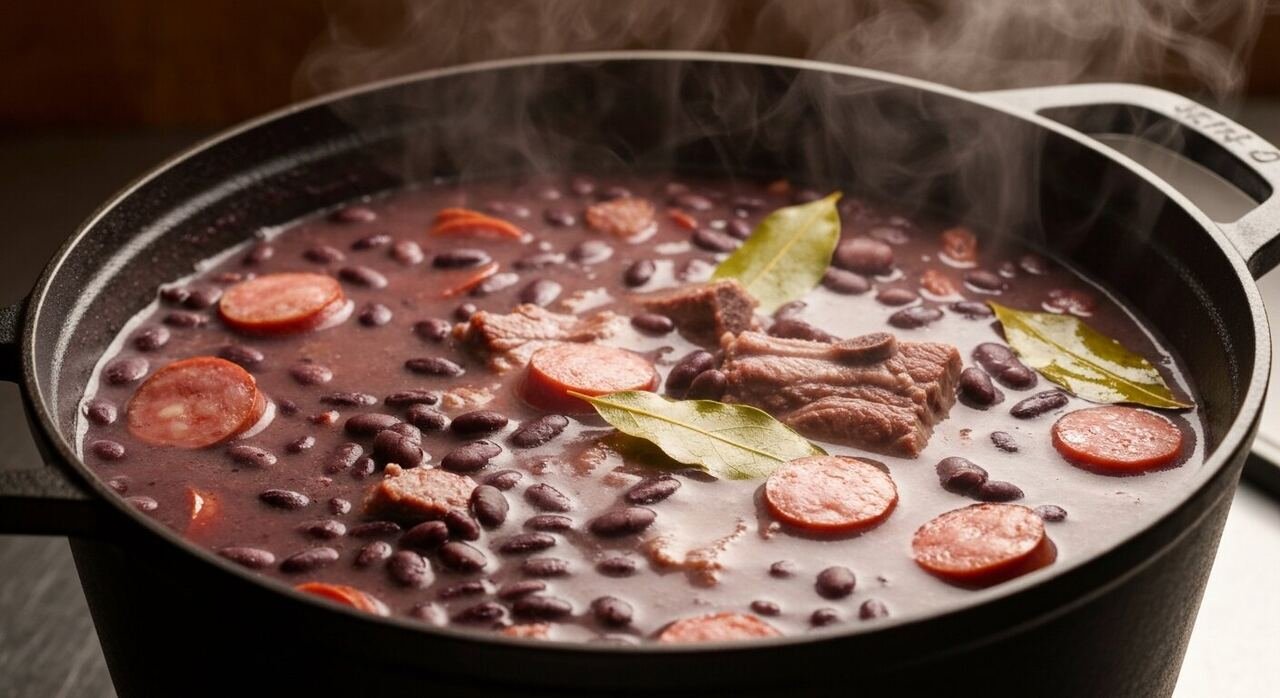
Feijoada asks for patience, not skill. Soak the beans overnight so they cook evenly. Brown the meats in batches before anything else — that fond in the bottom of the pot is the foundation of the whole flavor. Then everything goes in together with water to cover, and the heat goes low: a lazy simmer for two and a half to three hours, topping up water as needed, until the beans are soft enough to crush and the pork shreds at a look. A hard boil will just break the beans and toughen the meat.
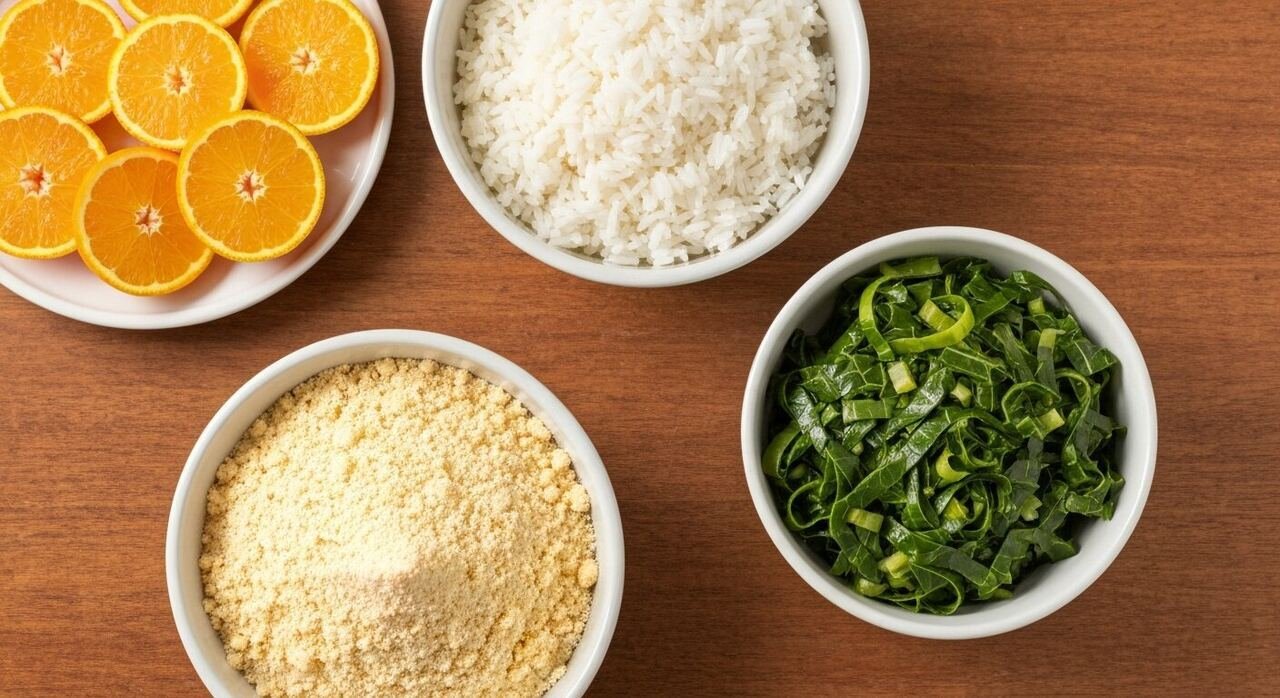
The finishing move is the one nobody writes down: crush a ladleful of beans against the side of the pot and stir the mash back in. The starch thickens the stew into that signature glossy body — no flour, no cornstarch, nothing but beans doing their job. Then build the plate properly: rice, a ladle of feijoada, farofa scattered over the top for crunch, garlicky collard greens, and cold orange slices on the side. Like an asado, the cooking is only half of it — the table is the other half.
Good to Know
Feijoada Wisdom
- Make it a day ahead — feijoada is famously better on day two, once the flavors settle. Reheat gently with a splash of water.
- De-salt cured meats — carne seca and salt pork need their own soak (and a discarded soaking water) or the pot turns brutal.
- Farofa is not optional — toasted cassava flour adds the crunch that keeps every bite from feeling heavy. Toast it in butter with a little garlic.
- Don’t salt early — the smoked meats bring plenty; season at the very end.
- It freezes beautifully — portion the leftovers; a Tuesday you’ll thank yourself for. Serve with pão de queijo to start if you’re going full Brazilian.
Watch It Made
Sometimes one minute of watching beats a page of reading — see the pot come together, then scroll on for the full recipe card.

Video walkthrough via YouTube — tap to play (nothing loads until you do).
The Continental Table Recipe
Brazilian Feijoada
Ingredients
Beans & meat
- 1 lb dried black beans, soaked overnight
- 1 lb pork shoulder, in chunks
- ¾ lb smoked pork ribs
- ½ lb linguiça or smoked sausage, sliced
- ¼ lb bacon or salt pork, diced
- 2 bay leaves
Base & table
- 1 large onion, diced
- 5 garlic cloves, minced
- 2 tbsp olive oil
- 1 tsp cumin, salt & pepper
- To serve: white rice, farofa, sautéed collard greens, orange slices
Method
- Soak the beans overnight; drain. Soak very salty cured meats separately and discard that water.
- Brown in batches. Render the bacon, then brown the pork shoulder, ribs, and sausage. Set aside.
- Build the base. Soften the onion 6 minutes; add garlic and cumin 1 minute.
- Combine. Return all the meat with the beans and bay leaves; cover with water by 2 inches; bring to a boil, then drop to a gentle simmer.
- Simmer 2½–3 hours, partly covered, topping up water, until the beans are creamy and the pork falls apart.
- Thicken & season. Crush a ladle of beans against the pot and stir back in; salt and pepper at the end.
- Serve over rice with farofa, collard greens, and fresh orange.
Cook It on a Saturday
Feijoada isn’t difficult — it’s just unhurried, which is a different kind of ask. Soak the beans, brown the pork properly, keep the heat low, crush that ladleful at the end, and put the farofa and orange on the table where they belong. Then invite more people than you planned for. That’s not a serving suggestion; in Brazil it’s the recipe.
Quick Answers
What is feijoada?
Brazil’s national dish — a slow-simmered stew of black beans and several cuts of fresh and smoked pork, served with rice, farofa, collard greens, and orange slices.
Was feijoada really invented by enslaved people?
It’s a popular story, but food historians largely dispute it. Feijoada descends from European bean-and-meat stews and appears in early records as restaurant and elite food made with prime cuts.
Why is orange served with feijoada?
Not as a garnish — the acidity cuts through the richness of the pork and beans. It’s a traditional and functional part of the plate.
What is farofa?
Toasted cassava (manioc) flour, often cooked with butter and garlic. Scattered over feijoada, it adds the crunch that balances the soft stew.
How do you thicken feijoada?
Crush a ladleful of the cooked beans against the side of the pot and stir the mash back in — the bean starch does it. No flour needed.
You might also like


Leave a Reply
Join the conversation
You need an account to leave a comment.