
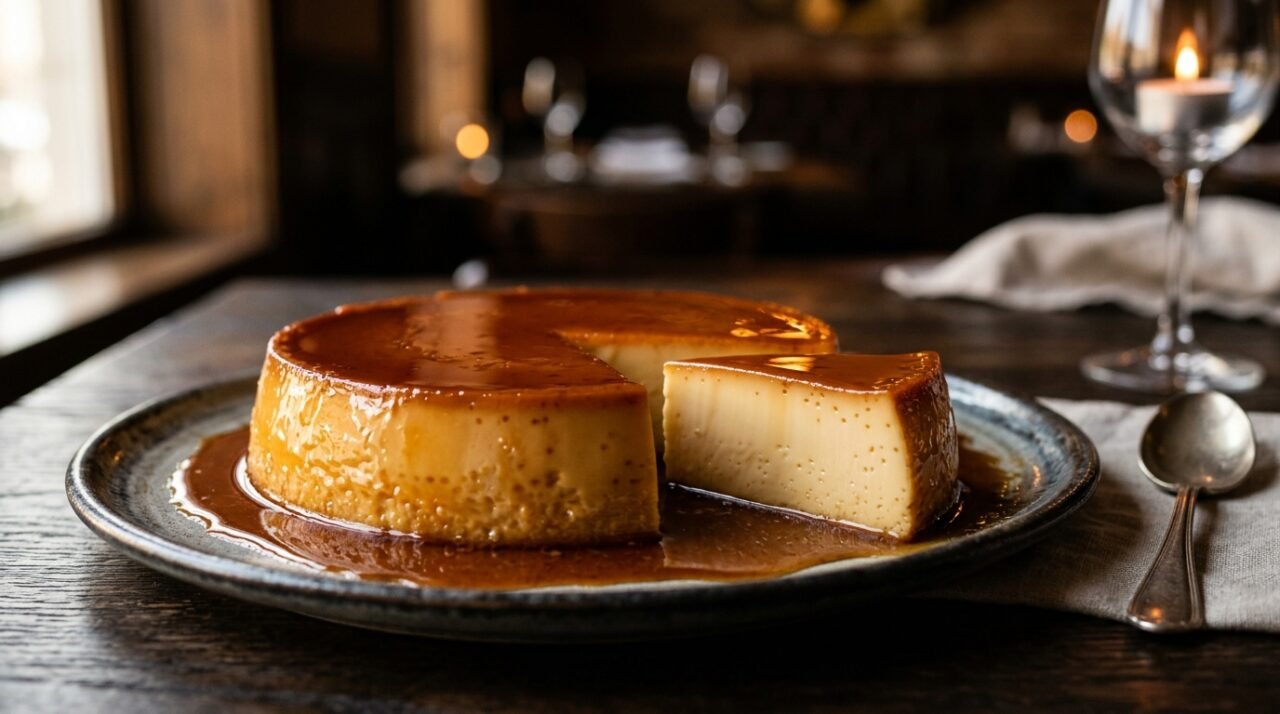
A trembling round of vanilla custard, glossed in its own amber caramel sauce — flan is the dessert that ends celebrations from Mexico City to Buenos Aires, and it asks for only five ingredients.
Flan crossed from Spain to the Americas with the colonists and never left. Every country claims a version — Mexican flan napolitano rich with cream cheese, Venezuelan quesillo pocked with caramel holes, Argentine flan buried under dulce de leche — but the classic remains: eggs, milk, condensed milk, vanilla, caramel, patience.
Before You Melt the Sugar
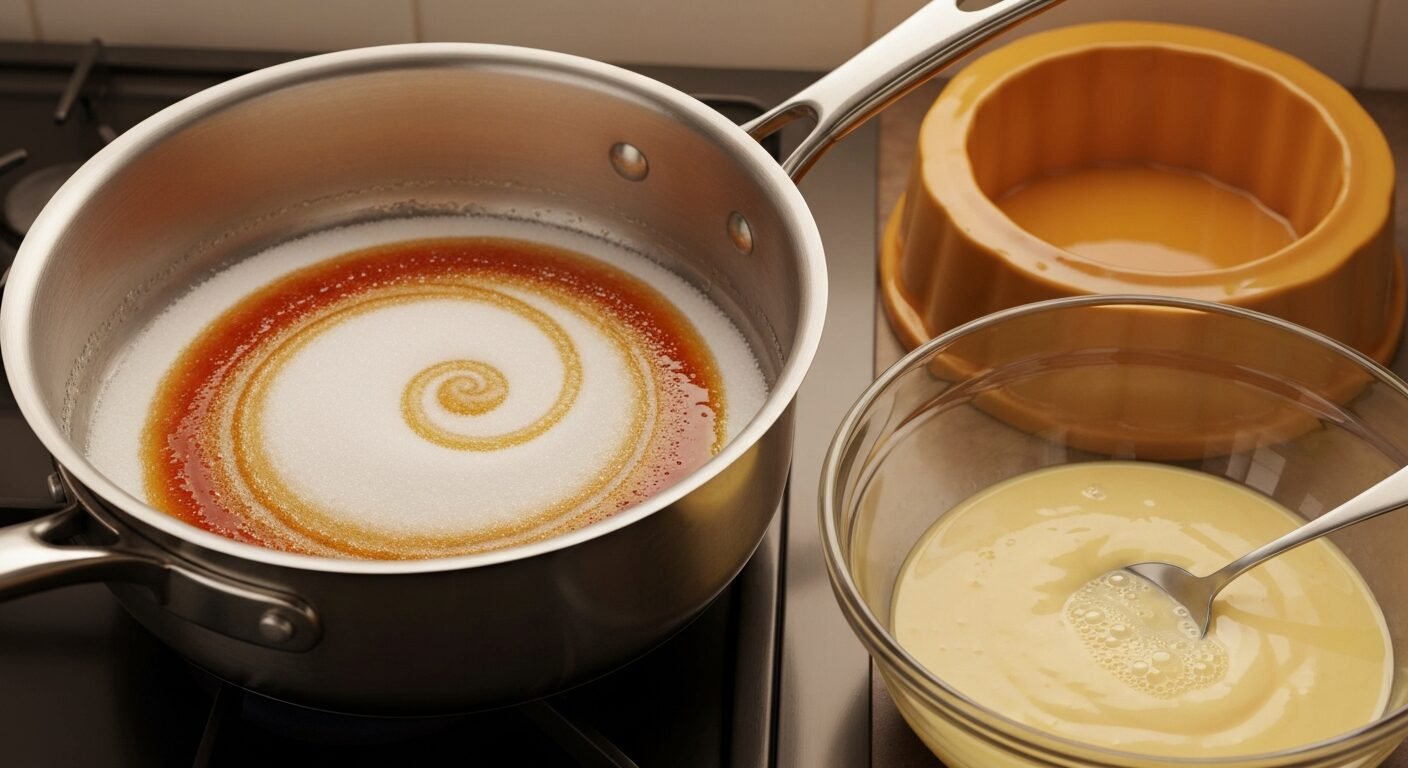
- The caramel is made first, alone in the pan — sugar melted to deep amber, no water needed.
- A water bath (baño maría) is the secret to silk: gentle, even heat.
- Do not over-bake — the center should still wobble like set jelly.
- Chill overnight; the caramel liquefies into sauce as it rests.
- Active time 20 minutes; bake 50; chill at least 4 hours.
Why the Water Bath Wins
Custard is just eggs holding milk in suspension, and eggs panic over direct heat. Surrounding the mold with hot water caps the temperature, so the flan sets evenly from edge to center with no rubbery ring and no bubbles — only silk.
The Flip
Run a thin knife around the chilled flan, set the serving plate on top, breathe, and invert with conviction. Wait a beat — then lift the mold as the caramel cascades down the sides. That moment is the whole show.
Five ingredients, one water bath, and the flip that makes the whole table go quiet.
Good to Know
Custard Rules
- Strain the custard into the mold — it catches every bit of chalaza for perfect silk.
- Hot water halfway up the mold — the bath is the thermostat.
- Overnight chill liquefies the caramel into sauce; four hours is the minimum.
- The flip: loosen the edge, plate on top, invert with conviction, wait a beat, lift.
Watch It Made
Sometimes one minute of watching beats a page of reading — see the technique in motion, then scroll on for the full recipe card.

Video walkthrough via YouTube — tap to play (nothing loads until you do).
The Continental Table Recipe
Classic Flan
Ingredients
The caramel
- 1 cup sugar (for the caramel)
- 4 large eggs + 2 yolks
- 1 can (14 oz) sweetened condensed milk
The custard
- 2 cups whole milk
- 1 tbsp vanilla extract
- Pinch of salt
Method
- Make the caramel. Melt sugar in a dry saucepan over medium heat, swirling, until deep amber. Immediately pour into the flan mold and tilt to coat the base.
- Blend the custard. Whisk eggs, yolks, condensed milk, whole milk, vanilla and salt until smooth. Strain into the mold for maximum silkiness.
- Bake in a water bath. Set the mold in a roasting pan, pour in hot water halfway up the sides, and bake at 325F (160C) for 45-55 minutes until just set with a central wobble.
- Chill and flip. Cool, then refrigerate at least 4 hours or overnight. Loosen the edge, invert onto a rimmed plate, and let the caramel pour over.
Quick Answers
What is flan?
A baked caramel custard – eggs, milk and condensed milk set gently in a water bath over a layer of amber caramel that becomes the sauce.
Why did my flan turn rubbery or bubbly?
Too much heat: the oven was too hot or it baked too long. The water bath and an early pull (center still wobbling) are the fix.
Is flan the same as creme caramel?
They are close cousins – creme caramel uses milk and eggs alone, while Latin American flan leans on condensed milk for a denser, sweeter custard.
You might also like

Leave a Reply
Join the conversation
You need an account to leave a comment.