
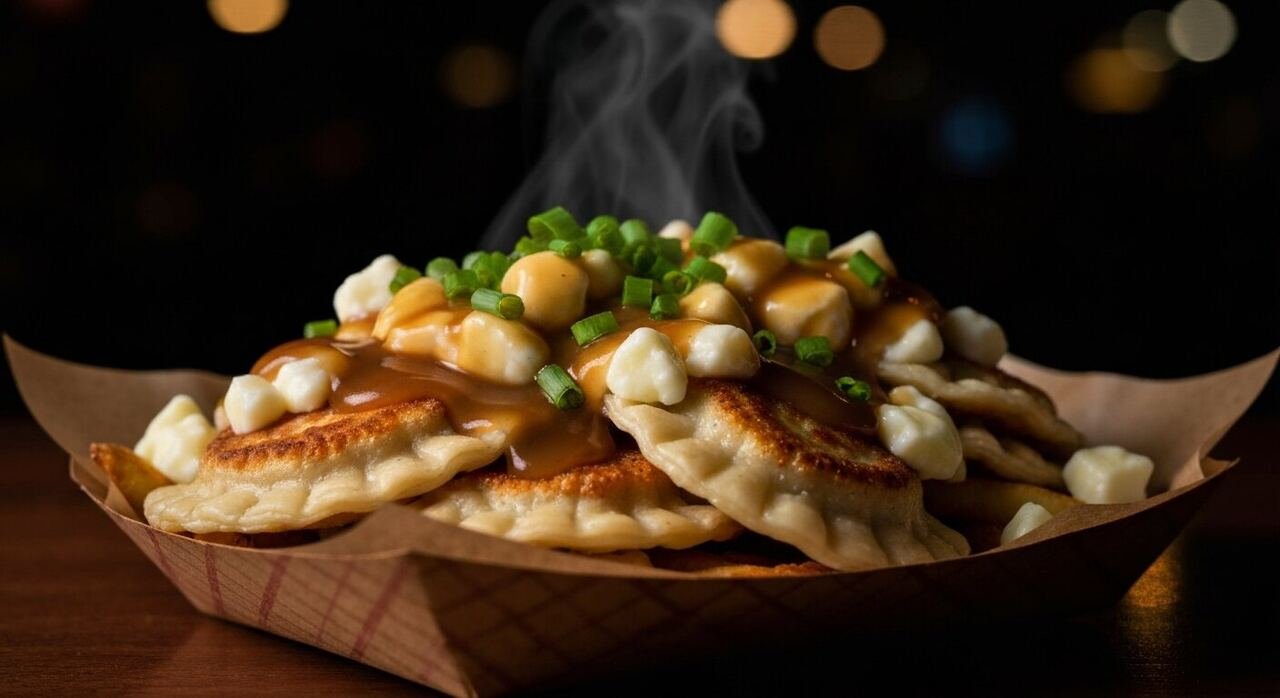
Two immigrant dishes, one glorious, gravy-soaked collision — and why it makes more sense than it has any right to.
Some food combinations sound like a dare. Pierogi poutine — Polish dumplings buried under Canadian gravy and squeaky cheese curds — is absolutely one of them. And yet, the first time you eat it, something clicks. Of course this works. How has this always existed?
I’ve been thinking about why certain mashup dishes earn their place at the table, and pierogi poutine is a fascinating case study. It’s not a fusion gimmick. It’s the natural result of two immigrant comfort traditions — one from the kitchens of Eastern Europe, one from the roadside diners of Québec — landing on the same continent and realizing they had more in common than anyone expected.
Let’s unpack both sides of this equation, because you genuinely can’t appreciate the mashup without understanding what went into it.
Key Takeaways
- Pierogi poutine swaps classic French fries for pan-fried or boiled pierogies, then drowns them in poutine’s signature gravy and fresh cheese curds.
- Pierogies are primarily Polish and Ukrainian — the “Russian” label is a North American simplification with a complicated history.
- Classic poutine is a Québécois invention from the late 1950s; Americans have no direct equivalent, which is exactly why the dish confuses them so much.
- Yes, pierogi poutine is indulgent. No, you shouldn’t eat it every Tuesday. But as an occasional comfort meal, it’s hard to argue against it.
- The best versions crisp the pierogies in butter before smothering them — texture contrast is everything.
The Three Laws of Poutine
| Element | The law | The crime |
|---|---|---|
| Curds | Fresh, room-temp, squeaky against your teeth | Shredded mozzarella — a different (lesser) dish |
| Gravy | Hot enough to soften the curds, never fully melt them | Lukewarm gravy that leaves curds cold and waxy |
| Base | Crisp enough to fight the gravy for a few minutes | Soft fries that surrender on contact |
What Even Is Pierogi Poutine?
The elevator pitch: it’s poutine, but instead of fries, you use pierogies as the base. That’s it. That’s the whole idea — and somehow it’s brilliant.
Classic poutine, if you’re not already familiar, is a Québécois dish built on a very specific three-part formula: crispy fries, brown gravy (traditionally a chicken or veal stock reduction), and fresh cheese curds — the kind that squeak against your teeth. It’s unapologetically rich, deeply savory, and the kind of thing you crave at 11pm after a long day.
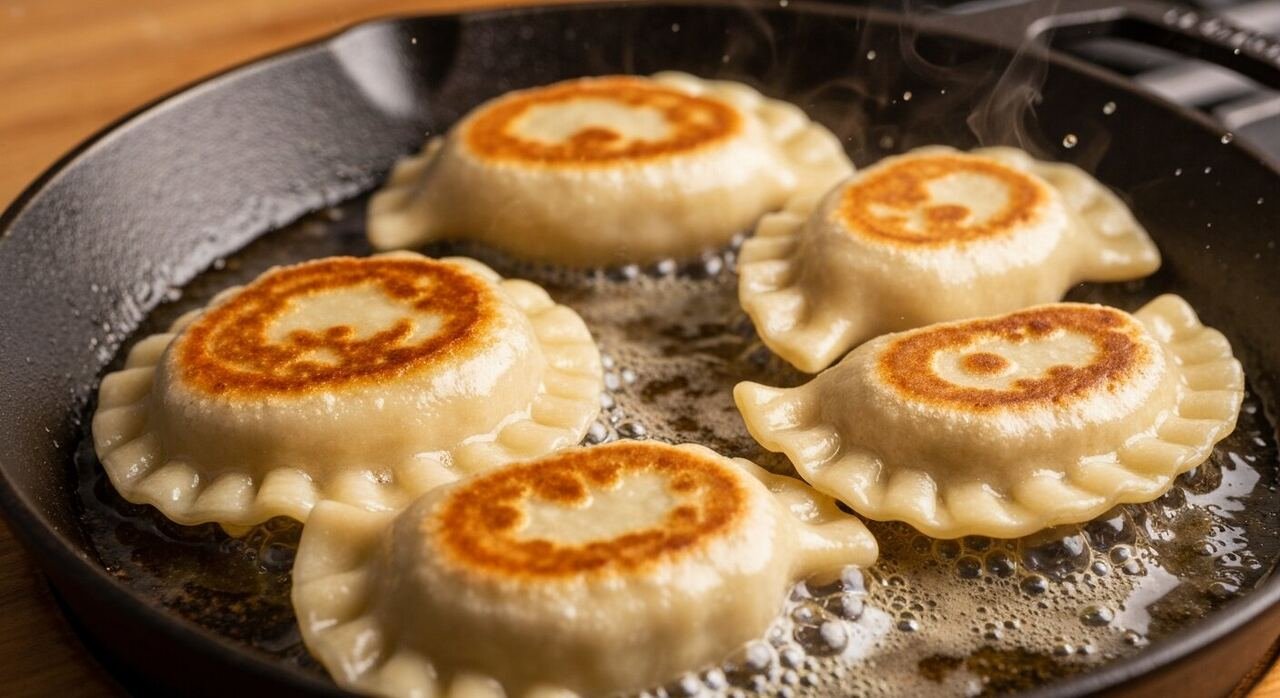
Pierogi poutine keeps that gravy-and-curd formula entirely intact. What changes is the foundation. Swap the fries for pierogies — typically the potato-and-cheese filled variety — and suddenly you’ve doubled down on the starchy, cheesy comfort without losing any of the saucy drama. The pierogies are usually pan-fried in butter first, so their edges get golden and slightly crisp before the gravy arrives. That textural contrast is what makes the dish sing.
Swap the fries for pierogies, and suddenly you’ve doubled down on the starchy, cheesy comfort without losing any of the saucy drama.
The Great Pierogi Debate: Polish, Ukrainian, or “Russian”?
Here’s where things get genuinely interesting — and a little politically charged, honestly.
If you’ve ever ordered pierogies at a North American restaurant, you’ve probably seen them labeled “perogies” or even “Russian pierogies.” This is a naming quirk that drives both Polish and Ukrainian food historians slightly mad, and understandably so.
Pierogies are deeply embedded in Polish and Ukrainian culinary tradition — two cultures with overlapping histories and distinct identities. The word itself comes from the Polish pieróg, meaning “dumpling.” In Ukraine, a closely related version is called varenyky, and it carries enormous cultural weight: it’s a symbol of home, harvest, and hospitality. To call either of these things “Russian” is to flatten a complex history into something that suits neither culture.
The “Russian pierogi” label likely emerged in North America partly because early Ukrainian immigrants were sometimes broadly categorized as Russian — a geographic and political simplification that stuck in restaurant menus long after it should have been corrected. If you want to be accurate (and respectful), call them Polish-style pierogies or Ukrainian varenyky, depending on the specific recipe tradition you’re working with.
As for the related question of piroshki — those are a different animal entirely. Russian piroshki are baked or fried bread rolls with a filling inside, not boiled dumplings. Similar concept, very different execution.
Why Americans Are So Confused by Poutine
If you’re American and you’ve had poutine explained to you, there’s a good chance the conversation included the phrase “fries with gravy and cheese?” followed by a skeptical pause. Here’s the thing: the United States doesn’t really have a direct equivalent dish. Gravy fries exist in pockets of American diner culture, but fresh cheese curds — the non-negotiable element that gives poutine its signature texture and mild tang — are genuinely hard to find outside of Wisconsin and a few specialty shops.
This is actually a quirky legal-ish issue that surprises people: fresh cheese curds are sold unpasteurized in Canada and consumed within hours of production. In the US, the same product exists but is far less common, partly because of refrigeration requirements and dairy regulations that vary by state. So when Americans ask “what do you call poutine in America?” — the honest answer is that there isn’t really a clean translation. Cheese fries with gravy? Close, but not quite. The squeak is missing.
That cultural gap is part of what makes pierogi poutine so interesting as a dish: it bridges the unfamiliar (poutine’s curds and gravy) with the more widely recognized comfort of stuffed dumplings, which appear in food traditions across Eastern Europe, Asia, and beyond. It’s approachable to more people, which might be why it’s caught on in cities with strong Eastern European diaspora communities — places like Toronto, Chicago, and Winnipeg.
Is Pierogi Poutine Actually Terrible for You?
Let’s be direct: yes, this dish is indulgent. You’ve got pasta-dough dumplings filled with potato and cheese, smothered in gravy and topped with more cheese. We are not talking about a salad.
That said, the hand-wringing about poutine’s health profile often goes a bit far. Traditional poutine — made properly, with real stock-based gravy and fresh curds — isn’t processed junk food. It’s whole ingredients prepared in a rich way. The calories are real, the sodium is significant, and it’s absolutely not something to eat daily. But as an occasional indulgence, shared over a good conversation? It doesn’t deserve the pearl-clutching it sometimes gets.
Pierogi poutine adds the dumpling’s carbs to the equation, so portions are naturally smaller than a full plate of fries. Treat it as a shared starter or a deliberate comfort meal, not a weeknight staple, and it fits into a normal, balanced life without drama.
How to Eat It Right
A few thoughts on technique, because this dish is easy to get wrong. The most common mistake is using cold or soggy pierogies — they need to be fresh, properly boiled and then pan-fried in butter until golden. The crisp exterior is what holds up under the gravy. Skip that step, and you end up with a mushy, undifferentiated pile.
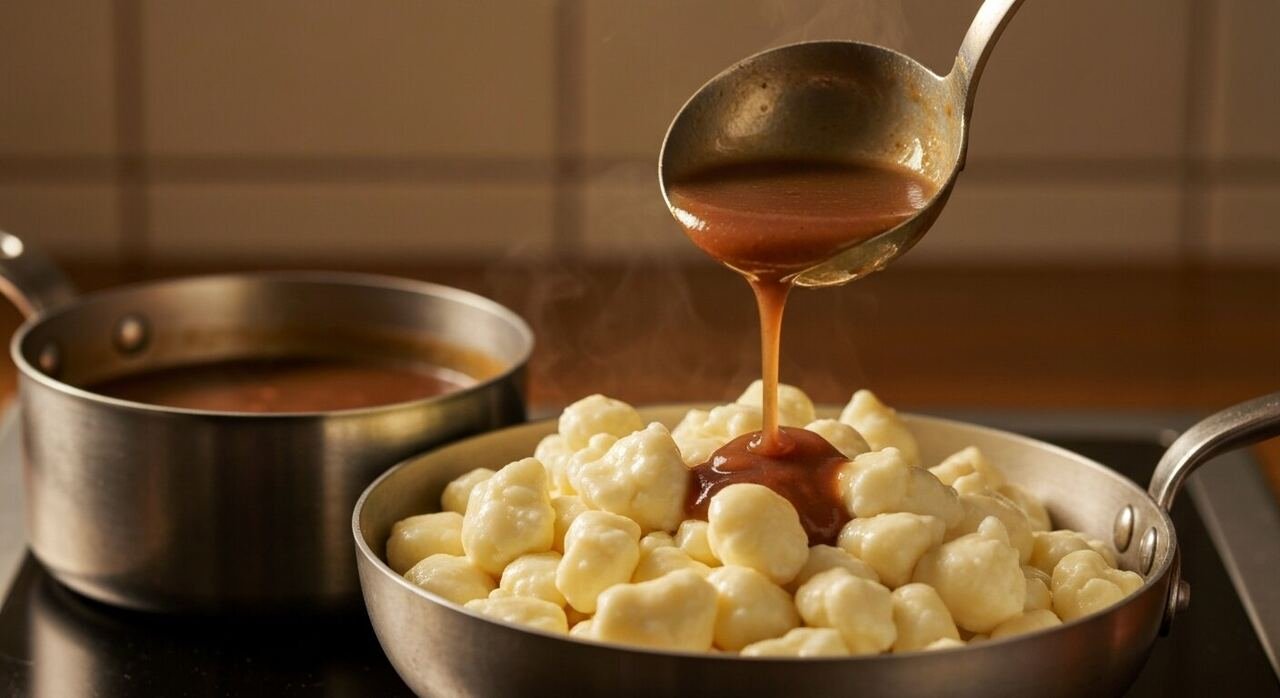
The gravy should be hot — almost too hot — when it hits the pierogies, so the cheese curds begin to soften slightly but don’t fully melt. You want them yielding, not dissolved. And eat it immediately. Pierogi poutine is emphatically not a dish that improves with time.
Watch It Made
Sometimes one minute of watching beats a page of reading — see the curds meet the gravy.

Video walkthrough via YouTube — tap to play (nothing loads until you do).
Frequently Asked Questions
Is poutine Russian or Canadian?
Unambiguously Canadian — specifically Québécois. It was invented in the late 1950s in rural Québec and has no Russian connection whatsoever. The word “poutine” is Québécois slang, loosely meaning “mess” or “puddle.”
Are pierogies more Ukrainian or Polish?
Both, genuinely. Polish cuisine uses pierogies extensively, and the word is Polish in origin. Ukrainian varenyky are essentially the same concept with strong cultural significance of their own. The two traditions developed in parallel across neighboring regions — assigning ownership to one culture over the other misses the point.
What is the gravy in poutine made of?
Traditional poutine gravy is a light, slightly thin brown gravy made from chicken or veal stock — sometimes a blend — thickened with a roux. It’s deliberately less heavy than a classic beef gravy, so it doesn’t overwhelm the cheese curds. Many modern versions use a chicken-veal hybrid for depth.
Can it be made vegetarian?
Yes. Use a mushroom or onion-based gravy in place of the meat stock, and choose vegetarian cheese curds (some are made with microbial rennet). The crisp-pierogi technique stays exactly the same — you lose none of the texture that makes the dish work.
What is Texas poutine?
Texas poutine swaps the traditional gravy for chili — typically a bold beef chili — keeping the cheese curds or substituting shredded cheddar. It’s a regional riff that leans into Tex-Mex flavors rather than the Québécois original. Delicious in its own right, but a different beast entirely.
You might also like
Leave a Reply
Join the conversation
You need an account to leave a comment.